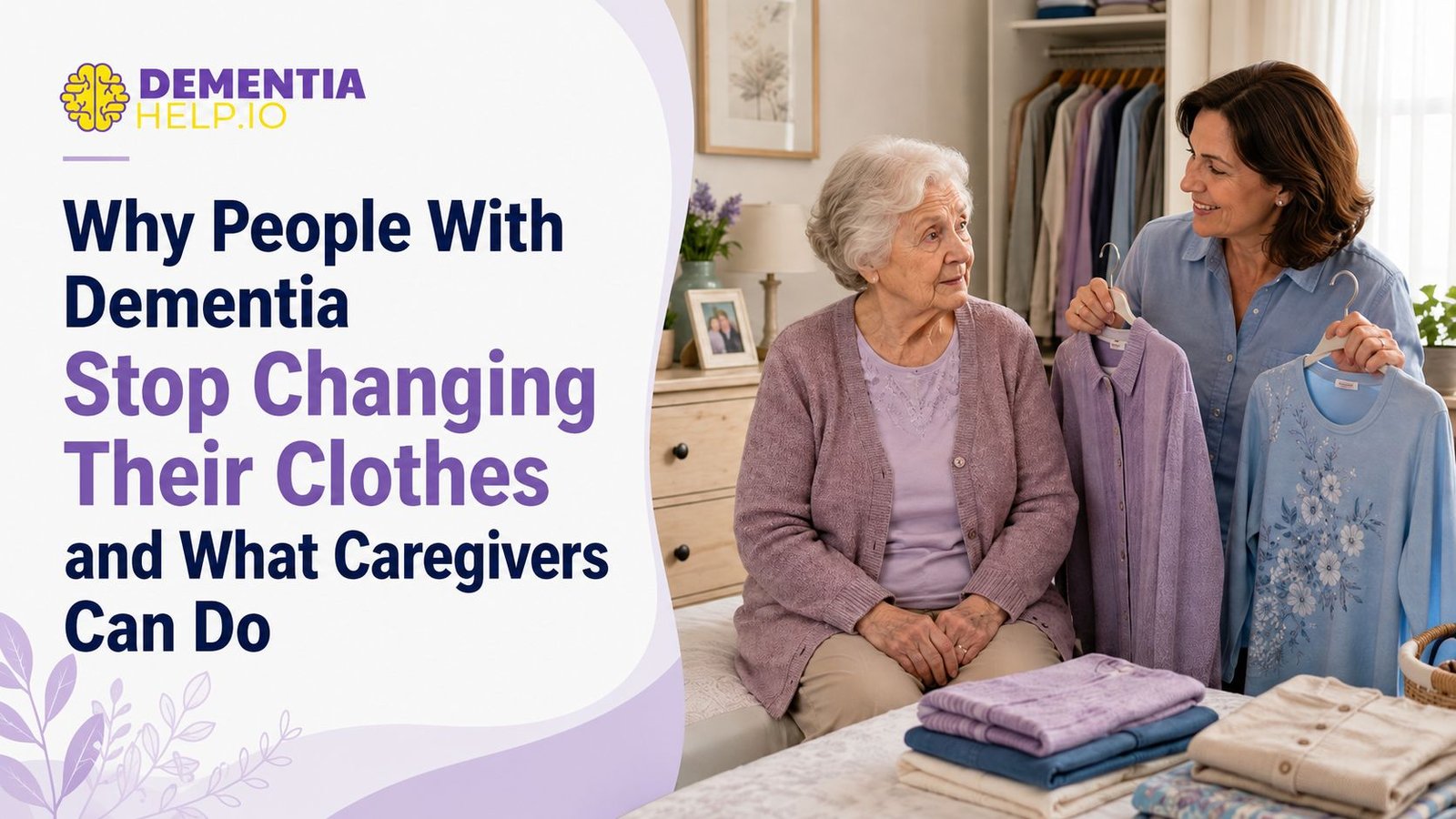
A person living with dementia may wear the same shirt, sweater, or pair of pants day after day.
They may insist the clothing is clean when it is visibly stained. They may sleep in it, refuse to remove it, or become angry when a caregiver suggests changing.
For families, this can be confusing and frustrating.
You may wonder:
“Do they not notice the smell?”
“Why are they so attached to that outfit?”
“How can I get them into clean clothes without starting a fight?”
Refusing to change clothes is usually not laziness, stubbornness, or a lack of pride. Dementia can affect memory, judgment, recognition, sequencing, sensory processing, and the ability to understand why changing is necessary.
The clothing may also provide comfort, familiarity, identity, or a sense of control in a world that increasingly feels unpredictable.
The answer is rarely to argue harder. It is to understand what is making the task difficult and make changing clothes feel safer, simpler, and less threatening.
The Quick Answer
Someone with dementia may stop changing clothes because they:
- Do not remember how long they have worn the outfit
- Believe the clothing is still clean
- Do not recognize stains or odors
- Feel attached to a familiar item
- Become overwhelmed by too many choices
- Have difficulty remembering the steps involved in dressing
- Struggle with buttons, zippers, balance, pain, or reduced mobility
- Feel cold, exposed, embarrassed, or vulnerable while changing
- Fear that a favorite item will be taken away
- Want to preserve control over a personal decision
Caregivers can help by reducing choices, creating a predictable routine, offering comfortable and easy-to-use clothing, removing dirty items discreetly, preserving the person’s style, and stepping back when the situation becomes confrontational.
The goal is not to make the person look perfect. The goal is to keep them clean, comfortable, safe, and treated with dignity.
Why Does Dementia Affect Dressing and Clothing Changes?
Getting dressed appears simple because most adults have performed the task for decades.
But dressing requires the brain to complete many steps:
- Recognize that the current clothing needs to be changed.
- Understand the time of day and weather.
- Find appropriate garments.
- Decide what to wear.
- Put the items on in the correct order.
- Understand how each item works.
- Manage buttons, zippers, sleeves, and shoes.
- Maintain balance while dressing.
- Recognize whether the finished outfit is comfortable and appropriate.
Dementia can interfere with any part of that sequence.
The Alzheimer’s Association explains that choosing and putting on clothing can become frustrating as dementia progresses. A person may forget how to dress or feel overwhelmed by the number of choices and steps involved.
What looks like refusal may actually be confusion, fear, discomfort, or an attempt to avoid a task that has become too difficult.
They May Not Remember Wearing the Same Clothes
Short-term memory loss can prevent someone from remembering that they wore the same outfit yesterday, slept in it overnight, or have had it on for several days.
When a caregiver says:
“You have worn that shirt all week.”
The person may genuinely believe that is untrue.
From their perspective, the shirt may feel freshly chosen.
Trying to prove how long they have worn it may create embarrassment or conflict without helping them understand the need to change.
They May Not Notice Stains or Odors
Dementia may affect awareness, judgment, vision, attention, and the ability to interpret what the senses are reporting.
A person may:
- Not see a stain
- Not recognize that clothing smells
- Forget that an accident occurred
- Believe the item was recently washed
- Be unable to connect visible dirt with the need to change
- Become defensive because the suggestion feels like criticism
Rather than saying:
“Your clothes smell.”
Try a neutral invitation:
“Let’s put on something fresh and comfortable.”
The difference may seem small, but dignity often lives in the wording.
The Outfit May Feel Familiar and Safe
A favorite sweater or shirt may offer more than comfort.
It may connect the person to:
- A spouse
- A former job
- A familiar daily routine
- A period of independence
- A specific memory
- Their personal style
- A sense of identity
As other parts of life become less predictable, familiar clothing can become an emotional anchor.
Removing it may feel like someone is taking away one of the few things they still recognize.
This is why simply hiding or discarding a favorite item can cause distress.
When possible, consider purchasing several similar or identical versions. The person can continue wearing what feels familiar while caregivers rotate clean replacements.
Too Many Choices Can Become Overwhelming
A closet full of clothing may once have represented freedom. With dementia, it may feel like a wall of impossible decisions.
The person may struggle with questions such as:
- Which shirt goes with which pants?
- Is it morning or evening?
- Is it hot or cold outside?
- Am I going somewhere?
- Which items are clean?
- What should I put on first?
The Alzheimer’s Association recommends reducing excess clothing and offering only one or two choices rather than presenting an entire closet.
Instead of asking:
“What do you want to wear today?”
Try:
“Would you like the blue shirt or the green shirt?”
Both options should be appropriate so there is no wrong answer.
They May Have Forgotten How to Dress
Dementia can affect procedural memory and sequencing, which are involved in remembering how to complete familiar tasks.
A person may:
- Put underwear over pants
- Put clothing on backward
- Forget to remove pajamas
- Add clean clothing over dirty clothing
- Stop halfway through dressing
- Wear several shirts at once
- Forget which garment comes next
- Become confused about how a sleeve or zipper works
This does not necessarily mean they can no longer participate.
They may need the task broken into smaller steps.
For example:
“Here is your shirt.”
Then wait.
“Put your arm through this sleeve.”
Then wait again.
One instruction at a time can be much easier to process than:
“Go get dressed so we can leave.”
Physical Discomfort May Be Part of the Problem
Not every dressing problem is caused directly by memory loss.
Changing clothes may hurt or feel physically difficult because of:
- Arthritis
- Shoulder pain
- Back pain
- Stiff joints
- Reduced balance
- Weakness
- Tremors
- Swelling
- Skin irritation
- Recent injury
- Difficulty bending
- Shortness of breath
- Poor coordination
Buttons, hooks, tight waistbands, bras, belts, shoelaces, and stiff fabrics can turn dressing into an exhausting obstacle course.
The person may not be able to explain that something hurts. Refusal may be their only available form of communication.
Sensory Changes Can Make Clothing Uncomfortable
A garment that looks perfectly comfortable to a caregiver may feel unbearable to the person wearing it.
Possible triggers include:
- Scratchy fabric
- Tight elastic
- Heavy seams
- Clothing tags
- Stiff denim
- Tight collars
- Uncomfortable undergarments
- Certain textures
- Clothing that feels too warm or too cold
- The sensation of fabric being pulled over the head
The person may repeatedly choose the same outfit because it is the only one that feels tolerable.
Pay attention to what the preferred clothing has in common. It may be softer, looser, warmer, easier to put on, or more familiar.
Changing Clothes Can Feel Exposing or Frightening
Undressing requires vulnerability.
Someone living with dementia may no longer understand:
- Who is helping them
- Why their clothing is being removed
- Where they are
- Whether they are safe
- What is about to happen
- Why privacy is being interrupted
Even a spouse or adult child may not feel familiar in that moment.
The person may fear being exposed, touched, rushed, or controlled.
Dressing support should preserve privacy as much as possible. Close doors and curtains, cover parts of the body that are not being dressed, explain each step, and avoid having unnecessary people in the room.
They May Fear Losing the Clothing
Some people resist changing because they believe the item will disappear.
This concern may be stronger if clothing has previously been misplaced, removed without explanation, or taken for laundry and not returned quickly.
Try saying:
“We are going to wash this shirt and bring it right back.”
You may also let the person see where it is being placed.
When possible, replace it with an identical or very similar item so the transition feels less abrupt.
Refusal May Be an Attempt to Preserve Control
Clothing is personal.
For most of our lives, we decide what to wear, when to change, and how we want to present ourselves. Dementia often brings increasing dependence and fewer opportunities to make decisions.
Refusing to change may be one of the few ways the person can still say:
“This is my body.”
“This is my choice.”
“Stop telling me what to do.”
That does not mean hygiene and safety should be ignored. It means the approach matters.
Whenever possible, support choice rather than issuing commands.
What Caregivers Can Do
The most effective strategy depends on why the person is resisting.
Observe first. Then simplify.
1. Create a Predictable Dressing Routine
Try to encourage changing clothes at roughly the same time each day.
For example:
- After morning toileting
- Before breakfast
- After a shower
- Before leaving the house
- When changing into sleepwear at night
Routine reduces the number of decisions the person must make.
Instead of announcing:
“You need to change because those clothes are dirty.”
Try:
“It is time to get ready for breakfast.”
The clothing change becomes part of a familiar sequence rather than a confrontation about cleanliness.
2. Avoid Asking Whether They Want to Change
If changing is necessary, avoid asking a question that invites a firm refusal.
Instead of:
“Do you want to change your clothes?”
Try:
“Let’s get into something comfortable for the day.”
Or offer a controlled choice:
“Would you like the blue shirt or the purple one?”
This preserves agency while gently moving the task forward.
3. Offer Only Two Appropriate Choices
Too many options can freeze the decision-making process.
Choose two complete outfits that are:
- Appropriate for the weather
- Comfortable
- Familiar
- Easy to put on
- Consistent with the person’s style
Then allow the person to select one.
The Alzheimer’s Society recommends respecting the person’s clothing choices when they do not create a safety concern, even when the outfit seems unusual or does not match.
A mismatched outfit is not an emergency.
Being too hot, too cold, restricted, or at risk of falling may be.
4. Lay Out Clothing in the Correct Order
Place the garments where the person can see them, arranged in the order they should be worn.
For example:
- Underwear
- Undershirt
- Pants
- Shirt
- Socks
- Shoes
Remove unrelated items from view.
If laying out the full outfit is still overwhelming, hand over one item at a time.
5. Use Short, Respectful Instructions
Give one direction at a time.
Try:
“Please sit here.”
Pause.
“Here is your shirt.”
Pause.
“Put this arm through the sleeve.”
Avoid rapid instructions such as:
“Take that off, put this on, find your socks, and hurry because we are late.”
Rushing can increase anxiety and resistance. Both the National Institute on Aging and Alzheimer’s Association recommend allowing extra time for dressing and avoiding pressure.
6. Demonstrate the Action
Sometimes showing works better than explaining.
You can:
- Hold the shirt open
- Point to the sleeve
- Begin putting on your own sweater
- Demonstrate buttoning
- Guide the person’s hand toward the garment
Avoid taking over immediately if they can still perform part of the task.
Supporting someone does not mean doing everything for them. It means giving the right amount of help at the right moment.
The DementiaHelp.io guide to living with dementia while maintaining independence and quality of life emphasizes adapting everyday tasks without unnecessarily removing the person’s autonomy.
7. Choose Clothing That Is Easier to Manage
Helpful features may include:
- Elastic waistbands
- Loose necklines
- Front-opening shirts
- Large zipper pulls
- Magnetic or hook-and-loop fasteners
- Slip-on shoes
- Non-slip soles
- Soft, breathable fabrics
- Clothing without irritating tags
- Bras or undergarments that are easier to fasten
- Pants that are easy to lower for toileting
Avoid automatically replacing someone’s entire wardrobe with clothing that does not reflect their preferences.
Adaptive clothing should still look and feel like them.
A person who always wore dress shirts may not be happy in sweatshirts. Someone who valued bright colors may feel unlike themselves in a closet full of beige.
Practical does not have to mean impersonal.
8. Buy Duplicates of Favorite Items
If the person insists on wearing one particular shirt or sweater, look for identical or similar replacements.
Having several versions allows caregivers to:
- Rotate clean clothing
- Reduce conflict
- Preserve familiarity
- Keep the person’s preferred style
- Replace worn items without a dramatic change
This is one of those caregiving solutions that may not look elegant on paper but can save everyone from a daily wrestling match.
9. Remove Dirty Clothing Discreetly
When the person changes for bathing, sleep, or another activity, quietly move worn clothing to the laundry.
Avoid making a show of confiscating it.
You might say:
“I’m going to freshen this up for you.”
If the person becomes anxious when the clothing disappears, show them where it is going or replace it immediately with a familiar duplicate.
Do not secretly discard meaningful items unless they present a clear safety or hygiene problem that cannot be managed another way.
10. Use a Reason That Feels Relevant
A direct focus on dirt or odor may cause shame.
Sometimes it helps to connect the change with an activity:
“Let’s put on your blue shirt before Susan visits.”
“We are getting ready for lunch.”
“These pajamas will be more comfortable for sleeping.”
“Let’s wear the warm sweater before we go outside.”
The reason should be simple, believable, and immediate.
11. Protect Privacy
Close the door, shut the curtains, and keep the room warm.
Expose only the part of the body currently being dressed. A towel, robe, or blanket can help the person feel less vulnerable.
Ask permission before touching:
“May I help with your sleeve?”
Even when the person needs significant assistance, respectful language still matters.
Dementia may change their abilities. It does not erase their right to dignity.
12. Keep the Environment Calm
Turn off loud television or music. Limit the number of people in the room. Make sure the space is well-lit and comfortably warm.
A cold room can make anyone reluctant to undress. Add confusion and fear, and the task becomes even harder.
Choose a time when the person is usually calm rather than forcing the task during agitation, exhaustion, or hunger.
13. Step Back and Try Again Later
When changing clothes becomes a battle, continuing to push may make resistance stronger.
If there is no immediate safety or hygiene emergency:
- Pause
- Change the subject
- Offer a snack or drink
- Move to another room
- Let another caregiver try
- Return in 10 or 20 minutes
The Alzheimer’s Society includes a similar practical principle in caregiver guidance: when the person says no, backing off briefly and trying again may work better than escalating pressure.
A delay is not defeat. Sometimes it is the smartest tool in the room.
14. Match the Clothing to the Weather Without Creating a Power Struggle
A person may wear several sweaters in hot weather or refuse a coat when it is cold.
Rather than arguing about what they “should” wear, try:
- Keeping the room at a comfortable temperature
- Offering a lighter version of a favorite item
- Suggesting layers that can be removed
- Bringing an extra coat rather than forcing it immediately
- Using phrases connected to comfort
For example:
“Let’s bring this sweater in case the restaurant feels cold.”
If the clothing choice is unusual but not dangerous, consider letting it go.
Caregiving already has enough hills. Not every mismatched sock needs to become one.
15. Check for Toileting or Incontinence Issues
The person may resist changing because they are embarrassed about an accident or afraid someone will discover it.
Respond calmly and matter-of-factly:
“It looks like we need something dry and comfortable. We’ll take care of it together.”
Avoid blame, visible disgust, or discussing the accident in front of other people.
For more practical guidance, read Managing Incontinence With Dignity: A Caregiver’s Guide.
What Not to Do
Do Not Shame Them
Avoid statements such as:
“You smell.”
“That shirt is disgusting.”
“Everyone can tell you haven’t changed.”
Shame may increase defensiveness, withdrawal, or future resistance.
Do Not Treat Them Like a Child
A person living with dementia is an adult, even when they need help with basic tasks.
Avoid baby talk, scolding, threats, or speaking about them as though they are not present.
Do Not Rush
Rushing turns a complicated task into a crisis.
Plan more time than you think you need, especially before appointments.
Do Not Give Too Many Instructions at Once
Break the process into manageable steps.
Do Not Force a Clothing Change Unless Safety Requires Immediate Action
Physical force can cause fear, injury, resistance, or damage to trust.
If clothing is wet, heavily soiled, restricting circulation, causing overheating, or presenting another immediate health risk, seek additional help rather than attempting an unsafe struggle alone.
Do Not Assume Every Refusal Is Caused by Dementia
Look for pain, illness, skin irritation, mobility problems, depression, medication effects, and environmental discomfort.
Behavior is often communication wearing a disguise.
When Is Wearing the Same Outfit Mostly Harmless?
It may not be worth creating a confrontation when:
- The clothing is reasonably clean
- The person is comfortable
- The clothing is appropriate for the temperature
- There is no skin or hygiene concern
- The outfit is not causing a fall risk
- The preference reflects personal style
- A change can safely wait
The caregiver’s standard of appearance may not need to become the person’s daily battlefield.
The person does not have to match. They do not have to dress the way visitors expect. They do not have to look picture-perfect.
Clean, safe, comfortable, and dignified is enough.
When Does the Clothing Need to Be Changed?
A change becomes more important when clothing is:
- Wet or soiled
- Contaminated with urine, stool, vomit, blood, or food
- Causing skin irritation
- Tight enough to restrict movement or circulation
- Too warm for the environment
- Too light for dangerous cold
- Tangled or creating a fall hazard
- Interfering with toileting
- Hiding a wound, infection, or pressure injury
- Carrying a strong odor that may indicate hygiene or medical concerns
Even then, the approach should remain calm and respectful.
When Should You Contact a Healthcare Professional?
Discuss the change with a healthcare professional when refusal to change clothes:
- Begins suddenly
- Represents a major change from the person’s usual behavior
- Appears with new confusion or unusual sleepiness
- Is accompanied by pain or reduced mobility
- Follows a fall or injury
- Appears alongside fever or signs of infection
- Occurs with worsening incontinence
- Is connected to skin breakdown, sores, rashes, or wounds
- Appears with depression, withdrawal, or loss of interest in personal care
- Follows a medication change
- Becomes physically unsafe for the person or caregiver
A sudden decline in dressing ability or personal care may reflect delirium, infection, pain, medication effects, depression, or another treatable concern rather than dementia progression alone.
Seek urgent medical help for sudden weakness, facial drooping, slurred speech, loss of consciousness, serious injury, breathing difficulty, or another possible emergency.
What if the Person Becomes Aggressive?
If the person becomes verbally or physically aggressive:
- Stop the task when possible
- Give them physical space
- Lower your voice
- Remove extra people from the room
- Avoid blocking the doorway
- Do not argue
- Do not grab or restrain them unless immediate safety requires emergency intervention
- Try again later with a different caregiver
- Contact their healthcare professional if aggression is new or escalating
If anyone is in immediate danger, contact emergency services and explain that the person is living with dementia and experiencing behavioral distress.
Clothing Is Part of Identity
Clothing is not just fabric.
It can represent profession, culture, religion, gender expression, personal taste, modesty, memories, and pride.
A man who wore a collared shirt every day may feel uncomfortable in a T-shirt. A woman who always wore jewelry may feel unfinished without it. A person who loved bright colors may not recognize themselves in neutral adaptive clothing.
The Alzheimer’s Society advises caregivers not to make assumptions about how a person should look and to respect the cultural, religious, sentimental, and personal importance of clothing and grooming.
The best dressing support does not erase the person’s identity in the name of convenience.
It adapts the task while preserving as much of the person as possible.
When the Caregiver Is Running Out of Patience
Helping someone change clothes can look small from the outside.
Inside the home, it may involve repeated refusals, accidents, missed appointments, physical strain, hurtful words, and another task added to a day already packed to the ceiling.
Feeling frustrated does not make you uncaring.
It means the care demand is real.
When possible:
- Build extra time into the routine
- Share dressing duties with another caregiver
- Ask an occupational therapist about adaptive strategies
- Consider in-home support
- Keep backup outfits prepared
- Simplify the wardrobe
- Step away when emotions rise
- Give yourself permission to choose “good enough”
You do not have to win every clothing disagreement.
You are trying to protect health and dignity without losing your own footing in the process.
If frustration turns into guilt, our article Dealing With Caregiver Guilt: A Compassionate Guide for Dementia Care Partners may help.
The Goal Is Cooperation, Not Control
When someone with dementia refuses to change clothes, the natural temptation is to focus entirely on the outcome:
“They must put on a clean outfit.”
But how you reach that outcome matters.
A calm routine, two simple choices, comfortable clothing, privacy, and a little strategic patience often work better than correction or force.
Some days the outfit will not match.
Some days the favorite sweater will make another appearance.
Some days you may decide that a clean shirt can wait 20 minutes because preserving trust matters more than winning the moment.
That is not weak caregiving.
That is understanding that dignity and hygiene must travel together.
Frequently Asked Questions
Why Does Someone With Dementia Wear the Same Clothes Every Day?
They may not remember wearing them, may believe they are clean, or may find the outfit familiar and comforting. They may also feel overwhelmed by choosing a different outfit or have difficulty completing the steps involved in dressing.
Should I Hide Their Favorite Outfit?
Usually, it is better to remove it discreetly for washing and replace it with a similar or identical item. Suddenly hiding a favorite garment may increase anxiety or mistrust.
Is It Okay to Buy Several Identical Shirts?
Yes. Buying duplicates can preserve familiarity while allowing caregivers to rotate clean clothing.
What if Their Clothes Do Not Match?
If the clothing is safe, clean enough, comfortable, and appropriate for the weather, mismatching usually does not require correction. Personal choice matters more than social perfection.
How Can I Get Dirty Clothes Into the Laundry?
A good opportunity may arise when the person bathes, changes for bed, or becomes engaged in another activity. Remove the item calmly and describe it as being freshened or washed rather than confiscated.
What Clothing Is Easiest for Someone With Dementia?
Soft clothing with elastic waistbands, simple openings, large fasteners, slip-on shoes, and minimal buttons may be easier. However, the clothing should still reflect the person’s identity and preferences.
What if They Refuse to Change After an Accident?
Remain calm, protect privacy, and focus on comfort:
“Let’s get you into something clean and dry.”
If the person becomes distressed, pause briefly when safe and try again. Seek additional help if remaining in the soiled clothing creates an immediate skin or health risk.
Can Refusing to Change Clothes Be a Sign of Depression?
Loss of interest in personal care can occur with depression, illness, pain, or other medical problems. A sudden or significant change should be discussed with a healthcare professional.
References
- National Institute on Aging: Alzheimer’s Caregiving, Bathing, Dressing, and Grooming
- Alzheimer’s Association: Dressing and Grooming
- Alzheimer’s Society: How to Support a Person With Dementia to Get Dressed or Change Clothes
- Alzheimer’s Society: Personal Grooming and Dementia
Medical Disclaimer
The information provided by DementiaHelp.io is for educational and informational purposes only and is not intended as medical advice, diagnosis, or treatment. Always consult a physician or another qualified healthcare professional regarding sudden behavioral changes, pain, skin problems, mobility concerns, depression, medications, or other medical questions.