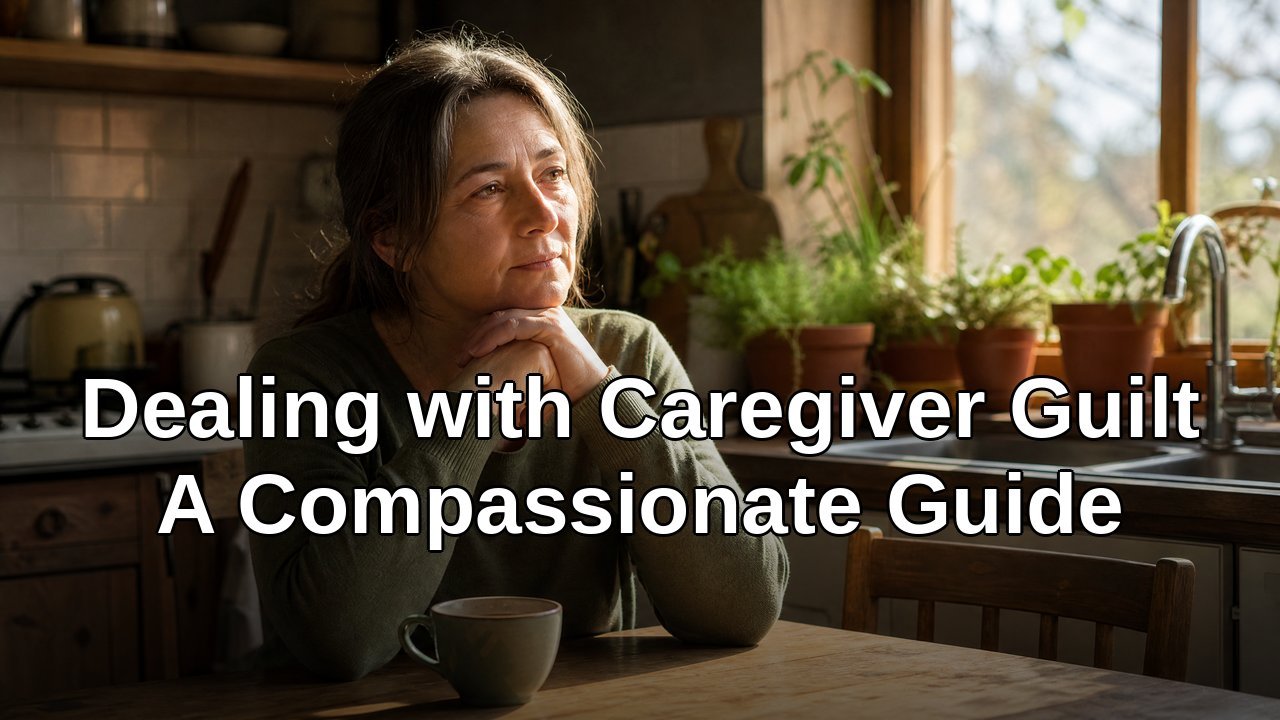
Dealing with Caregiver Guilt: A Compassionate Guide for Dementia Care Partners
“Am I doing enough? Should I have been more patient? Why do I feel resentful?” If these questions echo in your mind, you are not alone. Caregiver guilt is a heavy, silent companion for many of us supporting people living with dementia. It can feel isolating, but it is a common and understandable response to an incredibly demanding role.
We often hold ourselves to impossible standards, forgetting that we are human beings navigating a profound and difficult journey. This guilt can stem from various sources: feeling like we aren’t providing perfect care, experiencing negative emotions like anger or frustration, or simply needing a break. It’s time to shine a light on these feelings and learn how to manage them with compassion.
Understanding the Roots of Caregiver Guilt
To address caregiver guilt, we first need to understand where it comes from. It often arises from a deep sense of love and responsibility. We want to fix things, to make the person living with dementia comfortable and happy, but the reality of the disease often makes this impossible.
The Illusion of Perfection
We live in a society that often glorifies self-sacrifice, leading us to believe we must be perfect caregivers. When we inevitably fall short—perhaps we lose our temper or need time away—guilt rushes in. We must recognize that perfection is an illusion. We are doing our best in an imperfect situation. For more on managing these expectations, see Self-Care for the Global Care Partner: Moving from Martyrdom to Sustainability.
Conflicting Emotions
It’s completely normal to feel a mix of emotions, including resentment, anger, and sadness. Feeling resentful about the changes in our lives or angry at the disease does not make us bad caregivers; it makes us human. Acknowledging these feelings without judgment is a crucial step in managing guilt.
The “Should Haves”
“I should have noticed the signs earlier.” “I should be more patient.” These “should haves” are toxic. They keep us stuck in the past, focusing on perceived failures rather than the care we are providing right now. We must learn to challenge these thoughts and replace them with more realistic and compassionate ones.
Practical Strategies for Releasing Guilt
Managing caregiver guilt requires a conscious effort to shift our perspective and practice self-compassion. Here are practical strategies to help release the burden of guilt.
1. Acknowledge and Validate Your Feelings
The first step is simply acknowledging that the guilt exists. Don’t try to suppress it or pretend everything is fine. Validate your feelings: “It’s understandable that I feel guilty because I want the best for them, but I am also exhausted.” Recognizing the emotion lessens its power.
2. Challenge Unrealistic Expectations
Are you expecting yourself to be available 24/7 without ever feeling tired or frustrated? That is not a realistic expectation for anyone. Write down your expectations and evaluate them objectively. Replace them with realistic goals, such as, “I will do my best today, and I will also take time to rest.”
3. Practice Self-Compassion
Treat yourself with the same kindness and understanding you would offer a good friend in a similar situation. If a friend told you they lost their patience after a sleepless night of caregiving, would you judge them? Chances are, you’d offer words of encouragement and grace. Extend that same grace to yourself.
4. Set Realistic Boundaries
It’s not selfish to set boundaries; it’s essential for sustainable caregiving. This might mean saying no to additional responsibilities or asking for help. Boundaries protect our energy and prevent burnout. We can learn more about this in The Art of Saying No: A Strategist’s Guide for Care Partners.
5. Seek Support
Connecting with others who understand can be a lifeline. Join a support group, talk to a trusted friend or family member, or seek professional counseling. Sharing our experiences can normalize our feelings and provide new perspectives. We don’t have to carry this burden alone. Consider exploring Finding Strength in Numbers: Support Groups for Spouses of People Living with Dementia.
6. Focus on What You Can Control
There are many aspects of dementia we cannot control. Dwelling on these can fuel guilt. Instead, shift your focus to what is within your power: providing comfort, ensuring safety, and offering love. Celebrate the small victories and the moments of connection.
7. Learn from Mistakes, Then Let Go
We will make mistakes. It’s inevitable. Instead of dwelling on them, view them as learning opportunities. What can we do differently next time? Once we’ve learned the lesson, we must consciously choose to let go of the accompanying guilt. This is part of Coping with Dementia Behaviors: A Caregiver’s Guide.
8. Prioritize Respite and Self-Care
Taking time for ourselves is not a luxury; it’s a necessity. Respite care, even for a few hours, can recharge our batteries and prevent resentment from building. Remember, a refreshed caregiver is a better caregiver. Preventing Caregiver Burnout: A Compassionate Guide to Self-Care offers valuable insights.
9. Educate Yourself About Dementia
Understanding the disease can help us depersonalize challenging behaviors. When we know that certain actions are symptoms of the disease, not intentional acts, it can reduce feelings of guilt and frustration. Knowledge empowers us to respond with greater patience and empathy.
The Power of Forgiveness
Forgiving ourselves is perhaps the most challenging, yet most crucial, step in releasing caregiver guilt. We are doing an incredibly difficult job, often without adequate training or support. We are bound to stumble. Forgive yourself for not being perfect, for having human emotions, and for needing help.
Remember that the person living with dementia would likely not want us to suffer under the weight of guilt. They would want us to find peace and joy, even amidst the challenges. Our well-being is important, too.
Moving Forward
Caregiver guilt is a powerful emotion, but it doesn’t have to define our journey. By acknowledging our feelings, challenging unrealistic expectations, practicing self-compassion, and seeking support, we can gradually release its grip. We are not just caregivers; we are individuals deserving of kindness, understanding, and peace.
We encourage you to explore resources like the Alzheimer’s Association for additional support and information. Remember, you are doing important work, and your efforts are seen and appreciated. Be gentle with yourself; you deserve it.