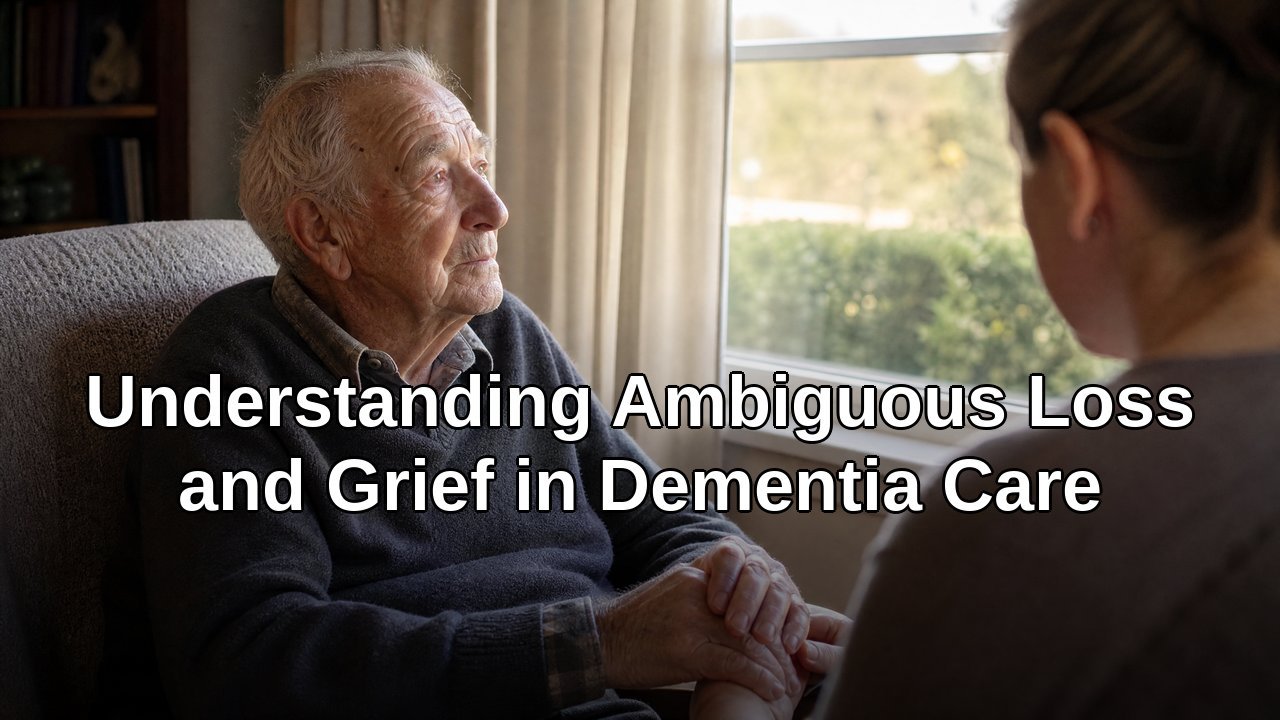
Understanding Ambiguous Loss and Grief in Dementia Care
Do you ever feel a profound sense of loss, even though your loved one with dementia is still physically here? This feeling, often confusing and isolating, is a common experience for many caregivers. It’s a unique kind of sorrow, one that doesn’t fit neatly into traditional definitions of grief. We call this ambiguous loss, and it’s a crucial concept for anyone supporting a person living with dementia.
What is Ambiguous Loss?
Ambiguous loss describes a loss that lacks clear closure or understanding. It’s a loss that remains unclear, leaving us in a state of uncertainty. In the context of dementia, it typically manifests in two primary forms:
- Physical Presence, Psychological Absence: This is perhaps the most common form in dementia. Our loved one is physically present, their body is here, but their mind, personality, and the relationship as we knew it are profoundly changed or gone. We see them, we touch them, but the person we once shared deep conversations and memories with is no longer fully accessible.
- Physical Absence, Psychological Presence: While less common in dementia, this form can occur if a person living with dementia wanders and goes missing, or if there’s uncertainty about their status. They are physically gone, but we hold onto hope, memories, and the psychological presence of who they were.
This type of loss is particularly challenging because it defies resolution. There’s no funeral, no clear ending, which can make the grieving process feel endless and confusing. It’s like living in a perpetual state of “goodbye” without ever truly saying it.
The Unique Grief of Dementia
Caring for a person living with dementia involves a series of ongoing losses. We grieve the loss of shared memories, future plans, companionship, and the very essence of who our loved one was. This grief is often disenfranchised, meaning it’s not always recognized or validated by society. Friends and family might say, “At least you still have them,” which, while well-intentioned, can invalidate the deep sorrow we feel.
| Aspect of Loss | Traditional Grief | Ambiguous Loss in Dementia |
|---|---|---|
| Clarity of Loss | Clear, definitive event (e.g., death) | Unclear, ongoing, no clear ending |
| Social Recognition | Generally recognized and supported | Often unrecognized, disenfranchised |
| Coping Mechanisms | Rituals (funerals) provide closure | Lacks rituals, hinders closure |
| Emotional State | Sadness, anger, acceptance stages | Confusion, helplessness, chronic sorrow |
| Relationship Status | Ended | Changed, but physically present |
This table highlights why ambiguous loss is so difficult. We are left without the usual signposts that guide us through grief, making it harder to process and heal.
Recognizing the Signs of Ambiguous Loss
It’s important to recognize the signs of ambiguous loss in ourselves and other caregivers. This recognition is the first step towards validating our feelings and finding healthy coping strategies. Some common signs include:
- Persistent Sadness and Depression: A lingering feeling of sorrow that doesn’t seem to lift.
- Anxiety and Helplessness: Feeling overwhelmed by the uncertainty and lack of control.
- Confusion and Guilt: Questioning our feelings, wondering if we “should” be grieving, or feeling guilty for wishing things were different.
- Emotional Numbness: A sense of detachment or an inability to feel deeply.
- Physical Symptoms: Fatigue, changes in appetite, sleep disturbances, and other stress-related physical ailments.
- Social Withdrawal: Pulling away from friends and activities because others don’t understand our unique situation.
These feelings are normal responses to an abnormal situation. They are not a sign of weakness, but rather a testament to the depth of our love and the profound impact of dementia.
Strategies for Coping and Finding Strength
While there’s no magic cure for ambiguous loss, there are powerful strategies we can adopt to find strength, validate our experiences, and continue to provide compassionate care while also caring for ourselves. It’s about learning to live with the ambiguity, rather than trying to resolve the unresolvable.
1. Validate Your Feelings
Your grief is real. The loss you feel is legitimate, even if your loved one is still with you. Allow yourself to feel the sadness, anger, frustration, and confusion without judgment. This is a crucial step in acknowledging the reality of your situation. Many caregivers find solace in understanding that what they are experiencing has a name and is a recognized phenomenon. It’s okay to mourn the person your loved one once was, even as you care for the person they are now.
2. Seek Support and Connection
Connecting with others who understand can be incredibly healing. Support groups, online forums, or even a trusted friend who “gets it” can provide a safe space to share your experiences. You are not alone in this journey. Preventing Caregiver Burnout: A Compassionate Guide to Self-Care emphasizes the importance of community.
3. Reframe Your Relationship
As the disease progresses, the nature of your relationship will change. Instead of focusing on what’s lost, try to find new ways to connect. This might involve focusing on sensory experiences, like listening to music, looking at old photos, or simply holding hands. The love remains, even if its expression transforms. We can find joy in small moments of connection. For more on adapting communication, consider Effective Communication: The Validation Method for Dementia Care.
4. Practice Self-Compassion
Caregiving is incredibly demanding, both physically and emotionally. Be kind to yourself. Recognize that you are doing your best in an incredibly difficult situation. Prioritize self-care activities, even small ones, to replenish your energy. Remember, you cannot pour from an empty cup. Our article, Self-Care for the Global Care Partner: Moving from Martyrdom to Sustainability, offers practical advice.
5. Find Meaning and Purpose
Even amidst the pain, many caregivers find profound meaning in their role. This might come from knowing you are providing comfort, love, and dignity to your loved one. Focusing on the positive impact you have can help sustain you through challenging times.
6. Educate Yourself and Others
Understanding dementia and ambiguous loss can empower you. Share what you learn with friends and family to help them better understand your experience. The more informed everyone is, the more supportive your environment can become. The Alzheimer’s Association offers extensive resources and support for families facing dementia. You can find valuable information on their website: Alzheimer’s Association.
Moving Forward
Living with ambiguous loss is a marathon, not a sprint. It requires immense resilience, self-compassion, and a willingness to embrace uncertainty. By acknowledging this unique form of grief, validating our feelings, and actively seeking support, we can find ways to cope, adapt, and continue to live meaningful lives while providing loving care. Remember, your feelings are valid, your strength is remarkable, and you are not alone on this journey. We are here to walk alongside you, offering understanding and practical guidance every step of the way.