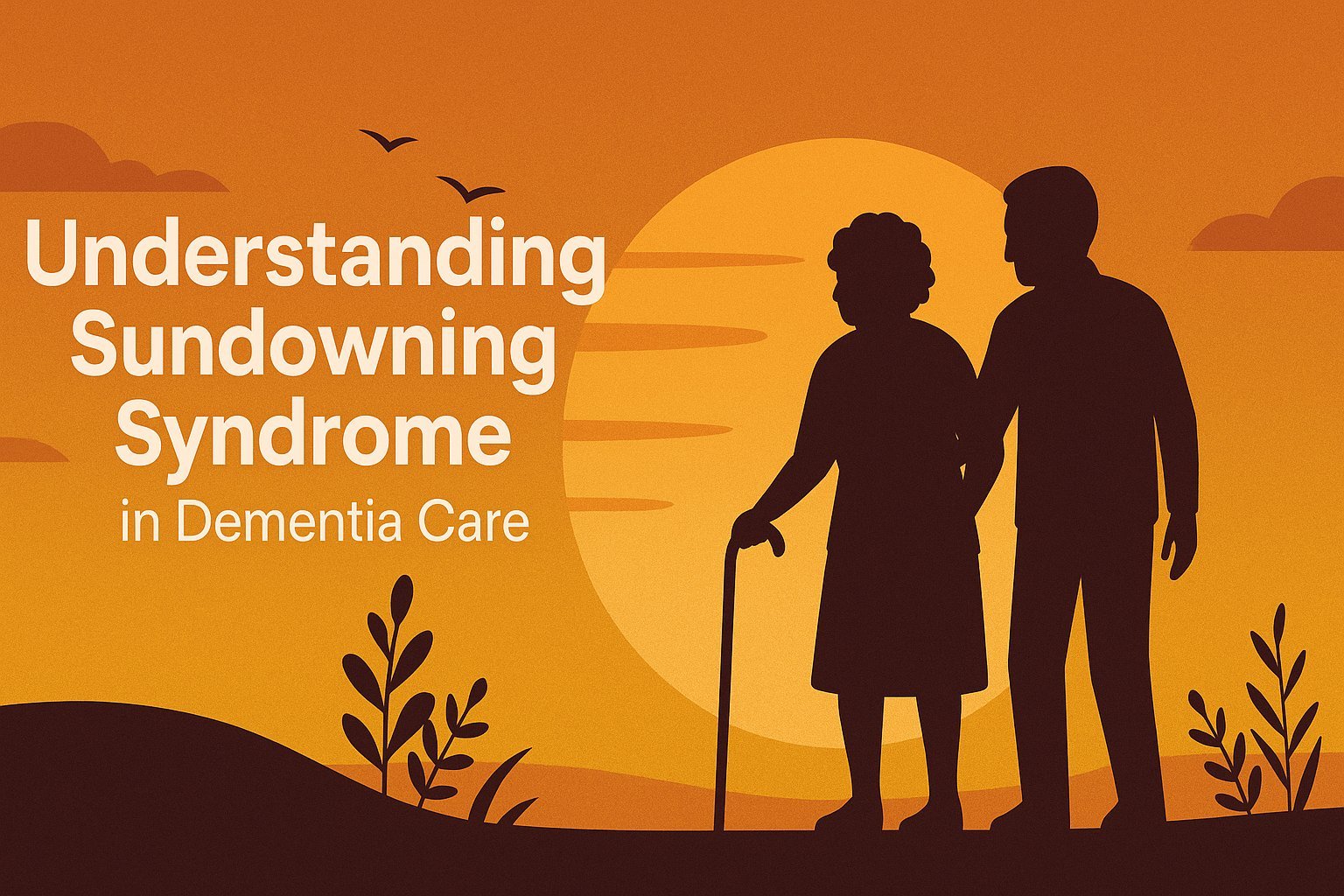
Understanding Sundowning Syndrome in Dementia Care
Sundowning is a group of symptoms that often affect people with dementia.
These symptoms usually appear in the late afternoon or early evening.
Sundowning may cause confusion, agitation, and anxiety as the day ends.
This article explains what sundowning is, what causes it, and how to manage sundowning to support people living with dementia.
What Is Sundowning?
Sundowning, also known as sundown syndrome, is a set of symptoms that occurs later in the day.
People with dementia experience sundowning more often in the middle and later stages of the disease.
Sundowning can happen at any stage of dementia but becomes more common as the condition progresses.
Signs and Symptoms of Sundowning
The symptoms of sundowning vary between individuals, but some common signs include:
| Sundowning Symptoms | Description |
|---|---|
| Confusion | Increased disorientation in the late afternoon |
| Agitation | Pacing, shouting, or restlessness |
| Anxiety | Heightened worry or fear |
| Hallucination | Seeing or hearing things that are not there |
| Delirium | Sudden change in awareness or thinking |
| Sleep disturbances | Trouble falling or staying asleep |
These symptoms tend to appear in the afternoon or evening hours, a pattern known as late-day confusion.
Who Is Affected by Sundowning?
Sundowning is a common problem for people with Alzheimer’s disease and other types of dementia.
Many people with dementia experience sundowning, especially those in the later stages.
The syndrome may also affect people with Alzheimer’s at any stage of dementia.
What Causes Sundowning?
The exact cause of sundowning is unknown, but researchers believe several factors may contribute:
- Changes in the brain from dementia
- Sleep issues and sundowning from poor sleep-wake cycles
- Less natural light during the day
- Too much activity during the day
- Fatigue or hunger in the late afternoon
- A urinary tract infection could be the cause
- Medication side effects
- Environmental changes or unfamiliar settings
These factors can trigger sundowning and make sundowning worse.
The National Institute on Aging notes that sundowning may also be linked to the body’s internal clock.
When Does Sundowning Happen?
Sundowning symptoms often start in the late afternoon and evening. However, sundowning can happen at any time of day.
Most symptoms appear during the late afternoon or early evening, when people with dementia are more tired.
Chart: Common Time of Day for Sundowning
| Time of Day | Sundowning Risk |
|---|---|
| Morning | Low |
| Early afternoon | Medium |
| Late afternoon | High |
| Evening hours | High |
| Night | Medium |
How to Manage Sundowning
To help manage sundowning, a caregiver should build a calm and steady routine. These tips for coping with sundowning may ease the symptoms:
Tips for Coping
- Keep the room well-lit in the evening
- Limit naps during the day
- Reduce noise and clutter
- Offer simple, calming activities
- Avoid caffeine and sugar later in the day
- Use blinds to block reflections or shadows
Consistent activity during the day and enough light during the day may also prevent sundowning. Exposure to sunlight during the day can help regulate the internal clock.
When to Seek Help
If sundowning becomes severe, talk to a doctor or health care provider.
A sudden change in behavior might signal delirium or a urinary tract problem.
These can agitate someone with dementia and contribute to sundowning.
When to Act
- If sundowning symptoms appear suddenly
- If the person shows signs of pain or infection
- If sleep patterns worsen quickly
- If hallucinations become frequent
Medical advice is vital if you care for someone with dementia and you notice new or worsening sundowning behaviors.
Sundowning vs Other Conditions
Sundowning is often confused with other issues such as depression, sleep disorders, or medication effects.
However, sundowning happens regularly during a specific time of the day, usually the afternoon and evening.
| Condition | Main Characteristics | Time Pattern |
|---|---|---|
| Sundowning | Confusion, agitation, restlessness | Late afternoon or early evening |
| Depression | Sadness, low energy | All day |
| Delirium | Sudden confusion, alertness changes | Rapid onset, any time |
| Sleep disorder | Trouble sleeping | Mostly night |
Summary
Sundowning is a real and common issue for people with dementia. It usually shows up in the late afternoon or early evening as confusion and agitation.
Sundowning symptoms can cause distress for the person and the caregiver.
Understanding what causes sundowning, learning the signs and symptoms of sundowning, and knowing how to manage sundowning can help ease the symptoms.
Good lighting, a stable routine, and medical support are important tools to help your loved one.
If you know if your loved one is showing signs of sundowning, act early to prevent sundowning from getting worse.