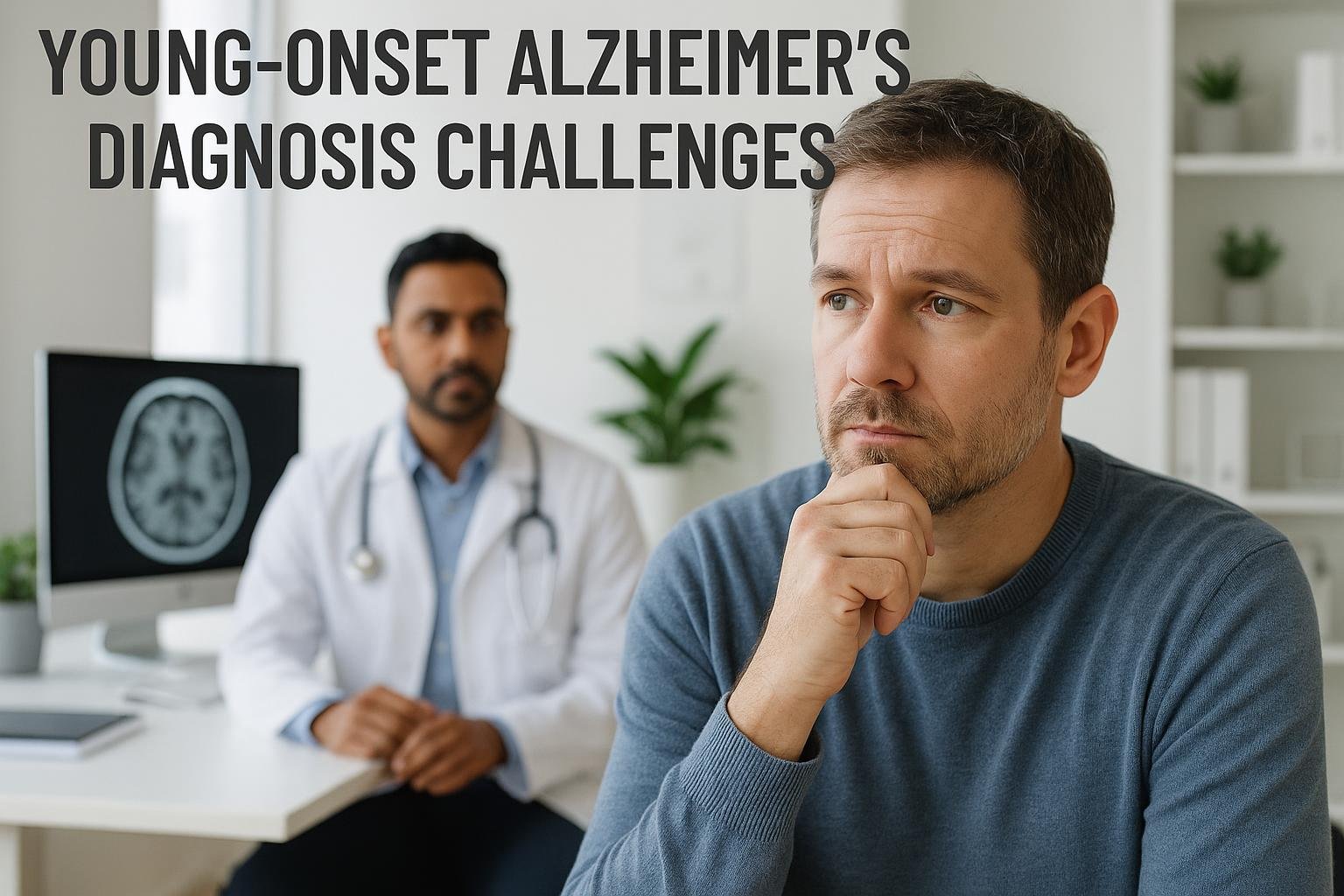
When we think of Alzheimer’s disease, we often picture an elderly person struggling with memory loss.
However, for a small percentage of individuals, the disease begins much earlier in life. This is known as young-onset Alzheimer’s, and it presents a unique set of challenges, starting with the diagnosis itself.
Diagnosing Alzheimer’s in someone under the age of 65 can be a long and difficult process. This article will explore the hurdles of diagnosing young-onset Alzheimer’s, from misdiagnosis and atypical symptoms to the profound impact it has on an individual’s career and family life.
What Is Young-Onset Alzheimer’s?
Young-onset Alzheimer’s, also known as early-onset Alzheimer’s, is defined as Alzheimer’s disease that develops in individuals younger than 65. While most people with Alzheimer’s are 65 or older, this form of the disease can affect people in their 50s, 40s, and even 30s [1].
It is relatively rare, accounting for an estimated 5-10% of all Alzheimer’s cases. However, its impact on individuals and their families is significant, as it strikes during the prime of their lives, often when they are still working and raising families.
The Diagnostic Dilemma
One of the biggest challenges of young-onset Alzheimer’s is getting an accurate and timely diagnosis. The process can be fraught with delays and misdiagnoses for several reasons.
Atypical Symptoms
While memory loss is a hallmark symptom of Alzheimer’s, it is not always the first or most prominent symptom in young-onset cases. Instead, individuals may present with other symptoms, such as:
•Behavioral and personality changes
•Language difficulties, such as trouble finding words
•Vision problems
•Difficulties with planning and problem-solving (executive dysfunction)
Because these symptoms are not the classic signs of Alzheimer’s, doctors may not initially suspect the disease in a younger person. This can lead to misdiagnosis or a delay in seeking a specialist’s opinion.
Misdiagnosis
Young-onset Alzheimer’s is often misdiagnosed as other conditions that are more common in younger adults, such as:
•Stress or burnout
•Depression or other psychiatric disorders
•Menopause
•Other neurological conditions
This misdiagnosis can be frustrating and distressing for the individual and their family, as they may go through a series of incorrect treatments before finally receiving the right diagnosis.
Lack of Awareness
There is a general lack of awareness about young-onset Alzheimer’s, both among the public and within the medical community.
Many people, including some healthcare professionals, still associate Alzheimer’s exclusively with old age. This can lead to a dismissal of symptoms in younger individuals, further delaying the diagnostic process.
| Diagnostic Challenge | Description |
| Atypical Symptoms | Initial symptoms may not be memory-related, leading to confusion. |
| Misdiagnosis | Often mistaken for stress, depression, or other more common conditions. |
| Lack of Awareness | Alzheimer’s is not expected in younger adults, causing delays. |
The Impact on Life and Family
A diagnosis of young-onset Alzheimer’s has a profound impact on every aspect of a person’s life, from their career and finances to their family relationships.
Career and Finances
Individuals diagnosed with young-onset Alzheimer’s are often at the peak of their careers. The diagnosis can mean a loss of income and financial security for the entire family. It may also lead to challenges in the workplace, as the person’s ability to perform their job declines.
It is important for individuals to understand their rights under the Americans with Disabilities Act (ADA) and to explore options such as disability benefits and the Family and Medical Leave Act (FMLA) [2].
Family Dynamics
The diagnosis can also place a significant strain on family relationships. Spouses may have to transition from being a partner to a caregiver, which can be emotionally challenging. Children, especially younger ones, may have difficulty understanding the changes in their parent’s behavior and abilities.
Open communication and seeking support from counselors or support groups can be helpful for families navigating these changes. It is also important to involve children in an age-appropriate way and to provide them with the information and support they need.
Getting the Right Diagnosis
If you or a loved one is experiencing cognitive changes at a younger age, it is crucial to seek a comprehensive evaluation from a specialist, such as a neurologist or geriatrician. The diagnostic process may include:
•A thorough medical and family history
•Cognitive and neuropsychological testing
•Blood tests and other lab work to rule out other conditions
•Brain imaging, such as an MRI or PET scan
An early and accurate diagnosis is essential for several reasons. It allows the individual and their family to access appropriate medical care, support services, and clinical trials. It also provides an opportunity to plan for the future, both legally and financially.
Moving Forward with Hope
While a diagnosis of young-onset Alzheimer’s is life-changing, it is not the end of the road. With the right support and resources, individuals and their families can find ways to live meaningful lives. Connecting with others who are going through a similar experience can be particularly helpful.
The Alzheimer’s Association and other organizations offer support groups and resources specifically for individuals with young-onset Alzheimer’s and their families [3]. These resources can provide a sense of community and hope in the face of a challenging diagnosis.
References
[1] Johns Hopkins Medicine. (n.d.). Early-Onset Alzheimer’s Disease. https://www.hopkinsmedicine.org/health/conditions-and-diseases/alzheimers-disease/earlyonset-alzheimer-disease
[2] Mayo Clinic. (2024, April 10). Young-onset Alzheimer’s: When symptoms begin before age 65. https://www.mayoclinic.org/diseases-conditions/alzheimers-disease/in-depth/alzheimers/art-20048356
[3] Alzheimer’s Association. (n.d.). Younger/Early-Onset Alzheimer’s. https://www.alz.org/alzheimers-dementia/what-is-alzheimers/younger-early-onset
[4] Cleveland Clinic. (n.d.). Early-Onset Alzheimer’s: What It Is, Causes & Symptoms. https://my.clevelandclinic.org/health/diseases/9592-early-onset-alzheimers-disease