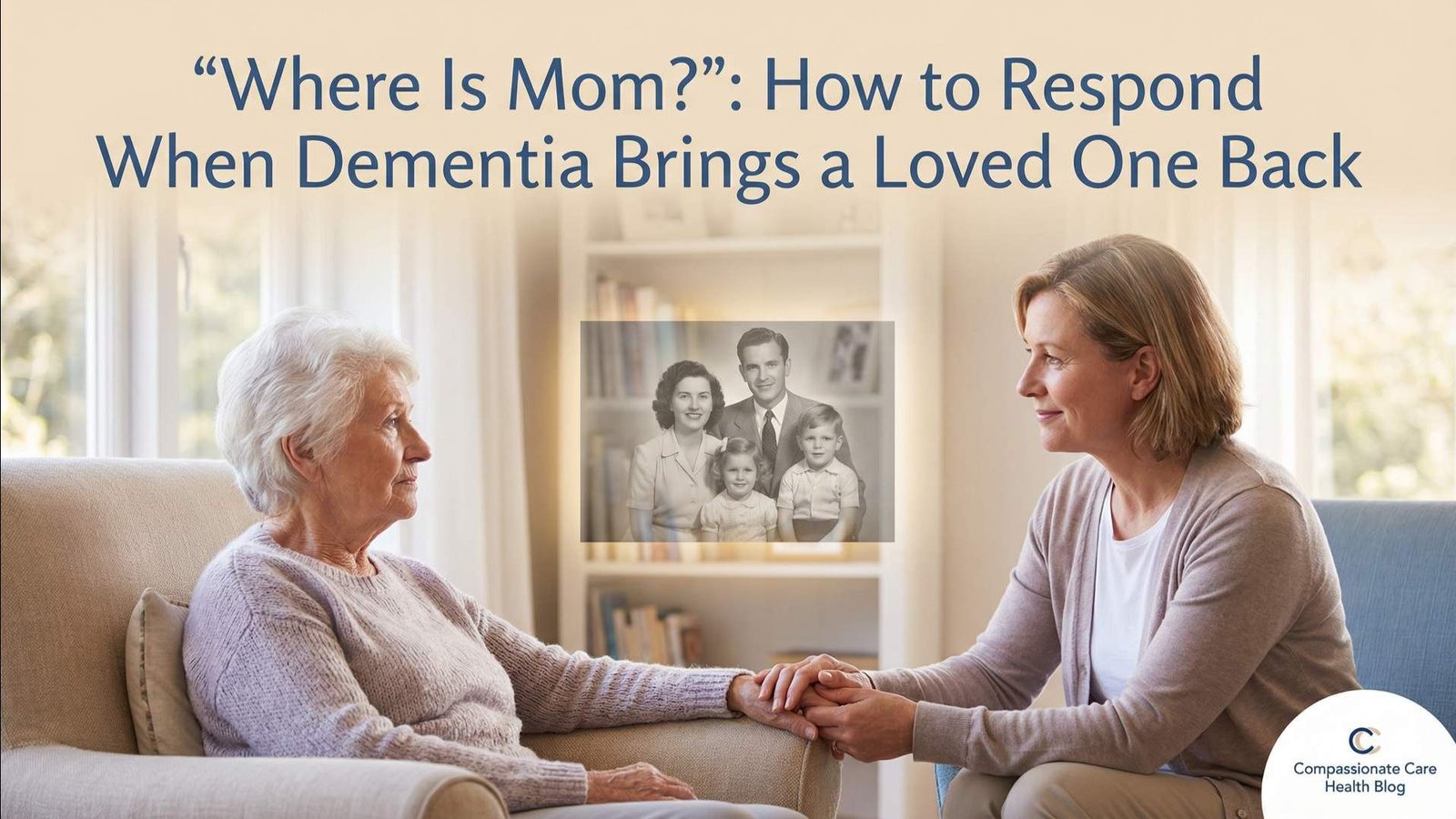
One of the most heart-wrenching moments for a dementia caregiver is when their loved one asks for a parent, spouse, or sibling who passed away years ago.
This question can feel like a fresh wave of grief, leaving you unsure how to respond without causing more pain.
Understanding why this happens is the first step toward handling these situations with compassion and confidence.
Why Do People With Dementia Ask for the Deceased?
This common experience isn’t a sign of your loved one forgetting their deceased relative on purpose. It stems from the changes happening in their brain.
Dementia often impairs a person’s sense of time and recent memory. As the disease progresses, the most preserved memories are often from childhood and young adulthood, a time when their parents or spouse were central figures in their life.
Asking for them is often a search for the comfort, security, and love they represent.
The Caregiver’s Dilemma: Truth or Comfort?
When faced with this question, caregivers often struggle between telling the truth and protecting their loved one from distress.
Reminding them that the person is gone can force them to relive the loss over and over, which can be incredibly cruel.
Experts suggest a spectrum of responses, ranging from gentle truth-telling to therapeutic fibbing.
The best approach depends on the person’s emotional state and the specific situation. The primary goal is always to reduce distress and promote well-being.
Three Compassionate Ways to Respond
There is no single right answer, but here are three effective, expert-recommended strategies. You may need to try different approaches to see what works best for your loved one.
| Response Strategy | When to Use It | Example |
| 1. Validation | When the person is calm or seeking comfort. | “You miss your mom, don’t you? Tell me about her. What was she like?” |
| 2. Redirection | When validation isn’t enough or the person is becoming anxious. | “I haven’t seen her today. You know, it’s a beautiful day. Shall we go for a walk in the garden?” |
| 3. Gentle Reality Orientation | Use sparingly, only if the person is distressed about the deceased’s safety. | “I know you’re worried about him. He is at peace now and you don’t need to worry.” |
1. Use Validation to Connect with the Emotion
Often, the person isn’t asking a factual question but expressing an emotional need. Instead of focusing on the fact that the person is gone, connect with the feeling behind the words.
Ask open-ended questions to encourage them to share memories. This validates their feelings and allows them to reminisce, which can be very comforting. You might be surprised to find that talking about the person is all they needed.
2. Gently Redirect the Conversation
If talking about the person increases their sadness or anxiety, redirection can be a powerful tool. Acknowledge their request, but then gently shift their focus to a pleasant and immediate activity.
Suggesting a favorite snack, listening to beloved music, or looking at a photo album can effectively change the subject without causing a confrontation. The key is to move from a painful topic to a comforting one.
3. Use the Truth Sparingly and with Care
Directly stating that the person is dead is often called “reality orientation.” This approach can be very painful and should be used with extreme caution. It can force the person to process the death as if it’s happening for the first time, leading to intense grief.
However, there are rare moments when it might be the least harmful option. For example, if your loved one is deeply distressed because they believe their deceased spouse is in danger, gently reminding them that the person is at peace may relieve their anxiety.
Your Well-being Matters, Too
Responding to these questions is emotionally draining. It’s important to acknowledge your own feelings of sadness and stress. Remember that you are doing your best in a difficult situation, and it’s okay if you don’t always get it “right.”
Connecting with other caregivers in support groups can provide a space to share these challenges and find comfort in knowing you are not alone.
Disclaimer: This article provides general advice for dementia care. Always consult with healthcare professionals for personalized guidance.