Have you ever noticed someone with dementia staring blankly into space, as if they’re lost in another world?
It’s a common sight, but it can leave you wondering: what is the dementia stare?
Is it confusion? Boredom? Or something deeper?
Let’s break it down together, step by step, in a way that’s easy to understand and packed with empathy for those caring for people with dementia.
What Exactly Is the Dementia Stare?
The dementia stare is when someone with dementia gazes off into the distance, seemingly unaware of their surroundings.
It’s not just a blank look—it’s a sign that their brain is processing things differently.
This stare can happen at any stage of dementia, but it’s more common as the condition progresses.
Think of it like a computer buffering.
The person’s brain is trying to make sense of the world, but the connections aren’t firing as they used to.
It’s not that they’re ignoring you—they’re just stuck in a moment.
Why Does the Dementia Stare Happen?
There’s no one-size-fits-all answer, but here are some reasons why someone with dementia may stare into space:
- Overwhelm: Too much noise, activity, or even light can make it harder for the person to focus.
- Confusion: They might be trying to process something but can’t quite grasp it.
- Fatigue: Dementia can be mentally exhausting, leading to moments of zoning out.
- Hallucinations: In some cases, they might be seeing things that aren’t there, like visual hallucinations.
- Unmet Needs: Sometimes, the stare is a sign of pain, discomfort, or even needing the toilet.
How to Respond to the Dementia Stare
If you see your loved one staring blankly, don’t panic; this is a common occurrence for people with dementia.
Here’s how you can help a relative or friend with dementia: be patient and understanding.
1. Stay Calm and Patient
- Avoid loud noises or sudden movements.
- Gently call their name or touch their hand to bring them back to the present.
2. Check for Unmet Needs
- Are they hungry, thirsty, or in pain?
- Do they need to use the bathroom? It’s important to check in with people with dementia about their needs.
3. Create a Calm Environment
- Reduce clutter and distractions.
- Play soft music or engage them in gentle activities like a hand massage.
4. Use a Memory Box
- Fill a box with familiar objects like photos, jewellery, or souvenirs.
- This can help stimulate their senses and bring them back to the moment.
The Dementia Stare Across Different Stages
Dementia isn’t a one-size-fits-all condition.
The stare can mean different things depending on the stage:
| Stage of Dementia | What the Stare Might Mean |
|---|---|
| Early Stage | Mild confusion or zoning out |
| Middle Stage | Overstimulation or fatigue |
| Later Stages | Hallucinations or drowsiness |
In the Later stages of dementia may present unique challenges for both the individual and their loved ones., the stare might be more frequent due to increased confusion or even hallucinations.
This is especially true for dementia with Lewy bodies, where visual hallucinations are common.
Common Misconceptions About the Dementia Stare
Let’s clear up some myths:
- Myth 1: They’re ignoring you on purpose.
- Truth: They’re not being rude—their brain is just struggling to process information.
- Myth 2: It’s always a sign of hallucinations.
- Truth: While hallucinations can happen, the stare might just be due to fatigue or overwhelm.
- Myth 3: There’s nothing you can do to help.
- Truth: Small changes, like reducing noise or offering a comforting touch, can make a big difference.
When to Seek Help
If the dementia stare is accompanied by other symptoms like:
- Hallucinations
- Sudden changes in behavior
- Loss of appetite
- Drowsiness
It’s time to talk to a doctor about how these changes may affect your relative or friend with dementia.
They can rule out other conditions like delirium or Parkinson’s disease and provide tailored advice.
Tips for Caregivers
Caring for someone with dementia can be challenging, but you’re not alone.
Here are some tips to make life easier:
- Stay Organized: Keep a journal to track symptoms and triggers.
- Take Breaks: Caregiving is tough—don’t forget to care for yourself too.
- Join Support Groups: Organizations like the Alzheimer’s Association offer resources and community support.
Real-Life Stories
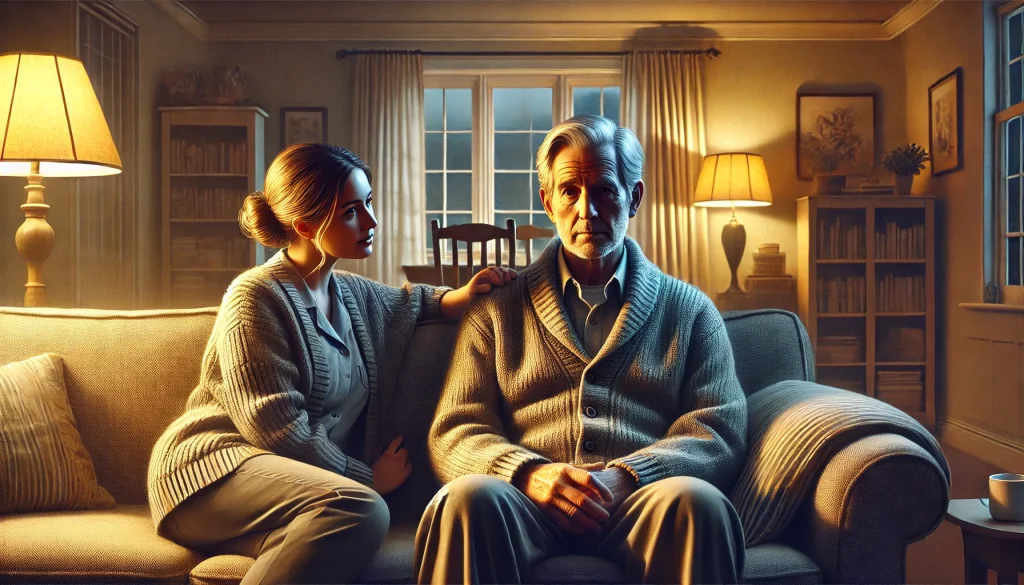
Meet Susan, a caregiver from Chicago.
She noticed her father, who has Alzheimer’s disease, often stared into space during the evening.
After some research, Susan realized it was sundowning—a common symptom where dementia symptoms worsen at night.
By adjusting her father’s routine and creating a calming environment, Susan saw a huge improvement.
Stories like Susan’s remind us that understanding the dementia stare is the first step to providing better care.
Quick Facts About Dementia
- Dementia is one of the leading causes of death in the U.S. among older adults.
- Over 6 million Americans are living with dementia.
- Diabetes and dementia are linked—managing blood sugar levels can reduce the risk.
Final Thoughts
The dementia stare isn’t just a blank look—it’s a window into the challenges someone with dementia faces every day.
By understanding what it means and how to respond, you can make a world of difference in their life.
So, the next time you see your loved one staring into space, remember: people with dementia are not lost—they’re just navigating a world that feels a little harder to understand.
And that’s the heart of what is the dementia stare.