If you’re a caregiver for someone with dementia, you’ve likely noticed increased confusion, restlessness, or anxiety as daylight fades.
You may wonder why your loved one experiences more difficulty in the late afternoon or early evening. This is called sundowning or sundown syndrome.
Sundowning is a Term You Should Know
Sundowning refers to a group of symptoms that affect people with dementia during the afternoon and evening hours.
Sundowning can happen regularly, and understanding it can help you better support your loved one.
Common Signs and Symptoms of Sundowning
Typical symptoms of sundowning include:
- Increased confusion or disorientation
- Agitation or anxiety
- Restlessness or pacing
- Irritability or mood swings
- Yelling or aggressive behavior
- Hallucination or delusions
- Sleep disturbances or insomnia
When Sundowning Occurs
Sundowning symptoms typically start during the late afternoon or early evening. This pattern is linked to natural light changes.
Many patients with dementia become confused when darkness falls.
| Time of Day | Common Behaviors |
|---|---|
| Early Afternoon | Mild confusion begins |
| Late Afternoon | Increased agitation, restlessness |
| Early Evening | Peak confusion, anxiety, possible aggression |
Who Experiences Sundowning?
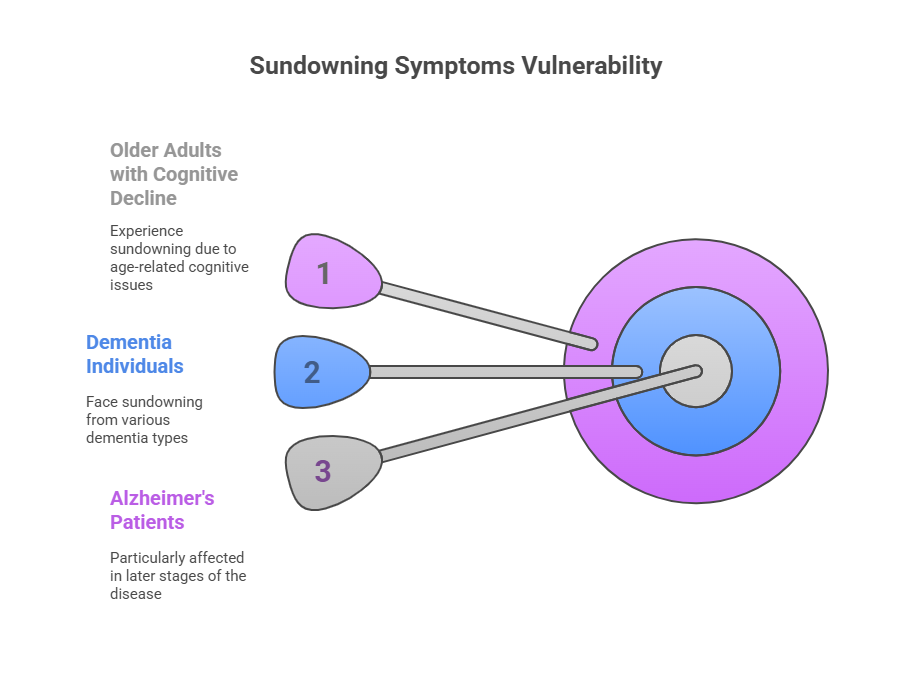
Sundowning symptoms commonly affect:
- People with Alzheimer’s disease (especially in the middle and later stages)
- Individuals with dementia such as vascular dementia or other types of dementia
- Older adults with advanced cognitive decline
What Causes Sundowning?
The exact cause of sundowning remains unclear, but several factors that may trigger or worsen symptoms include:
- Fatigue or exhaustion
- Changes in daily routine
- Reduced lighting and shadows
- Medical issues, like a urinary tract infection (UTI) or delirium
- Sleep disturbance or disruptions
- Medication side effects
Factors That May Make Sundowning Worse
- Poor daytime lighting
- Too much noise or activity
- Physical discomfort or illness
- Anxiety or depression
- Lack of daily routine
Sleep Issues and Sundowning
Many people with dementia experience sleep problems that can lead to worsening sundowning symptoms.
Poor sleep at night often leads to more daytime confusion and agitation.
How to Manage Sundowning
Caregivers can help reduce symptoms associated with sundowning by:
- Establishing a consistent daily routine
- Increasing exposure to light during the day
- Creating a calm, quiet evening environment
- Avoiding caffeine or large meals late in the day
- Encouraging light exercise in the morning or early afternoon
Treatment of Sundowning
Consulting a dementia specialist is crucial. Treatment options may include:
- Adjusting medications
- Melatonin treatment to improve sleep
- Treatment of depression if mood is an issue
- Addressing physical health problems like infections promptly
When to Seek Help
Seek professional help if your loved one:
- Shows increased aggression or violence
- Exhibits sudden, significant confusion (possible sign of delirium or illness)
- Experiences severe sleep disturbance
Caring for Yourself as a Caregiver
Taking care of someone with Alzheimer’s or other forms of dementia is challenging. Remember to care for your health by:
- Taking regular breaks
- Joining caregiver support groups
- Seeking help from family, friends, or professional caregivers
Summary
Understanding the phenomenon of sundowning helps caregivers better support loved ones with dementia.
Recognizing the signs, triggers, and treatments can significantly improve your loved one’s quality of life and ease your caregiving journey.