

What Are the Symptoms of Frontotemporal Dementia?
Common Signs and Symptoms of FTD
Ever wondered why someone in your life, who was once the life of the party, suddenly begins to act like a different person altogether?
Frontotemporal dementia (FTD) might be the culprit.
While most of us are familiar with Alzheimer’s disease, FTD often flies under the radar despite being a common form of dementia.
FTD primarily affects the frontal and temporal lobes of the brain, the areas responsible for personality, behavior, and language. People with FTD often exhibit dramatic changes in these functions.
What are the red flags? Symptoms can include:
- Sudden behavioral changes like apathy or impulsivity.
- Difficulty with language (Primary Progressive Aphasia).
- A growing inability to communicate effectively.
- Lack of empathy, often misinterpreted as indifference.
While these symptoms can vary, one thing is certain: FTD is progressive, meaning symptoms get worse over time.
Behavioral Symptoms in People with Frontotemporal Dementia
One of the most common signs is what we call behavioral variant frontotemporal dementia (bvFTD). People with this variant might start behaving in ways completely out of character. Imagine your most responsible friend suddenly making rash decisions, or a once-sociable neighbor withdrawing entirely. That’s the impact bvFTD can have.
Some of the most telling signs include:
- Socially inappropriate behaviors, such as making rude comments.
- Obsessive routines, like repeating the same phrase over and over.
- Lack of self-awareness about their changing behaviors.
Over time, these behaviors cause problems not only for the person but also for loved ones trying to understand what’s happening.
Language and Communication Issues: Primary Progressive Aphasia
Another form of FTD is Primary Progressive Aphasia (PPA), where language skills slowly deteriorate. Picture trying to have a conversation but feeling like the words are trapped in your brain, just out of reach. This can be frustrating for everyone involved. People with PPA may:
- Struggle to find the right words.
- Speak in fragmented sentences.
- Lose the ability to comprehend or form coherent thoughts.
It’s not that they don’t want to speak – they simply can’t. This kind of frustration is common in someone with frontotemporal disorder.
What Causes Frontotemporal Dementia?
Understanding the Causes of Frontotemporal Disorder
You might be wondering, “What causes this disorder, and why?” Unfortunately, the exact cause of FTD remains a bit of a mystery. However, we do know it’s due to the degeneration of the frontal and temporal lobes – the parts of the brain that regulate behavior, emotions, and language.
Unlike Alzheimer’s, which primarily affects memory, FTD targets these cognitive functions first. It’s as if certain brain cells are shutting down, one by one, in these areas.
Genetic Factors and Family History of FTD
In some cases, genetic factors can be a contributor. Studies have shown that familial types of frontotemporal disorders exist, meaning if a family member has had FTD, there’s an increased likelihood that other family members may develop it too. Rare familial types of FTD occur because of mutations in certain genes, such as the MAPT and GRN genes.
This family history of FTD often means that siblings, children, and even cousins could be at risk of developing this type of dementia.
How Frontotemporal Degeneration Affects the Brain
So, how exactly does this degeneration work? Over time, nerve cells in the frontal and temporal lobes die off, leading to shrinkage in these parts of the brain. Think of it like a slowly deflating balloon; as it shrinks, its ability to function properly diminishes. The result is frontotemporal degeneration, where the person’s behavior, decision-making, and communication skills gradually decline.
Here’s a table showing the key differences between Alzheimer’s and FTD:
| Factor | Alzheimer’s Disease | Frontotemporal Dementia |
|---|---|---|
| Primary Symptoms | Memory loss | Behavioral & language changes |
| Affected Brain Area | Entire brain | Frontal and temporal lobes |
| Typical Onset Age | 65+ years | 45-65 years |
| Progression | Gradual memory decline | Changes in personality and speech first |
| Genetic Link | Sometimes | More likely in familial cases |
How is Frontotemporal Dementia Diagnosed?
Diagnosis Process for FTD
Diagnosing FTD can feel like piecing together a jigsaw puzzle, especially since symptoms of FTD can often mimic other forms of dementia. It’s not uncommon for FTD to be mistaken for psychiatric disorders due to the personality and behavioral changes.
When diagnosing FTD, doctors typically rely on:
- Clinical evaluations: Behavioral assessments and cognitive tests.
- Brain imaging, like MRIs or CT scans, to see which areas are shrinking.
- Family history, especially in familial types of frontotemporal disorders.
Tests and Evaluations for Frontotemporal Dementia
Testing for FTD often involves:
- Neuropsychological tests to evaluate behavior and thinking.
- Imaging tests like MRIs to check for brain atrophy.
- Blood tests to rule out other potential causes, like infections or vitamin deficiencies.
Distinguishing FTD from Other Types of Dementia
FTD can be tricky to diagnose because its symptoms are similar to other dementias. However, the behavioral and language aspects help distinguish it from Alzheimer’s, where memory is the primary issue. In FTD cases, behavioral changes tend to appear first, making it unique among other types of dementia.
What Types of Frontotemporal Dementia Exist?
Behavioral Variant Frontotemporal Dementia vs. Language Variant
There are two primary types of FTD:
- Behavioral variant (bvFTD), where behavioral symptoms dominate.
- Language variant (Primary Progressive Aphasia), where the person gradually loses their ability to communicate.
People with the behavioral variant often display impulsiveness, poor judgment, and a general lack of inhibition. Those with the language variant experience a gradual decline in their speaking abilities.
Movement Disorders Associated with FTD
Some people with FTD develop movement symptoms. These can be similar to those seen in Parkinson’s disease, such as tremors, stiff muscles, or difficulty walking. Some forms of FTD include frontotemporal dementia with parkinsonism, where both cognitive and motor symptoms are present.
In rare cases, FTD can overlap with amyotrophic lateral sclerosis (ALS), leading to both cognitive decline and motor neuron issues.
Types and Symptoms of Frontotemporal Lobar Degeneration
In addition to the behavioral and language variants, there’s Frontotemporal Lobar Degeneration (FTLD), an umbrella term that refers to the degeneration of the frontal and temporal lobes. FTLD is what causes FTD, and it can take different forms, each with its own set of symptoms.
How to Manage Symptoms of Frontotemporal Dementia?
Strategies for Living with Frontotemporal Dementia
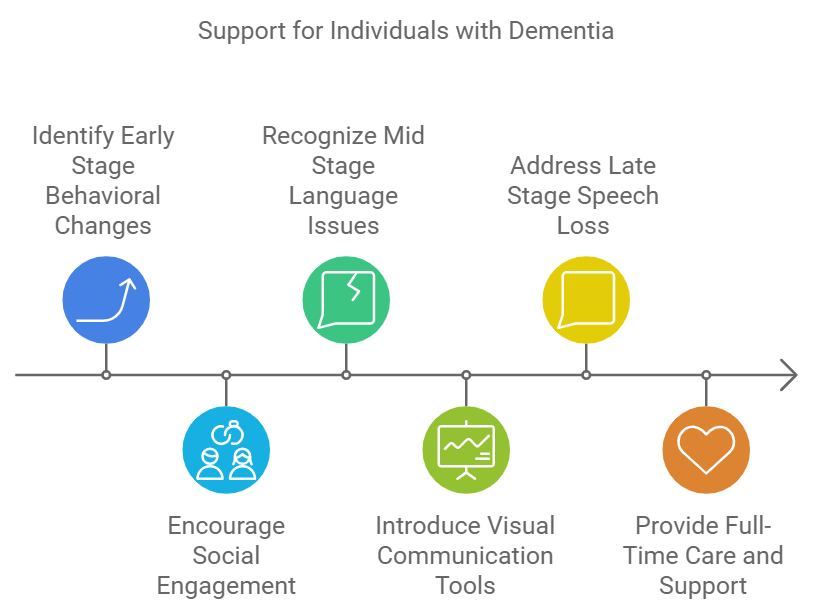
Living with FTD is no picnic, but there are ways to manage the symptoms. While there’s no cure, we can focus on treating certain behavioral symptoms and providing a structured environment. Some tips for caregivers include:
- Setting a routine to reduce confusion.
- Using visual aids to help with communication.
- Encouraging physical activity to promote general well-being.
Support and Resources for People with FTD
Dealing with FTD can feel like navigating through a fog, but there are plenty of resources out there. Organizations like the National Institute on Aging and FTD support groups provide crucial information and emotional support for families and caregivers. It’s also worth exploring local dementia care centers for specialized help.
Understanding How Symptoms of FTD Get Worse Over Time
Unfortunately, FTD symptoms get worse over time. As the frontal and temporal lobes of the brain continue to deteriorate, the symptoms of frontotemporal dementia progress from mild behavioral changes to severe communication and movement issues.
Is There a Cure for Frontotemporal Dementia?
Current Research on Frontotemporal Dementia Treatments
At the moment, there is no cure for FTD, but researchers are working tirelessly. Studies funded by institutions like the National Institute on Aging are exploring ways to slow or stop the progression of this disease.
Managing Symptoms: What Works?
While a cure remains elusive, certain therapies can help. Medications that treat symptoms like depression or agitation might offer some relief. Speech therapy is also helpful for those with Primary Progressive Aphasia.
The Future of FTD: Hope and Innovations
Looking ahead, the future isn’t all bleak. Advances in genetic research offer hope for targeted therapies. As we learn more about the causes of FTD, we inch closer to treatments that could one day halt the progression of this devastating disease. After all, we never know what the next scientific breakthrough will bring!
In the meantime, understanding, compassion, and effective management strategies can make all the difference in caring for someone with FTD.