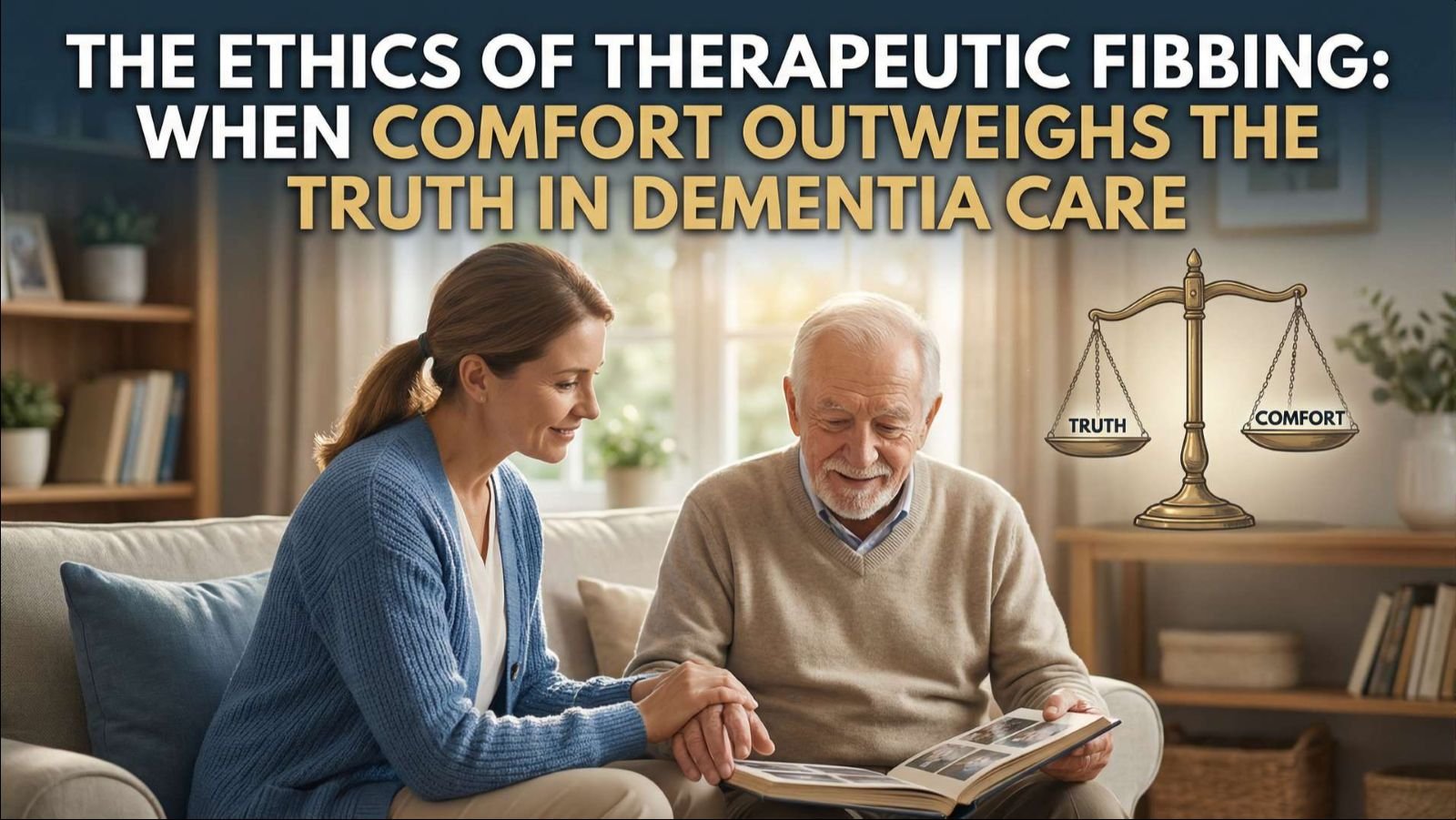
For anyone raised on the principle that “honesty is the best policy,” caregiving for a loved one with dementia presents a painful moral paradox.
During my six+ years as a caregiver for three family members, I faced this dilemma constantly: Do I tell the truth and cause immediate emotional trauma, or do I “fib” to preserve their peace of mind?
In the professional caregiving world, this is known as Therapeutic Fibbing. While it may feel like a betrayal of trust, it is often the most ethical and compassionate path available to us.
The Moral Struggle: Lying vs. Kind Intent
Therapeutic fibbing is the practice of validating a person’s reality, even when that reality is factually incorrect. It is not done for the caregiver’s convenience, but rather to prevent the “Ward” or loved one from experiencing unnecessary fear, grief, or agitation.
In ethics, we often look at the Principle of Non-Maleficence, the duty to do no harm. When a loved one with Alzheimer’s asks for their deceased parent, providing the “honest” answer forces them to experience the death as if it just happened. In this context, the truth becomes a form of harm.
Why the “Truth” Can Be Cruel
Dementia often impairs the brain’s ability to process new information or logic. When we insist on “Reality Orientation”, constantly correcting our loved ones, we aren’t helping them remember; we are creating a cycle of confusion and distress.
- The Emotional Memory: While the factual memory of a death might be gone, the emotional capacity for grief remains fully intact.
- The Loss of Trust: Constant correction can lead a loved one to feel attacked or belittled, which erodes the essential bond between caregiver and patient.
Establishing the Ethical Boundary
How do you know if a fib is truly “therapeutic”? The ethical boundary is defined by intent and necessity:
- Is it for their benefit? Does the fib reduce their anxiety, or is it just making your day easier?.
- Is it a last resort? We should always try redirection or validation first (e.g., “Tell me about your father”) before resorting to a direct falsehood.
- Does it preserve dignity? If the fib helps a loved one feel safe and respected, it is generally considered ethically sound in modern memory care.
A Caregiver’s Perspective: Protecting the Peace
During my journey with my uncle, stepfather, and grandmother, I eventually realized that my “duty” wasn’t to be a fact-checker; it was to be a protector. Protecting their emotional peace was far more important than being factually correct.
Choosing to step into their reality isn’t a lie; it’s a form of Validation Therapy, meeting them where they are because they can no longer meet us where we are.
Disclaimer: This article discusses the ethical aspects of dementia care and is for educational purposes only. It does not constitute legal or medical advice.
References
- [1] Alzheimer’s Society. (2024). Is it okay to lie to someone with dementia?
- [2] Verywell Health. (2025). Using Validation Therapy for People With Dementia.
- [3] Ethics in Caregiving: The Moral Dilemma of the “White Lie.” (2025).