Understanding the progression of dementia is crucial for caregivers, families, and individuals living with the condition.
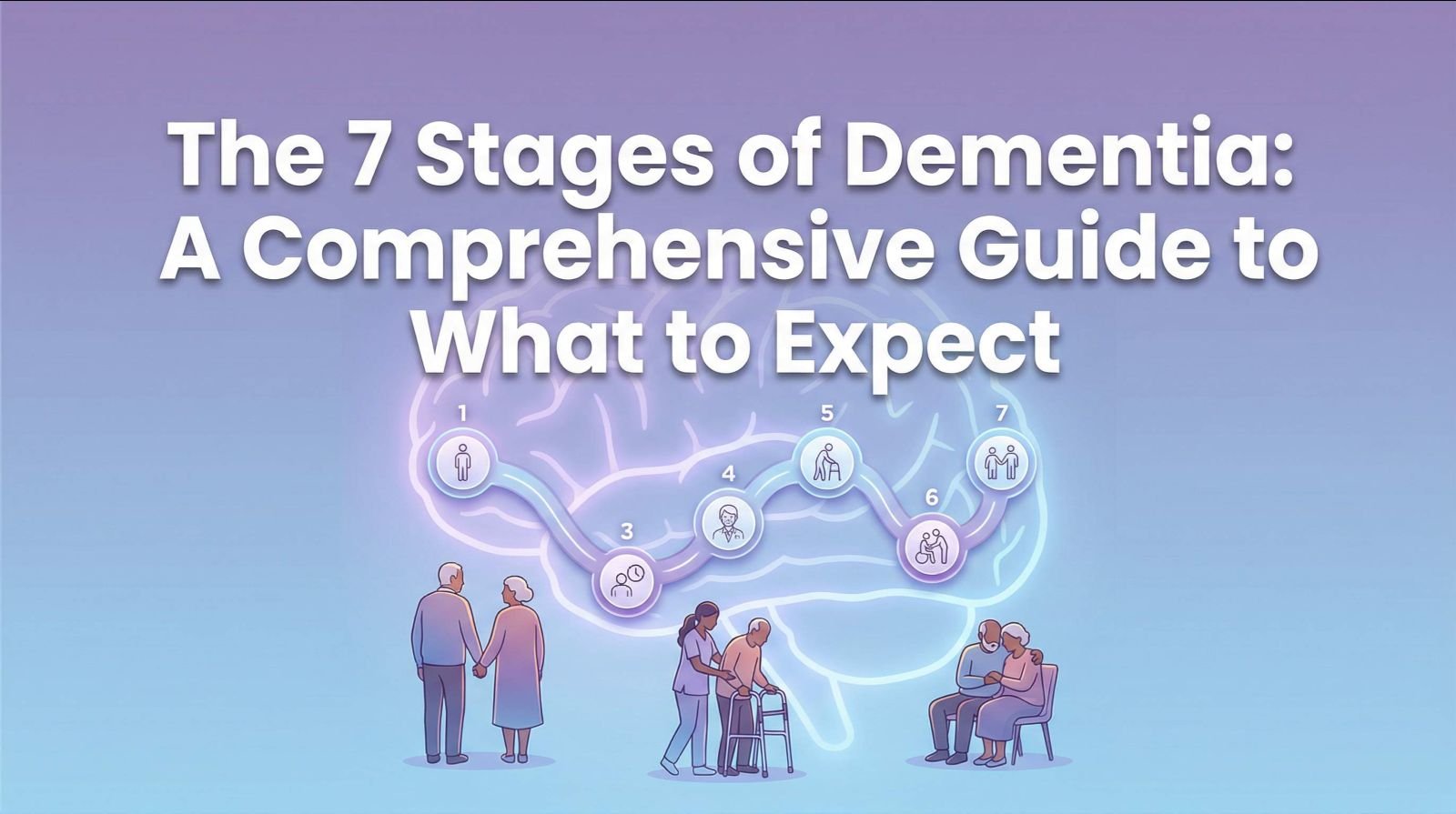
The 7 Stages of Alzheimer’s, also known as the Global Deterioration Scale (GDS), provides a framework for understanding the cognitive and functional changes that occur over time. Developed by Dr. Barry Reisberg, this scale is used by professionals worldwide to identify which stage of the disease a person is in.
The GDS is divided into two main phases: the pre-dementia stages (1-3) and the dementia stages (4-7). Stage 5 marks the point where a person can no longer live independently without assistance. This guide breaks down each stage to help you know what to expect.
The Pre-Dementia Stages
Stage 1: No Cognitive Decline
In this stage, there are no noticeable symptoms of cognitive or functional decline. The individual is mentally healthy and shows no signs of dementia. This is considered the “normal” stage for any age.
Stage 2: Age-Associated Memory Impairment
Many people over 65 experience subjective cognitive decline, such as forgetting names or where they placed things. These symptoms are not noticeable to others and are often considered normal age-related forgetfulness. However, individuals in this stage may decline at a higher rate than their peers. This stage can last for about 15 years in otherwise healthy individuals.
Stage 3: Mild Cognitive Impairment (MCI)
At this stage, cognitive deficits become more noticeable to close family and friends. Symptoms can include repeating questions, difficulty with complex tasks like planning events, and a decline in job performance.
Concentration may also be affected, and anxiety can become more apparent. The average duration of this stage is about seven years.
| Stage | Key Characteristics | Duration |
| 1 | No cognitive decline | N/A |
| 2 | Subjective memory complaints | ~15 years |
| 3 | Mild cognitive impairment (MCI) | ~7 years |
The Dementia Stages
Stage 4: Mild Dementia
A diagnosis of Alzheimer’s disease can be made with considerable accuracy at this stage. Individuals have difficulty with complex tasks like managing finances, ordering from a menu, or preparing meals.
Memory loss becomes more evident, and they may forget recent events. However, they can still recall their address and major current events. This stage typically lasts about two years.
Stage 5: Moderate Dementia
In this stage, individuals can no longer survive independently. They need help with basic daily activities, such as choosing appropriate clothing. They may wear the same outfit repeatedly if not reminded to change.
Memory gaps are significant, and they may not recall their address or the current head of state. Behavioral problems like anger and suspiciousness can emerge if they don’t have adequate support. This stage lasts about 1.5 years.
Stage 6: Moderately Severe Dementia
This stage is characterized by a severe decline in the ability to perform basic activities of daily life. It is broken down into five sub-stages (6a-6e) that include a progressive loss of ability to dress, bathe, and manage toileting independently.
Incontinence becomes an issue, with urinary incontinence typically preceding fecal incontinence. Communication becomes difficult, and individuals may confuse family members or forget their names. This stage lasts about 2.5 years.
Stage 7: Severe Dementia
This is the final stage of the disease. The person loses the ability to speak, walk, and perform most basic activities. They require assistance with all aspects of daily care, including eating and toileting. The body begins to shut down, and this stage eventually leads to death.
| Stage | Key Characteristics | Duration |
| 4 | Mild dementia, difficulty with complex tasks | ~2 years |
| 5 | Moderate dementia, needs assistance with daily living | ~1.5 years |
| 6 | Moderately severe dementia, loss of basic abilities | ~2.5 years |
| 7 | Severe dementia, loss of speech and motor skills | Varies |
Planning for the Journey
Understanding these stages can help families and caregivers anticipate future needs and plan accordingly. It’s important to remember that the duration of each stage can vary, and not everyone will experience the same symptoms in the same order.
Early diagnosis and planning can make a significant difference in the quality of life for both the person with dementia and their caregivers.
Disclaimer: This article is for informational purposes only and does not constitute medical advice. Please consult with a qualified healthcare professional for any health concerns or before making any decisions related to your health or treatment.