
Dementia. It’s a word that carries weight, often wrapped in fear and uncertainty. But understanding its symptoms and stages can help lift that fog.
Think of it like mapping out a road trip—while the destination might not be one we’d choose, knowing the route helps us navigate with more confidence and care.
So, let’s explore how dementia affects people, from its early signs to its later stages, with empathy, insight, and a touch of humor where it fits.
What Is Dementia?
At its core, dementia is a general term for a collection of symptoms affecting memory, thinking, and behavior.
It’s not a single disease but a broad umbrella covering several conditions. Think of dementia-like symptoms as a group of puzzles—each piece representing a different type of dementia with its unique traits.
While Alzheimer’s disease is the most well-known common cause of dementia, there are several types of dementia like vascular dementia, frontotemporal dementia, and Lewy body dementia.
Understanding the nuances of each helps families provide better care for their loved ones.
The Early Symptoms of Dementia: Subtle but Telling
The early symptoms of dementia often start quietly, like the soft hum of a refrigerator you barely notice.
These might include memory loss, difficulty finding words, or forgetting appointments.
While we all misplace keys, early dementia symptoms affect daily life in more significant ways.
10 warning signs of dementia often include:
- Persistent memory issues, such as forgetting recent events.
- Difficulty solving problems or managing finances.
- Confusion about time or place.
- Struggling with words in conversation.
- Misplacing items and being unable to retrace steps.
- Poor judgment in social or financial situations.
- Withdrawal from hobbies or social activities.
- Mood swings or personality changes.
- Repetition in speech or actions.
- Trouble interpreting visual or spatial relationships.
Spotting these early signs can pave the way for an early diagnosis, which allows families to plan and explore early treatment options.
How Dementia Progresses: The Three Stages
Experts often talk about the three stages of dementia: early, middle, and late. But like life itself, these stages may overlap, and everyone experiences them differently.
1. Early Stage

The early stage is often the trickiest to notice. Mild memory loss and confusion can be dismissed as “senior moments.” Symptoms may include difficulty organizing tasks or remembering names. People might still live independently, but subtle changes signal the beginning of cognitive decline.
2. Middle Stage
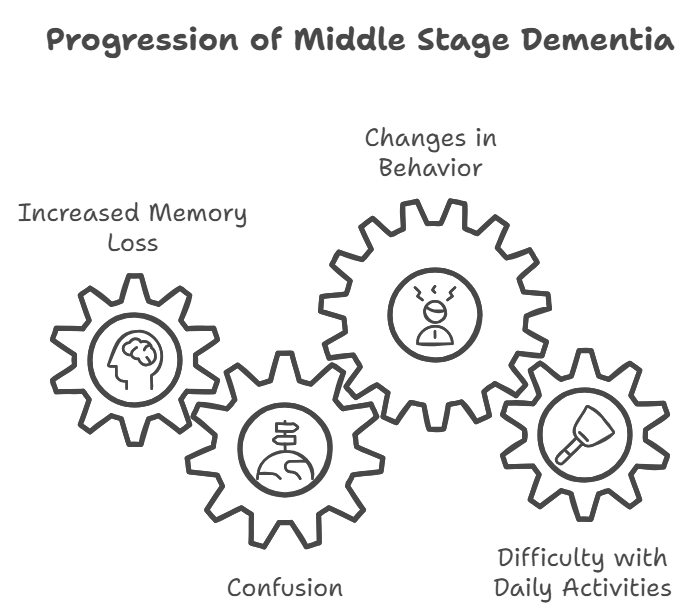
In the middle stage of Alzheimer’s or other dementias, symptoms become more noticeable. This is when dementia gets harder to ignore. Mood changes, confusion, and a need for assistance with daily activities mark this phase. For families, patience becomes the name of the game as behaviors may shift unexpectedly.
3. Late Stage
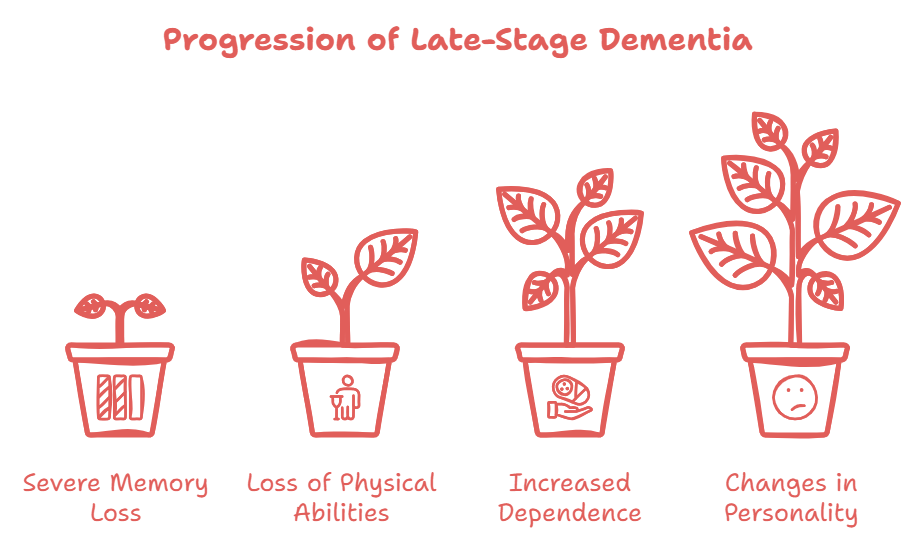
The late stage of dementia brings significant challenges. Communication becomes limited, physical abilities decline, and round-the-clock care may be necessary. Here, love and connection shine in nonverbal ways—a gentle touch, a favorite song, or the comfort of presence.
The Symptoms of Each Type of Dementia
Different dementias come with distinct hallmarks. Knowing these can make it easier to identify what’s going on.
- Alzheimer’s and dementia: The most common type, with progressive memory loss and disorientation.
- Vascular dementia: Caused by impaired blood flow to the brain, leading to symptoms like poor judgment and concentration issues.
- Lewy body dementia: Marked by hallucinations, sleep issues, and motor problems due to protein deposits called Lewy bodies.
- Frontotemporal dementia: Affects the part of the brain that governs personality and language, causing noticeable behavioral shifts.
- Mixed dementia: A combination of two or more types, like Alzheimer’s and vascular dementia, creating a blend of symptoms.
Dementia Symptoms Vary: A Personal Journey
The truth is, dementia can affect people differently. Every person with dementia is unique, and the way symptoms affect daily life depends on the part of the brain impacted.
Some might struggle with memory, while others experience mood swings or motor difficulties.
Let’s not forget humor. Like the time a grandparent thought the remote was a phone and “called” the cat.
It’s these moments, though challenging, that remind us to embrace life’s quirks.
Dementia and Alzheimer’s Disease: Clearing the Confusion
While Alzheimer’s disease is a common type of dementia, not all dementias are Alzheimer’s.
Think of it like apples and fruit—one is a specific type, while the other is a broader category.
Dementia and Alzheimer’s disease are often mentioned together, but understanding their differences can help when discussing symptoms or treatment.
How Dementia Symptoms Affect Daily Life
As dementia progresses, tasks we take for granted—like dressing or cooking—can become monumental challenges.
This is where empathy and creativity step in. Families learn to adjust, whether it’s labeling drawers or embracing a routine that brings comfort.
Stages of Alzheimer’s: A Closer Look
The stages of Alzheimer’s mirror those of general dementia, moving from mild forgetfulness to profound cognitive impairment.
The middle stage of Alzheimer’s often requires the most hands-on care, while the later stages demand around-the-clock support.
Diagnosis of Dementia: When to Seek Help
Recognizing the warning signs of dementia and seeking an early diagnosis of dementia can make a world of difference.
Doctors typically use cognitive tests, brain scans, and health histories to diagnose dementia and pinpoint its type.
Early intervention means access to treatments that can slow progression and improve quality of life.
Supporting People Living with Dementia
Caring for people with dementia is about balance—balancing patience, understanding, and sometimes humor.
Whether it’s creating a memory box filled with keepsakes or learning to appreciate small victories, the journey is one of resilience.
Hope and Research: The Way Forward
While a way to prevent dementia outright hasn’t been found, research is uncovering new treatments and therapies that bring hope.
Organizations like the Alzheimer’s Association play a crucial role in advancing understanding and supporting families.
Final Thoughts on Symptoms and Stages of Dementia
Understanding the symptoms and stages of dementia allows us to approach this journey with compassion.
From recognizing the early symptoms to supporting loved ones through the later stages, knowledge empowers us to provide care, patience, and love. And that, as they say, makes all the difference.