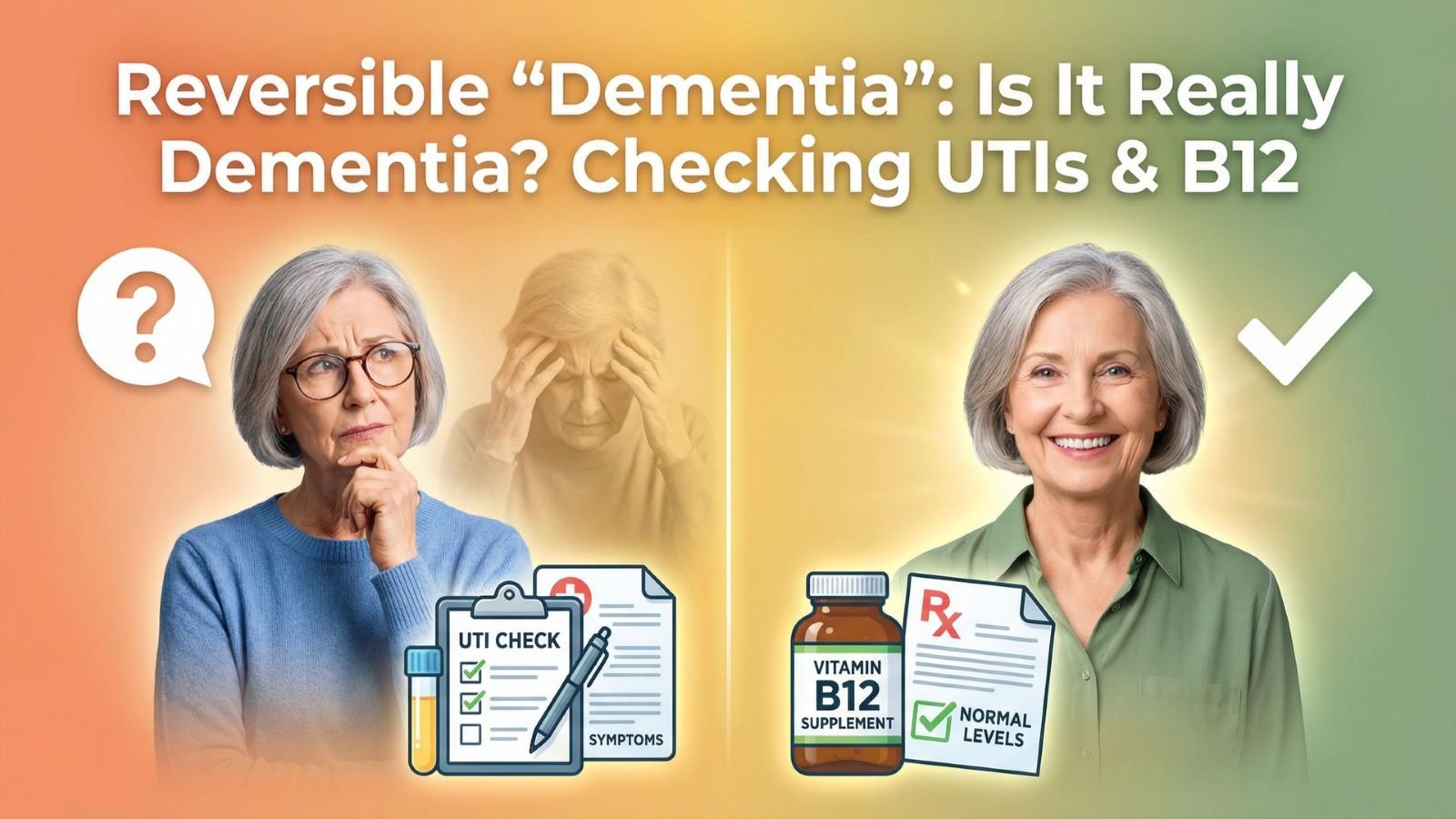
When a loved one suddenly shows signs of confusion, memory loss, or behavioral changes, it’s natural to fear the worst. But what if it isn’t dementia?
While true dementia, like Alzheimer’s disease, is a progressive and irreversible condition, there are numerous medical issues that can mimic its symptoms.
These conditions are often treatable, and the dementia-like symptoms can be reversed once the underlying cause is addressed.
Two of the most common culprits behind reversible dementia symptoms are urinary tract infections (UTIs) and vitamin B12 deficiency.
The Surprising Link Between UTIs and Confusion
A urinary tract infection might seem like a simple issue, but in older adults and people with dementia, it can trigger a sudden and severe state of confusion known as delirium. This isn’t the typical dementia progression; it’s an acute change in mental state.
While a younger person with a UTI might experience pain and urgency, an older adult may not show these classic signs. Instead, the first and sometimes only symptom is a significant behavioral change.
Symptoms of UTI-induced delirium can include:
•Sudden and severe confusion or disorientation
•Increased agitation or anxiety
•Hallucinations or paranoia
•Withdrawal and unresponsiveness
“If a person with a memory impairment or dementia has a UTI, this can cause sudden and severe confusion known as ‘delirium’.” – Alzheimer’s Society
Because the person may not be able to communicate their discomfort, it’s crucial for caregivers to recognize these behavioral shifts as a potential sign of infection.
A simple urine test can diagnose a UTI, and a course of antibiotics can often resolve the infection and reverse the cognitive symptoms.
Vitamin B12 Deficiency: The Brain’s Energy Crisis
Vitamin B12 is essential for healthy nerve function and the creation of red blood cells that carry oxygen to the brain. As we age, our ability to absorb B12 from food can decline, putting older adults at a higher risk for deficiency.
A lack of B12 can lead to a range of neurological problems that look strikingly similar to dementia, including:
•Memory loss and confusion
•Difficulty with reasoning and decision-making
•Irritability and personality changes
•Balance problems and numbness or tingling
Studies have shown that treating a B12 deficiency with supplements can lead to a dramatic improvement in these cognitive symptoms.
A simple blood test can determine if B12 levels are low. For this reason, checking for B12 deficiency is a standard part of the diagnostic process when evaluating someone for dementia.
Other Treatable Conditions that Mimic Dementia
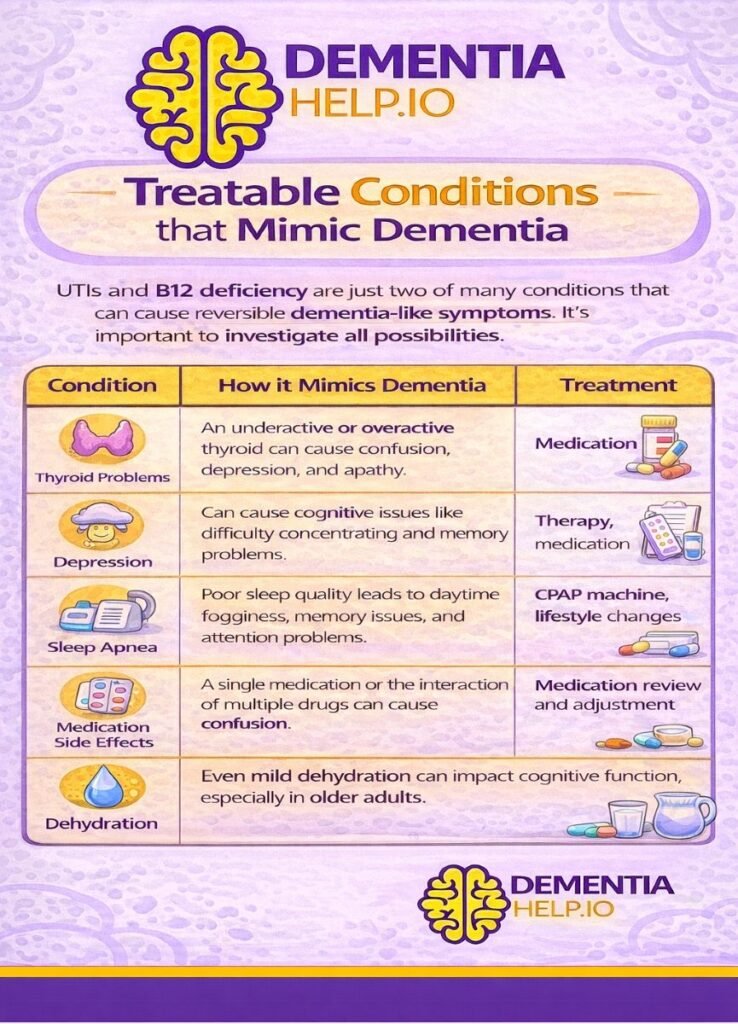
UTIs and B12 deficiency are just two of many conditions that can cause reversible dementia-like symptoms. It’s important to investigate all possibilities.
| Condition | How it Mimics Dementia | Treatment |
| Thyroid Problems | An underactive or overactive thyroid can cause confusion, depression, and apathy. | Medication |
| Depression | Can cause cognitive issues like difficulty concentrating and memory problems. | Therapy, medication |
| Sleep Apnea | Poor sleep quality leads to daytime fogginess, memory issues, and attention problems. | CPAP machine, lifestyle changes |
| Medication Side Effects | A single medication or the interaction of multiple drugs can cause confusion. | Medication review and adjustment |
| Dehydration | Even mild dehydration can impact cognitive function, especially in older adults. | Rehydration |
When to See a Doctor
If you notice a sudden change in memory, thinking, or behavior in yourself or a loved one, it’s essential to see a doctor immediately.
While it’s important to rule out serious conditions like Alzheimer’s, it’s equally important to identify and treat reversible causes.
A thorough medical evaluation can uncover the true cause of the symptoms and set you on the right path to recovery.
Disclaimer: This article is for informational purposes only and does not constitute medical advice. Please consult with a qualified healthcare professional for any health concerns or before making any decisions related to your health or treatment.
References
[2] Alzheimer’s Society. (2017, April 1 ). Urinary tract infections and dementia. Retrieved from