
Recognizing early signs of dementia can feel like trying to catch a whispered hint in a crowded room.
Imagine your uncle, once a master of crossword puzzles, suddenly struggling with clues he solved in seconds just a year ago.
At first, you might think he’s having an off day, but this subtle shift could be a warning sign worth noticing.
After all, dementia is not one simple illness—it’s actually a group of symptoms tied to changes in how the brain works.
Professionals say dementia is caused by damage to brain cells, and it’s often linked to more than one specific disease.
Conditions such as Alzheimer’s disease are a common cause of dementia, but there are also different types of dementia, like vascular dementia, frontotemporal dementia, and dementia with lewy bodies.
Each type of dementia can bring its own twists and turns, and dementia can affect people differently, making each person’s experience of dementia unique.
Understanding the Nature of Cognitive Changes
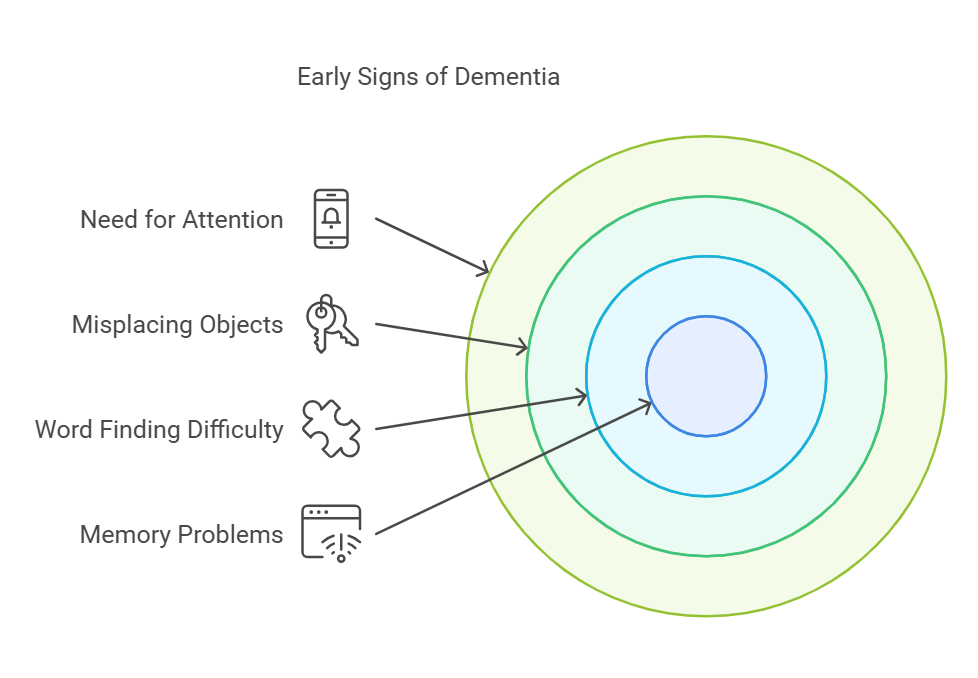
Early changes may include those moments when someone seems to misplace everyday objects more frequently—like discovering car keys in the cookie jar—or struggles with daily tasks once done on autopilot.
It might start with early symptoms of dementia that appear so gentle, they blend right into the hustle and bustle of life.
One of the early symptoms could be memory problems that go beyond forgetting a grocery item: we’re talking about recurring slips that feel more unsettling.
Some individuals show common early symptoms, such as trouble finding the right word, which can feel like hunting for that missing puzzle piece.
If these shifts feel more than just part of aging, it might help to remember that early symptoms also reflect a need to pay attention.
In fact, spotting early signs of dementia can lead to early diagnosis, and that can open doors toward early treatment options or strategies that slow the progression of dementia.
Why Spotting Early Signs Matters
Common early symptoms of dementia often fly under the radar. Another early clue could be personality changes—perhaps someone once outgoing now seems withdrawn.
Early onset dementia may appear in younger adults, too, reminding us that such changes aren’t always tied to getting older.
Dementia often tiptoes into a person’s life, and as the onset of dementia approaches, symptoms are often mild.
At these earliest stages, family members might brush them aside as normal forgetfulness.
Yet recognizing early signs and symptoms matters. Think of it as catching the quiet opening notes of a song before it swells.
Identifying Key Indicators and Seeking Help
Health professionals sometimes share 10 warning signs to help guide families, and these warning signs of dementia may include difficulties managing money, following a recipe, or keeping track of appointments.
Dementia symptoms can vary, and common symptoms might overlap with other conditions.
Some people develop dementia after years of subtle hints—maybe they go on to develop dementia without anyone suspecting.
Conditions like frontotemporal dementia focus more on personality changes or behavior shifts, while vascular dementia revolves around blood flow issues to the brain.
Symptoms of vascular dementia might include confusion or slowed thinking. Lewy body dementia introduces unique challenges, as lewy proteins affect the brain and may spark vivid dreams or hallucinations.
When Dementia-Like Symptoms Show Up
Many conditions cause dementia-like symptoms, and some of these can be reversible.
For example, certain vitamin deficiencies cause dementia-like symptoms that vanish with proper care.
Because symptoms may blend with those of other conditions, an early and accurate diagnosis of dementia matters.
Doctors can diagnose dementia using scans, tests, and observation, piecing together a puzzle that could explain why someone may have difficulty completing tasks that once felt simple.
Early warning signs might be subtle, but paying attention to them encourages seeking a dementia diagnosis sooner rather than later.
Early and accurate diagnosis of dementia opens the door to support groups, therapies, and potential ways to slow the progression, giving everyone time to adapt.
In some cases, addressing risk factors can prevent dementia or at least delay its emergence.
After all, high blood pressure can increase the risk of dementia, and taking steps toward dementia prevention might mean changing diet, exercising, or staying socially active.
Connecting the Dots with Alzheimer’s and Other Conditions
Alzheimer’s disease often comes up when discussing memory loss and confusion. Those likely to develop Alzheimer’s disease may notice increasing forgetfulness.
Dementia and Alzheimer’s disease frequently appear side by side in conversation because they’re closely linked. In fact, Alzheimer’s and dementia share overlapping signs and symptoms, and symptoms of Alzheimer’s typically include ongoing memory decline.
The Alzheimer’s Association and the Alzheimer’s Society both offer resources and guidance available across the world.
Parkinson’s disease can also cause dementia, introducing another layer of complexity.
Since these are all part of a collection of symptoms tied to cognitive changes, it’s no wonder that one with dementia might feel frustrated or scared.
Offering Support and Compassion
Families sometimes find themselves searching for help, feeling like they’re finding the right support in a cluttered attic.
A person with dementia may struggle to explain what’s wrong, and dementia may have difficulty presenting a neat and tidy pattern of clues.
Over time, these challenges gets worse, and mild dementia might shift into more noticeable struggles, making it harder to ignore.
When someone may have trouble recalling names or dates, or may have difficulty following a beloved TV show, it can be unsettling.
Remember that dementia may have trouble showing all its cards at once, so patience and compassion are key.
Looking Toward the Future
Common early symptoms of dementia often echo other issues, so careful evaluation is crucial.
Doctors consider a variety of factors to reach a dementia diagnosis and look for ways to slow the progression.
While some diseases cause permanent damage, others cause dementia-like symptoms that improve with treatment. The disease causes brain cells to wither over time, but lifestyle choices might help prevent dementia or at least keep it at bay.
Dementia research explores ways to reduce risks, and dementia prevention efforts focus on keeping our minds sharp. Over time, one sign of dementia might be confusion during daily tasks, another early sign could be struggling to plan events.
Symptoms also depend on which of the different types of dementia a person faces, since types of dementia can cause distinct patterns.
Adjusting to Life with Cognitive Changes
For many, living with dementia involves adjustments. People with dementia often rely on friends and family for understanding and kindness.
While some conditions show symptoms similar to dementia, expert guidance can pinpoint what’s truly happening.
Try to think of this journey as noticing small pebbles on a trail before it becomes a rocky path.
If you notice signs of dementia—like unusual forgetfulness, difficulty with daily tasks, or shifts in mood—it’s worth speaking to a healthcare professional. They might uncover a cause, propose early treatment, or suggest ways to slow the progression.
Even though everyone’s path looks different, recognizing that dementia may have difficulty shining a bright spotlight on itself helps us understand why these subtle shifts matter.
By spotting these subtle hints, seeking help, and understanding each step, families can find hope and balance in the face of change.