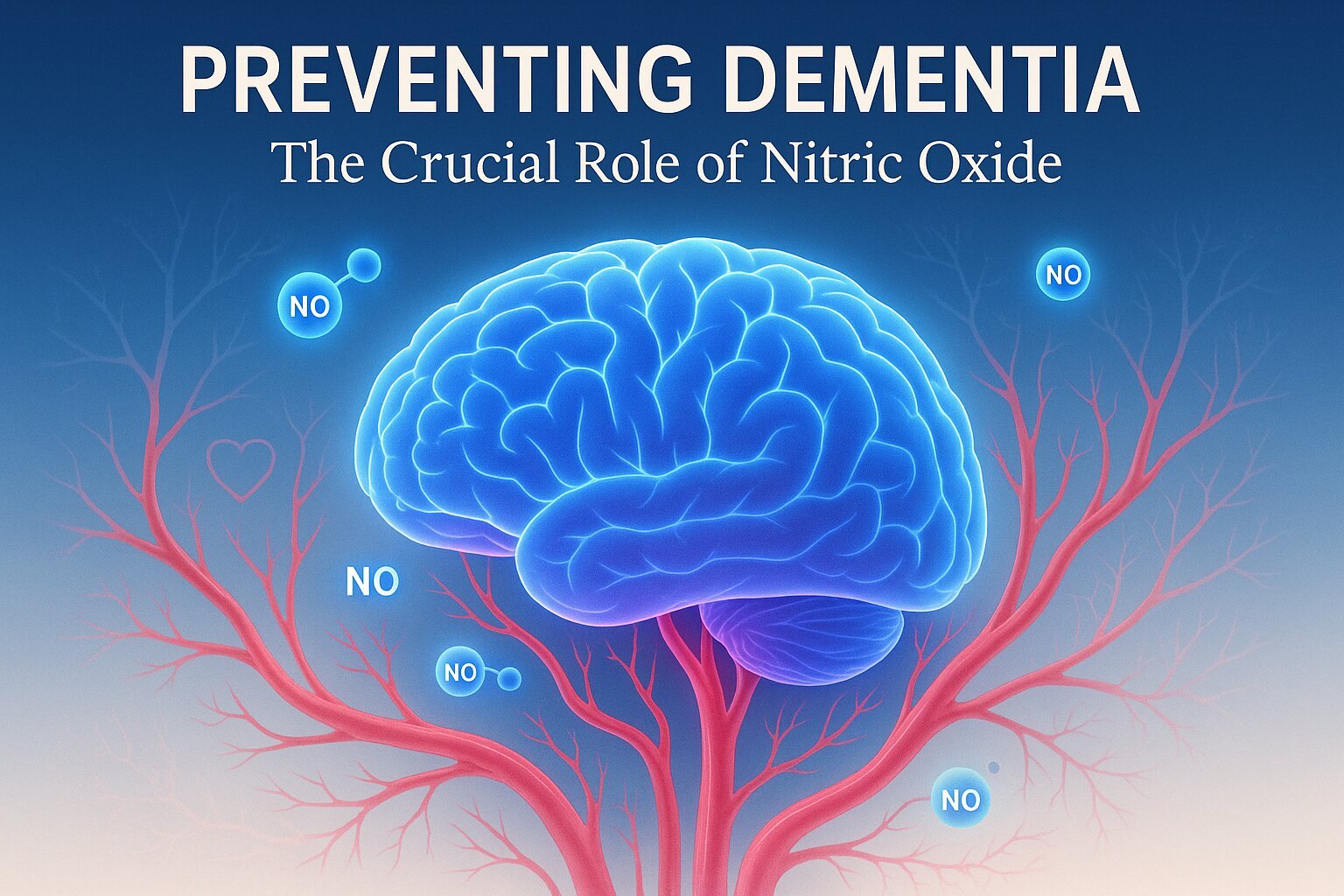
Are you concerned about dementia and looking for ways to protect your brain health?
You’re not alone. With over 55 million people worldwide living with dementia, understanding how to prevent cognitive impairment has become more critical than ever.
Emerging research reveals that nitric oxide, a simple molecule produced in your body, plays a vital role of nitric oxide in maintaining cognitive function and potentially reducing your risk of dementia.
This comprehensive guide explores the connection between nitric oxide and dementia prevention, providing actionable strategies to maintain healthy nitric oxide levels for optimal brain health.
Understanding Nitric Oxide and Its Role in Brain Health
Nitric oxide is a powerful signaling molecule produced by nitric oxide synthases, a family of enzymes found throughout your body.
This remarkable molecule serves as a critical regulator of vascular function, acting as a potent vasodilator that relaxes blood vessel walls and improves circulation. [1]
The role of nitric oxide in brain health cannot be overstated.
Nitric oxide enables proper blood flow to the brain, ensuring that neurons receive adequate oxygen and nutrients for optimal function.
When nitric oxide production declines, cerebral blood flow becomes compromised, setting the stage for cognitive impairment and dementia.
The Vascular Connection: How Nitric Oxide Protects Against Dementia
Vascular dementia, the second most common form of dementia, results from reduced blood flow to the brain. This neurodegenerative disease is closely linked to vascular dysfunction, where blood vessels lose their ability to regulate blood flow effectively. [2]
Endothelial nitric oxide synthase (eNOS), the primary enzyme responsible for nitric oxide production in vascular tissue, plays a crucial role of endothelial cells in maintaining brain health.
These endothelial cell populations line your blood vessels and continuously produce nitric oxide to keep blood vessels flexible and responsive.
When endothelial dysfunction occurs, nitric oxide production decreases dramatically. This decline triggers a cascade of problems that increase the risk of dementia:
- Reduced cerebral blood flow: Without adequate nitric oxide, blood vessels cannot dilate properly, limiting blood flow to the brain.
- Vascular dysfunction: Impaired nitric oxide signaling leads to stiff, narrow blood vessels that compromise cerebral blood flow.
- Increased inflammation: Nitric oxide possesses anti-inflammatory properties, and its deficiency promotes chronic inflammation, a known risk factor for dementia.
Nitric Oxide and Alzheimer Disease: A Complex Relationship
The relationship between nitric oxide and Alzheimer disease demonstrates the nuanced role of nitric oxide in brain health.
Research shows that nitric oxide can act as both a protective and potentially harmful factor, depending on concentration and cellular context. [3]
Protective Effects of Nitric Oxide
At physiological levels, nitric oxide offers several neuroprotective benefits:
- Prevents accumulation of amyloid-beta plaques, a hallmark of Alzheimer disease
- Reduces hyperphosphorylation of tau protein, preventing neurofibrillary tangle formation
- Enhances cerebral blood flow, supporting neuronal health
- Promotes synaptic plasticity essential for cognitive function
The Role of Nitric Oxide Synthases in Disease Pathology
Different nitric oxide synthases produce nitric oxide under various conditions.
While endothelial nitric oxide synthase generates protective nitric oxide, excessive activation of inducible nitric oxide synthases during inflammation can produce harmful levels of nitric oxide.
This excess nitric oxide contributes to oxidative stress and disease pathology in Alzheimer disease. [4]
Studies using nitric oxide synthase inhibitor compounds have revealed that blocking excessive nitric oxide production can reduce cognitive deficit in animal models of dementia.
However, completely inhibiting nitric oxide production worsens outcomes, highlighting the importance of balanced nitric oxide levels.
Vascular Risk Factors and Cognitive Decline
Multiple vascular risk factor conditions compromise nitric oxide production and accelerate cognitive decline:
| Risk Factor | Impact on Nitric Oxide | Effect on Dementia Risk |
| Hypertension | Reduces nitric oxide bioavailability | Increases risk 60% |
| Cardiovascular disease | Impairs endothelial function | Doubles dementia risk |
| Diabetes | Decreases nitric oxide production | Increases risk 50% |
| Smoking | Damages endothelial cells | Increases risk 45% |
| Physical inactivity | Reduces nitric oxide synthase activity | Increases risk 35% |
These vascular conditions share a common feature: endothelial dysfunction that reduces nitric oxide availability. Addressing these risk factor conditions represents a crucial strategy for dementia prevention. [5]
The Science Behind Nitric Oxide and Cognitive Function
Nitric oxide influences cognitive function through multiple mechanisms beyond vascular effects. This molecule serves as a neurotransmitter, participating in learning and memory formation. Nitric oxide signaling pathways activate proteins essential for long-term potentiation, the cellular basis of memory.
Research demonstrates that nitric oxide deficiency impairs spatial working memory and other aspects of cognitive function. Conversely, enhancing nitric oxide availability through dietary precursors can improve cognitive function in individuals experiencing early cognitive impairment. [6]
Nitric Oxide and Neurovascular Coupling
The brain’s remarkable ability to direct blood flow to active regions depends on nitric oxide. This process, called neurovascular coupling, ensures that working neurons receive adequate oxygen and glucose. When nitric oxide production falters, neurovascular coupling breaks down, contributing to cognitive dysfunction and vascular dementia.
Maintaining Healthy Nitric Oxide Levels: Evidence-Based Strategies
Given the critical role of nitric oxide in preventing dementia and maintaining cognitive function, adopting strategies to support nitric oxide production is essential.
1. Consume Nitrate-Rich Vegetables
Your body converts dietary nitrates into nitric oxide through a process involving oral bacteria and enzymatic conversion. Vegetables high in nitrates provide an excellent source of nitric oxide precursors:
| Vegetable | Nitrate Content (mg/100g) | Serving Recommendation |
| Arugula | 480 | 2 cups daily |
| Celery | 250 | 3-4 stalks daily |
| Lettuce | 200 | 2 cups daily |
| Beetroot | 150 | 1 medium beet daily |
| Spinach | 120 | 2 cups daily |
Regular consumption of these vegetables significantly increases nitric oxide production and improved cognitive performance in clinical studies. [7]
2. Increase Antioxidant Intake
Nitric oxide degrades rapidly when exposed to free radicals. Antioxidants protect nitric oxide from degradation, extending its beneficial effects on vascular function and cognitive function:
- Vitamin C: Found in citrus fruits, berries, and bell peppers
- Vitamin E: Abundant in nuts, seeds, and leafy greens
- Polyphenols: Present in green tea, dark chocolate, and berries
- Glutathione: Produced from sulfur-rich vegetables like broccoli and garlic
Combining nitrate-rich foods with antioxidants maximizes nitric oxide bioavailability and enhances protection against cognitive impairment.
3. Exercise Regularly to Boost Nitric Oxide Production
Physical activity represents one of the most powerful ways to increase nitric oxide production. Exercise stimulates endothelial nitric oxide synthase, enhancing nitric oxide generation in vascular endothelial cells throughout your body. [8]
Studies show that regular exercise:
- Increases cerebral blood flow by up to 30%
- Enhances endothelial cell function
- Reduces risk factor conditions for dementia
- Directly improve cognitive function through increased nitric oxide
Aim for 30 minutes of moderate-intensity exercise most days of the week. Activities like brisk walking, swimming, and cycling effectively stimulate nitric oxide production.
4. Consider L-Arginine and L-Citrulline Supplementation
L-arginine and L-citrulline are amino acids that serve as substrates for nitric oxide synthases. These supplements can boost nitric oxide production, particularly in individuals with vascular risk factor conditions or cognitive impairment.
Research indicates that L-citrulline supplementation may be more effective than L-arginine because it bypasses first-pass metabolism in the liver. However, consult a healthcare provider before starting supplementation, especially if you have existing health conditions.
5. Limit Mouthwash Use
Surprisingly, frequent mouthwash use can reduce nitric oxide production. Oral bacteria play a crucial role in converting dietary nitrates to nitrites, which are then converted to nitric oxide. Antiseptic mouthwash kills these beneficial bacteria, potentially reducing nitric oxide availability by up to 25%.
The Endothelial-Brain Connection
The role of endothelial cells in brain health extends beyond nitric oxide production. Endothelial cell populations form the blood-brain barrier, a critical structure that protects the brain from harmful substances while allowing nutrient delivery.
Endothelial dysfunction compromises blood-brain barrier integrity, allowing inflammatory molecules to enter brain tissue. This breach contributes to neuroinflammation, a key feature of Alzheimer disease and vascular dementia. Maintaining healthy nitric oxide levels supports endothelial cell function and blood-brain barrier integrity. [9]
Addressing Vascular Dysfunction to Prevent Cognitive Decline
Vascular dysfunction represents a modifiable risk factor for dementia that responds to lifestyle interventions. By addressing vascular health through nitric oxide-supporting strategies, you can reduce your risk of dementia significantly.
Key approaches to combat vascular dysfunction include:
- Managing blood pressure through diet, exercise, and medication when necessary
- Controlling blood sugar levels to prevent diabetes-related vascular damage
- Maintaining healthy cholesterol levels to support endothelial function
- Avoiding smoking and excessive alcohol consumption
- Managing stress through mindfulness and relaxation techniques
These interventions work synergistically to enhance nitric oxide production, improve cerebral blood flow, and protect against cognitive decline.
The Future of Nitric Oxide Research in Dementia Prevention
Ongoing research continues to reveal new insights about the role of nitric oxide in dementia prevention.
Scientists are investigating:
- Novel nitric oxide donors that could treat cognitive impairment
- The relationship between nitric oxide and specific neurodegenerative disease processes
- How nitric oxide influences tau protein pathology in Alzheimer disease
- The potential of targeting nitric oxide synthases for therapeutic benefit
- Ways to measure nitric oxide levels as biomarkers for dementia risk
These research directions hold promise for developing new interventions to prevent and treat dementia through nitric oxide modulation.
Taking Action for Brain Health
The evidence is clear: nitric oxide plays a fundamental role in maintaining cognitive function and preventing dementia.
While there’s no guaranteed way to prevent cognitive impairment, supporting healthy nitric oxide levels through diet, exercise, and lifestyle modifications offers a science-backed approach to reducing your risk factor profile.
Start by incorporating nitrate-rich vegetables into your daily meals. Add regular physical activity to stimulate nitric oxide production.
Protect your vascular health by managing cardiovascular disease risk factor conditions. These simple yet powerful steps can help maintain optimal cerebral blood flow, support endothelial function, and preserve your cognitive function for years to come.
Remember that dementia prevention is a lifelong commitment. The choices you make today about nitric oxide production can significantly impact your brain health tomorrow.
By understanding the vital role of nitric oxide in preventing cognitive decline and taking proactive steps to maintain healthy levels, you’re investing in a future with improved cognitive vitality and reduced dementia risk.
References:
[1] Healthline. (2024). How to Increase Nitric Oxide Naturally. Retrieved from https://www.healthline.com/nutrition/how-to-increase-nitric-oxide
[2] Yang, Y., Ma, K., Li, S., & Xiong, T. (2025). Multifaceted role of nitric oxide in vascular dementia. Medical Gas Research, 15(4), 496-506. https://pmc.ncbi.nlm.nih.gov/articles/PMC12124705/
[3] Azargoonjahromi, A., et al. (2023). Dual role of nitric oxide in Alzheimer’s disease. Nitric Oxide, 134-135, 23-37. https://www.sciencedirect.com/science/article/abs/pii/S1089860323000320
[4] Wang, L., Lu, D., Wang, X., Wang, Z., Li, W., & Chen, G. (2023). The effects of nitric oxide in Alzheimer’s disease. Medical Gas Research, 13(4), 191-196. https://pmc.ncbi.nlm.nih.gov/articles/PMC11257180/
[5] Katusic, Z. S., d’Uscio, L. V., & He, T. (2023). Emerging Roles of Endothelial Nitric Oxide in Preservation of Cognitive Health. Stroke, 54(3), 686-696. https://www.ahajournals.org/doi/10.1161/STROKEAHA.122.041444
[6] Zhang, X., et al. (2025). The emerging role of nitric oxide in the synaptic dysfunction of vascular dementia. Neural Regeneration Research, 20(2), 402-415.
[7] Kobayashi, J., et al. (2015). NO-Rich Diet for Lifestyle-Related Diseases. Nutrients, 7(6), 4911-4937. https://pmc.ncbi.nlm.nih.gov/articles/PMC4488823/
[8] Shannon, O. M., et al. (2022). Nitric oxide, aging and aerobic exercise. Nitric Oxide, 125-126, 31-40.
[9] Saleem, M., et al. (2018). Association Between Endothelial Function and Cognitive Performance. Journal of Alzheimer’s Disease, 63(2), 739-748. https://pmc.ncbi.nlm.nih.gov/articles/PMC6365250/