“They just sit in front of the TV all day. I don’t know what else to do.” This is one of the most common things caregivers say.
The TV becomes a default because it’s easy. But passive screen time doesn’t engage the brain — and for someone with dementia, that matters more than most people realize.
Why Activities Matter in Dementia Care
Meaningful activity isn’t just about passing time. It reduces agitation, improves mood, supports physical health, and gives people a sense of purpose and identity.
Research consistently shows that engagement in purposeful activities can reduce behavioral symptoms of dementia — including anxiety, aggression, and wandering — more effectively than many medications.
What Makes an Activity “Meaningful”?
Meaningful activities connect to who the person was before dementia. A former gardener who can’t tend a full garden might still love sorting seed packets or watering a single plant.
The goal isn’t perfection or productivity — it’s engagement, dignity, and a moment of feeling like themselves.
Activity Ideas by Stage
Early Stage
In early dementia, people can still participate in most activities they enjoyed before — with some modifications. This is the time to lean into hobbies, social connections, and physical activity.
- Walking groups or gentle exercise classes
- Book clubs or reading (audiobooks work well)
- Cooking simple recipes with supervision
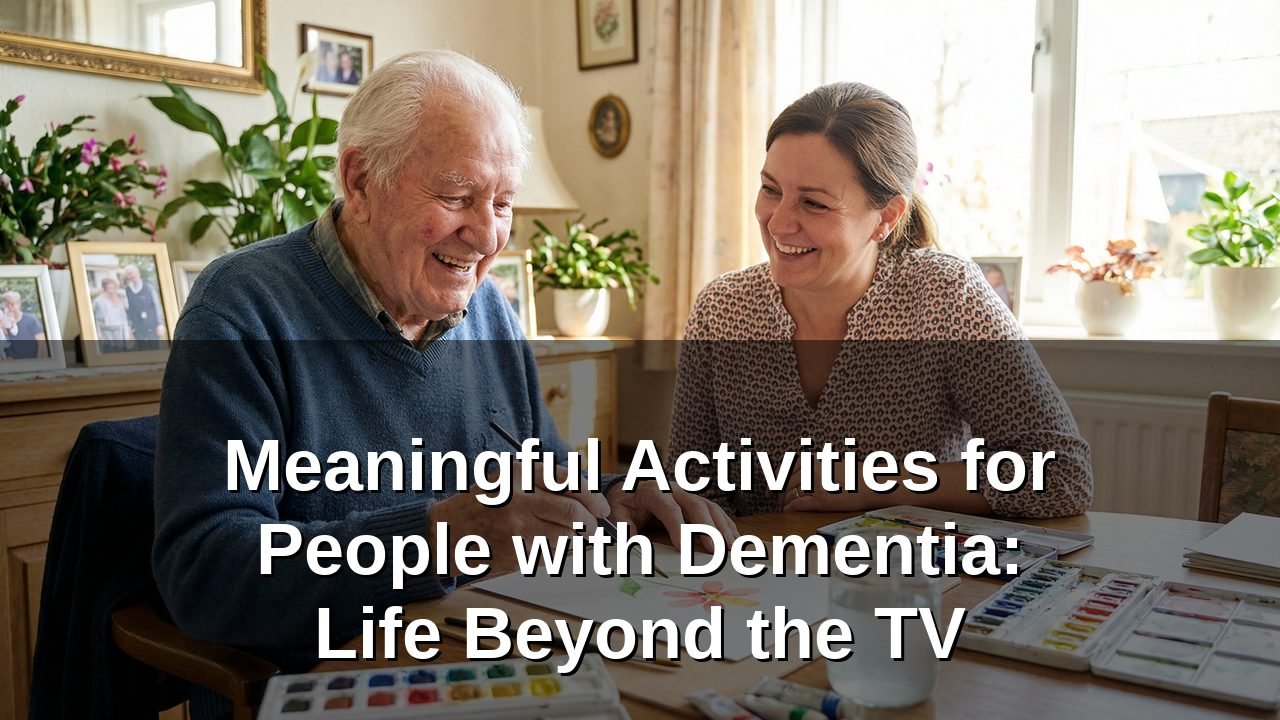
- Gardening, knitting, woodworking, or other crafts
- Volunteering in a supervised setting
- Music — playing instruments, singing, or attending concerts
Middle Stage
As dementia progresses, activities need to become simpler and more sensory-focused. The emphasis shifts from achievement to experience.
- Sorting activities: buttons, coins, socks, or colored objects
- Folding laundry or setting the table
- Looking through photo albums and reminiscing
- Simple puzzles (large-piece or children’s puzzles work well)
- Baking with pre-measured ingredients
- Music playlists from their youth — this is remarkably effective
- Gentle stretching or chair yoga
Late Stage
In late-stage dementia, the focus is entirely on sensory comfort and connection. Verbal communication may be limited, but response to touch, music, and familiar voices remains.
- Hand massage with lotion
- Listening to familiar music or nature sounds
- Holding a familiar object (a tool, a toy, a piece of fabric)
- Gentle movement — rocking, swaying, hand-holding
- Looking at photos or nature scenes
The Power of Music
Music is one of the most powerful tools in dementia care. The part of the brain that processes music is often preserved even in advanced dementia.
A personalized playlist — songs from the person’s teens and twenties — can reduce agitation, spark memories, and create moments of genuine connection. Apps like Spotify make this easy to set up.
Reminiscence Activities
Reminiscence therapy uses photos, objects, and music from the past to stimulate memory and conversation. It doesn’t require accurate recall — it’s about emotional engagement, not factual accuracy.
A memory box filled with meaningful objects (an old watch, a recipe card, a sports program) can be a wonderful activity tool.
Adapting Activities Over Time
What works today may not work next month. Dementia is progressive, and activities need to evolve with the person.
Watch for signs of frustration or disengagement — these are signals to simplify, not push harder. The goal is always a positive experience, not task completion.
Caregiver Tip: You Don’t Have to Entertain
You don’t need to be an activities director. Sometimes the most meaningful activity is simply sitting together, listening to music, or looking out the window.
Presence is an activity. Connection is an activity. Don’t underestimate the power of just being there.
Supporting Daily Routine
Activities are most effective when they’re woven into a predictable daily routine. Structure reduces anxiety and creates natural windows for engagement. Read more about how routine reduces anxiety in dementia.
For more caregiver guidance and resources, explore our Caregiving Tips section.