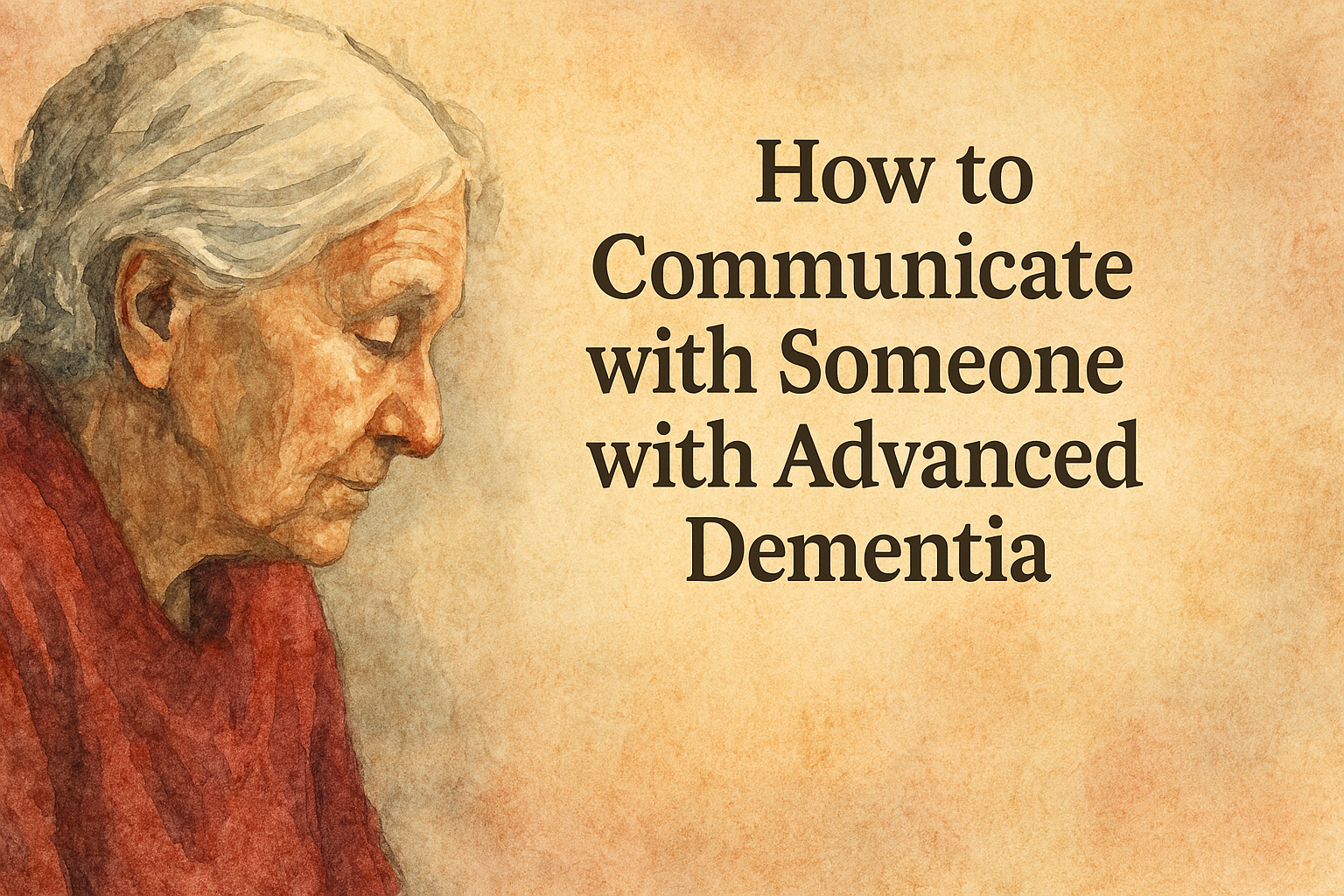
Communicating with someone who has advanced dementia can be challenging.
As dementia progresses, changes in communication can make interaction difficult.
Clear, simple ways to communicate can improve communication and help the caregiver support a person effectively.
Importance of Clear Communication
Clear communication reduces confusion and helps people affected by dementia feel valued and secure.
According to the National Institute on Aging, effective communication can ease distress and prevent agitation.
Key Ways to Communicate Clearly
- Speak Slowly and Clearly
Use short sentences and clear speech. Pause between sentences to give time to process information. - Maintain Eye Contact
Eye contact helps reassure the person and shows that you are engaged and caring. - Use Simple Language
Choose straightforward words. Avoid complex terms or detailed instructions.
Using Nonverbal Communication
Nonverbal communication includes body language, facial expressions, and gestures. These are essential for communicating with someone with dementia.
| Nonverbal Cue | Purpose |
|---|---|
| Smile | Reassure and comfort |
| Gentle touch | Calm anxiety and distress |
| Nod | Confirm understanding |
Helpful Tips for Communicating with People with Dementia
- Limit Distractions: Noise and crowded places can cause confusion. Talk in quiet areas.
- Stay Calm and Patient: If a person with dementia becomes agitated or withdraws, reassure the person and speak softly.
- Rephrase Instead of Repeating: If the person doesn’t understand, rephrase your words instead of repeating the same thing.
Understanding Communication Difficulties
A person with dementia might:
- Have difficulty finding the right word
- Become frustrated when they cannot express themselves
- Withdraw from social activities due to difficulty communicating

How to Ask Questions
When communicating with people with dementia, ask simple yes/no questions or offer choices. For example:
- “Would you like tea or water?”
- “Are you cold?”
Managing Sensitive Information
When communicating sensitive information:
- Talk privately in a calm environment.
- Use gentle language and reassure the person frequently.
How Dementia Affects Communication
As the disease progresses, the person communicates less through words and more through gestures and facial expressions. Be attentive to these cues to improve communication.
When to Seek Help
Health professionals and support groups, like the Alzheimer’s Society, can offer caregiver support and training in communication strategies. Reach out for help if communication becomes increasingly difficult.
Common Communication Challenges and Solutions
| Challenge | Solution |
| Person becomes tense or intimidated | Speak gently, use soothing voice |
| Person withdraws or becomes frustrated | Give reassurance, use distraction |
| Difficulty understanding instructions | Use clear, simple instructions |
Tips to Improve Communication at a Care Home
Care home staff should:
- Be patient and friendly
- Use consistent routines
- Encourage physical contact like holding hands
Conclusion
Clear and simple communication is key to interacting with people living with dementia.
By following these strategies, caregivers can significantly improve quality of life for someone with dementia.