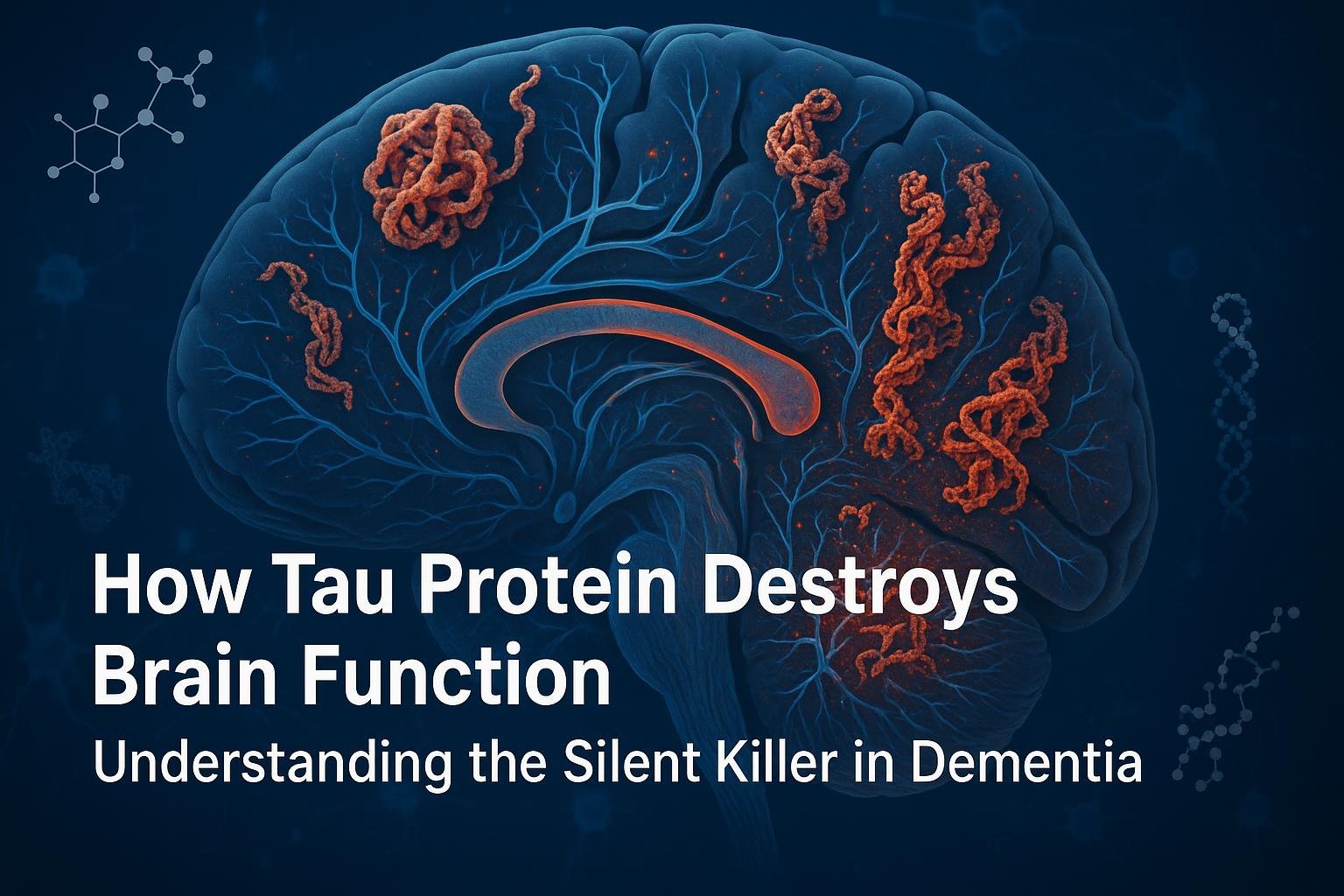
What if a single protein could silently destroy your brain from the inside out? Tau protein, once a helpful guardian of brain cells, becomes a deadly enemy when it malfunctions.
This microscopic protein plays a central role of tau in dementia development, creating devastating changes that rob people of their memories, personalities, and cognitive abilities.
Understanding how tau impacts brain function helps families recognize early warning signs and make informed decisions about treatment options.
When tau protein goes wrong, it triggers a cascade of destruction that affects millions of people worldwide, making it one of the most important topics in modern dementia research.
What Is Tau Protein and Its Normal Function?
Tau protein serves as a crucial structural component in the healthy brain, working like internal scaffolding to maintain brain cells and support proper neural communication.
Normal Tau Function in Brain Cells
In a healthy brain, tau performs several essential functions:
Microtubule stabilization:
- Tau binds to microtubules inside neurons
- Maintains structural integrity of brain cells
- Supports transport of nutrients and signals
- Keeps neural pathways functioning properly
Cellular communication:
- Helps maintain connections between neurons
- Supports electrical signal transmission
- Facilitates memory formation and storage
- Enables proper cognitive processing
Protective functions:
- Guards against cellular damage
- Maintains brain cell health and longevity
- Supports repair mechanisms
- Protects neural networks from stress
Tau Protein Structure and Composition
Tau protein consists of specific amino acid sequences that determine its function and behavior in the brain:
Key characteristics:
- Contains 352-441 amino acids depending on the variant
- Highly soluble in normal conditions
- Binds strongly to microtubules when functioning properly
- Undergoes constant recycling and renewal
Normal tau regulation:
- Controlled by specific enzymes and cellular mechanisms
- Maintained at optimal levels through cellular quality control
- Removed when damaged or no longer needed
- Replaced with fresh protein as required
How Tau Becomes Abnormal and Toxic
When tau protein malfunctions, it transforms from a helpful protein into a destructive force that damages the human brain in multiple ways.
The Process of Tau Dysfunction
Abnormal tau development follows a predictable pattern that researchers have identified through extensive brain tissue studies:
Initial changes:
- Tau becomes hyperphosphorylated (gains too many phosphate groups)
- Protein loses its ability to bind to microtubules
- Tau begins to clump together inside brain cells
- Normal cellular functions start to break down
Progressive damage:
- Tau forms twisted fibers called neurofibrillary tangles
- These tangles disrupt cellular transport systems
- Brain cells become unable to function properly
- Neural connections begin to fail and die
Factors That Trigger Tau Problems
Several factors can cause tau protein to become abnormal tau and start damaging the brain:
Genetic factors:
- Inherited mutations in tau genes
- Family history of dementia conditions
- Genetic variations that affect protein processing
- Age-related changes in gene expression
Environmental triggers:
- Head injuries and traumatic brain damage
- Chronic inflammation in the brain
- Exposure to toxins and harmful substances
- Chronic stress and poor lifestyle factors
Age-related changes:
- Natural decline in cellular quality control
- Reduced ability to clear damaged protein
- Increased oxidative stress in the brain
- Changes in brain metabolism and energy production
| Stage | Tau Changes | Brain Impact | Symptoms |
|---|---|---|---|
| Early | Hyperphosphorylation | Mild cellular dysfunction | Subtle memory changes |
| Moderate | Tangle formation | Neural connection loss | Noticeable cognitive decline |
| Advanced | Widespread tangles | Brain cell death | Severe dementia symptoms |
Tau’s Impact on Different Types of Dementia
Tau protein dysfunction affects various forms of dementia, each with distinct patterns of brain damage and symptom progression.
Alzheimer’s Disease and Tau
In Alzheimer’s disease, tau works together with another protein called amyloid to create devastating brain damage:
Tau’s specific role:
- Forms neurofibrillary tangles throughout the brain
- Spreads in predictable patterns from memory centers
- Correlates directly with symptom severity
- Continues accumulating as the disease progresses
Brain regions affected:
- Hippocampus (memory formation center)
- Temporal lobes (language and memory processing)
- Frontal cortex (executive function and planning)
- Eventually spreads throughout the entire brain
Frontotemporal Dementia and Tau
Frontotemporal dementia represents a group of conditions where tau dysfunction primarily affects specific brain regions:
Tau-related changes:
- Abnormal tau accumulates in frontal and temporal lobes
- Different tau variants cause distinct symptom patterns
- Protein aggregation disrupts personality and behavior centers
- Language areas become severely affected
Unique characteristics:
- Often begins at younger ages than Alzheimer’s
- Causes dramatic personality and behavior changes
- Affects language abilities more severely
- Tau may spread differently than in other dementia types
Progressive Supranuclear Palsy and Tau
This condition shows how tau dysfunction can affect movement and cognitive abilities simultaneously:
Movement-related impacts:
- Tau accumulates in brain regions controlling movement
- Affects balance, walking, and eye movements
- Causes muscle stiffness and coordination problems
- Tau may interfere with brain circuits controlling motor function
Mechanisms of Tau-Related Brain Damage
Understanding exactly how tau destroys brain function helps researchers develop targeted treatments and gives families insight into disease progression.
Cellular Transport Disruption
When tau protein becomes abnormal tau, it severely disrupts the internal transport systems that brain cells need to survive:
Transport system breakdown:
- Tau tangles block microtubule highways inside neurons
- Nutrients cannot reach distant parts of brain cells
- Waste products accumulate and become toxic
- Cellular communication systems fail
Consequences for brain function:
- Brain cells become malnourished and weak
- Synaptic connections between neurons deteriorate
- Memory formation and retrieval become impaired
- Cognitive processing slows down significantly
Inflammatory Responses
Abnormal tau triggers inflammatory responses in the brain that cause additional damage:
Immune system activation:
- Microglia (immune cells) recognize tau as a threat
- Inflammatory chemicals are released throughout the brain
- Chronic inflammation damages healthy brain tissue
- Protein clearance systems become overwhelmed
Spreading damage:
- Inflammation makes tau problems worse
- Healthy brain cells become more vulnerable
- Tau spreads more easily between connected regions
- Overall brain function declines more rapidly
Synaptic Dysfunction
Tau dysfunction severely affects the connections between brain cells that enable thought, memory, and consciousness:
Synaptic changes:
- Tau accumulation disrupts neurotransmitter release
- Communication between brain cells becomes unreliable
- Memory formation requires healthy synaptic function
- Cognitive abilities depend on proper neural communication
Progressive loss:
- Early stages show subtle synaptic problems
- Advanced stages involve complete synapse loss
- Brain networks become disconnected
- Mental abilities deteriorate as connections fail
Current Research and Treatment Approaches
Scientists worldwide are developing innovative approaches to target tau dysfunction and protect brain function in dementia.
Tau-Targeted Therapies
Researchers are testing multiple strategies to prevent tau from damaging the brain:
Anti-tau antibodies:
- Designed to remove abnormal tau from the brain
- Target specific forms of toxic tau protein
- Aim to prevent tau spreading between brain cells
- Currently being tested in clinical trials
Tau aggregation inhibitors:
- Protein compounds that prevent tau clumping
- Stop the formation of neurofibrillary tangles
- Protect brain cells from tau-related damage
- Show promise in laboratory studies
Diagnostic Advances
New technologies allow doctors to detect tau problems earlier and track disease progression:
Brain imaging:
- PET scans can visualize tau accumulation in living patients
- Shows tau distribution patterns throughout the brain
- Helps predict disease progression and symptom development
- Enables earlier diagnosis and treatment planning
Biomarker testing:
- Blood tests can detect tau protein fragments
- Spinal fluid analysis reveals tau levels in the brain
- Protein markers help distinguish different dementia types
- Allow monitoring of treatment effectiveness
Future Directions and Hope
Research into tau protein and its impact on brain function continues advancing rapidly, offering hope for better treatments and eventual prevention of dementia.
Emerging Therapeutic Strategies
Scientists are developing innovative approaches that target tau dysfunction at multiple levels:
Gene therapy approaches:
- Techniques to reduce tau production in the brain
- Methods to enhance protein clearance systems
- Strategies to protect brain cells from tau damage
- Potential to prevent dementia development entirely
Combination treatments:
- Targeting both tau and other disease protein simultaneously
- Combining tau therapies with neuroprotective treatments
- Addressing inflammation while clearing abnormal tau
- Comprehensive approaches to brain health and protection
Prevention Strategies
Understanding tau function opens new possibilities for preventing dementia before symptoms appear:
Lifestyle interventions:
- Exercise programs that support healthy tau function
- Dietary approaches that reduce protein dysfunction
- Stress management to protect brain health
- Social engagement to maintain cognitive reserve
Early intervention:
- Identifying people at risk before tau problems begin
- Preventive treatments for high-risk individuals
- Monitoring tau levels to guide intervention timing
- Protecting the human brain before damage occurs
Key Takeaways
Tau protein plays a central role in dementia development by transforming from a helpful brain protein into a destructive force that damages brain cells and disrupts cognitive function. When tau becomes abnormal tau, it forms tangles that block cellular transport, trigger inflammation, and destroy the connections between brain cells that enable memory and thinking.
Understanding how tau impacts brain function helps families recognize the biological basis of dementia symptoms and appreciate why these conditions progress as they do. Frontotemporal dementia, Alzheimer’s disease, and other tau-related conditions each show distinct patterns of brain damage that correspond to their unique symptom profiles.
Current research offers hope through tau-targeted therapies, improved diagnostic tools, and prevention strategies that may protect the human brain from tau-related damage. While tau dysfunction currently causes devastating brain damage in millions of people, ongoing scientific advances continue moving us closer to effective treatments and eventual prevention of these tragic conditions.
The role of tau in dementia represents one of the most important frontiers in neuroscience research, with the potential to transform how we understand, treat, and prevent cognitive decline in aging populations worldwide.