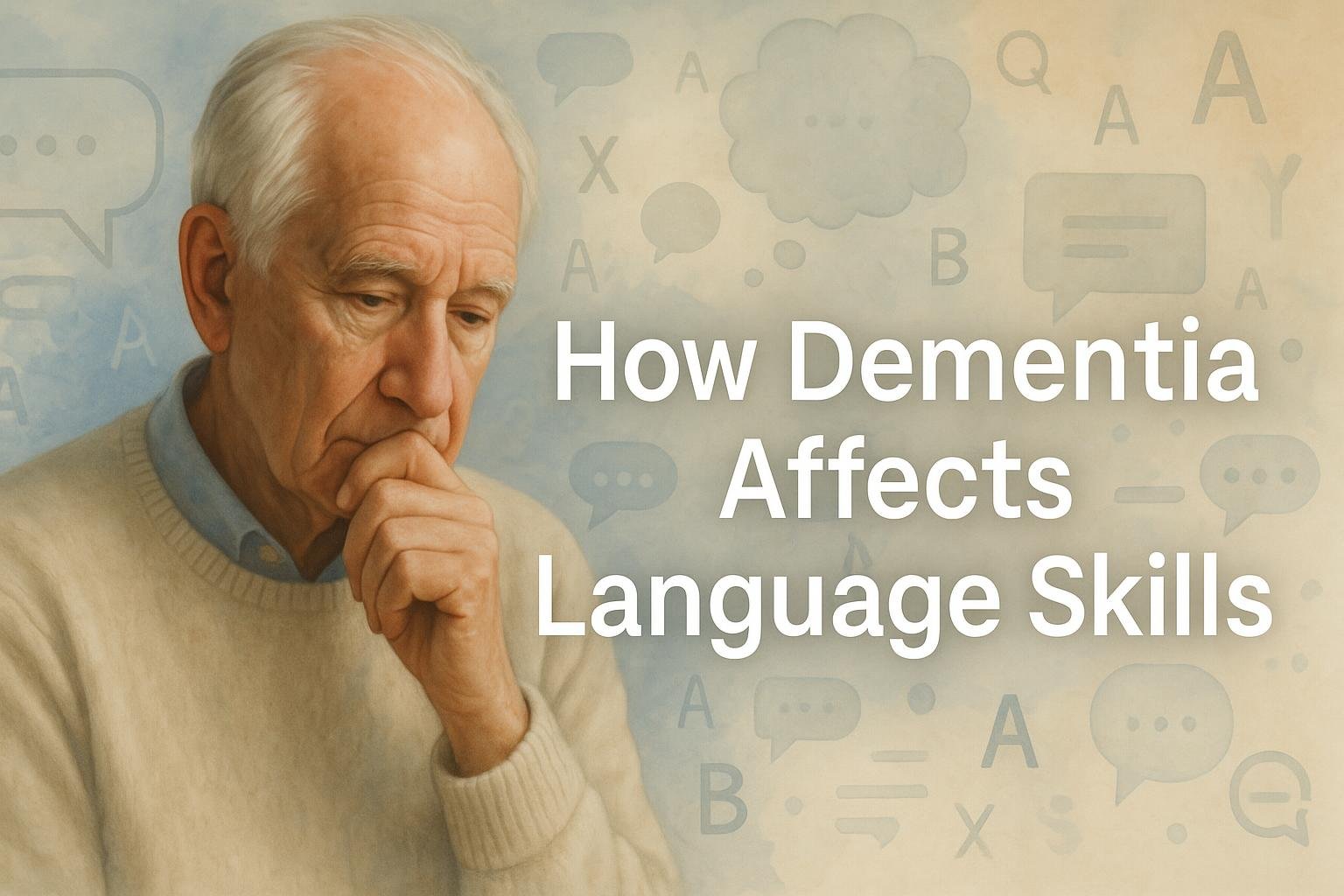
Have you noticed your loved one struggling to find the right words during conversations? Are they having difficulty understanding what you say or following simple instructions? These language changes are common concerns that families face when dementia begins to impact communication abilities.
Dementia creates significant challenges in language and communication that dementia affect both speaking and understanding.
Understanding how dementia impacts language skills helps families adapt their communication approaches and maintain meaningful connections with their loved ones.
Understanding Language Changes in Dementia
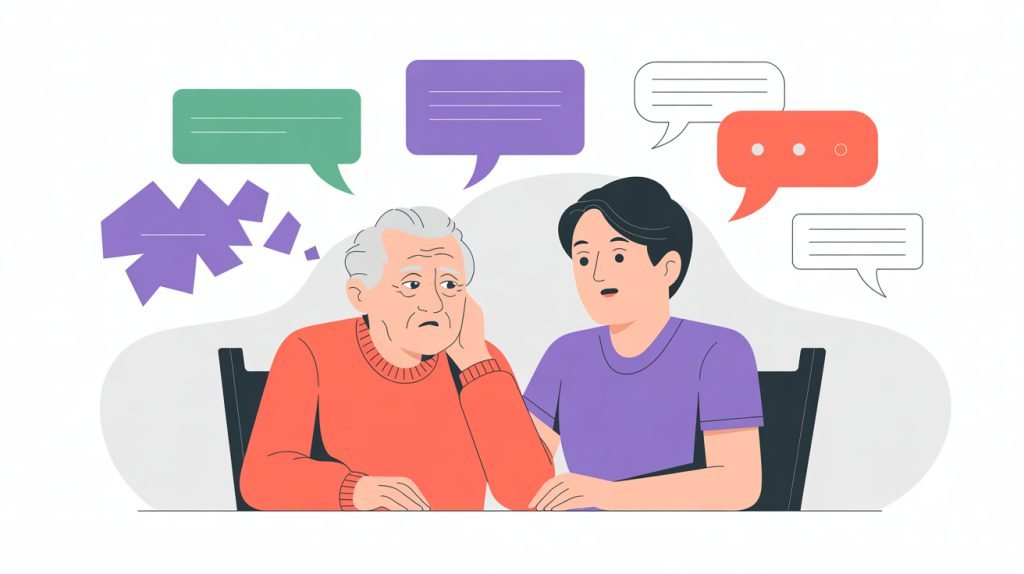
Dementia causes progressive damage to brain areas responsible for language processing, communication, and understanding.
People with dementia may experience different types of language difficulties depending on the specific type of dementia and which brain regions are most affected.
How Brain Changes Impact Language
Dementia damages specific brain regions that control different aspects of language:
Left hemisphere and temporal lobe damage:
- Word finding and vocabulary access
- Memory for words and meanings
- Grammar and sentence structure
- Reading and writing abilities
- Understanding of complex sentences
Frontal and parietal lobe changes:
- Planning and organizing speech
- Social communication skills
- Conversation flow and turn-taking
- Integration of language with other cognitive functions
Early Language Changes and Progression
Dementia often begins with subtle language changes that families may initially attribute to normal aging. Recognizing these early signs helps families seek appropriate evaluation and support.
Word-Finding and Conversation Difficulties
People with dementia commonly experience word-finding problems that appear as:
Early signs:
- Tip-of-the-tongue experiences and pausing during conversations
- Describing objects instead of naming them directly
- Using general terms like “thing” or “stuff” instead of specific words
- Talking around words they cannot remember
Conversation changes:
- Interrupting others frequently or long pauses during conversations
- Losing track of conversation topics
- Repeating the same topics or questions
- Difficulty following complex discussions
Progressive Language Decline
As dementia advances, language problems become more pronounced:
Speaking and expression changes:
- Gradual loss of less common words and reliance on basic vocabulary
- Incomplete sentences and incorrect word order
- Slower speech production with increased hesitations
- Difficulty with abstract concepts
Understanding and comprehension issues:
- Difficulty following complex instructions
- Problems with background noise interference
- Slower language processing requiring extra time
- Reduced reading comprehension abilities
| Stage | Language Changes | Communication Impact |
|---|---|---|
| Early | Word-finding problems, topic confusion | Frustration during conversations |
| Moderate | Simplified grammar, reduced vocabulary | Need for simpler communication |
| Severe | Single words, minimal comprehension | Reliance on non-verbal cues |
Communication Challenges by Dementia Type
Different types of dementia create distinct patterns of language and communication problems.
Alzheimer’s Disease Language Changes
Dementia caused by Alzheimer’s disease follows predictable patterns:
- Early stage: Word-finding difficulties with proper nouns, problems with complex sentence comprehension
- Middle stage: Significant word-finding problems, simplified grammar and sentence structure
- Late stage: Severely limited vocabulary, single words or short phrases only
Frontotemporal Dementia Language Impact
Dementia affecting the frontal and temporal lobes creates specific language problems:
- Primary progressive aphasia: Gradual loss of language abilities with preserved understanding initially
- Semantic variant: Loss of word meanings and difficulty understanding concepts
- Non-fluent variant: Difficulty producing speech with effortful, halting speech patterns
Vascular Dementia Communication Changes
Dementia caused by vascular problems creates variable language difficulties with sudden onset language problems, step-wise decline in abilities, and unpredictable progression patterns.
Non-Verbal Communication Changes
Dementia affects not only spoken language but also non-verbal communication abilities. People with dementia may rely increasingly on non-verbal methods as verbal skills decline.
Body Language and Gestures
As verbal communication becomes more difficult, people with dementia may use increased body language including pointing to objects they cannot name, using hand movements to express ideas, and facial expression changes to convey emotions. Gesture use may increase as a way to supplement limited verbal abilities.
Dementia also impacts the ability to interpret non-verbal communication from others, including difficulty reading emotional expressions, problems interpreting social cues, and reduced ability to understand tone of voice.
Impact on Daily Activities and Relationships
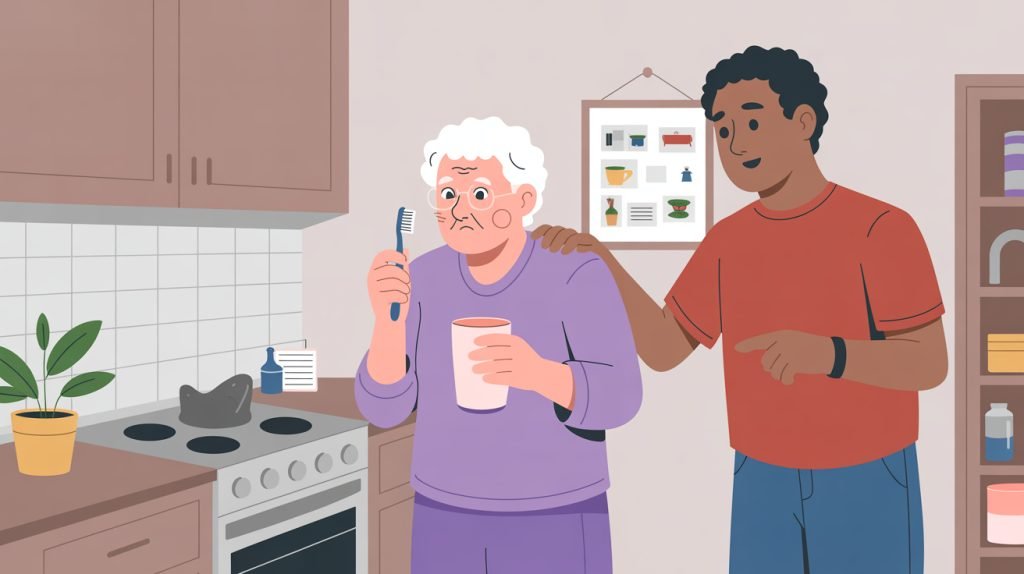
Language changes in dementia significantly affect daily activities and independence:
Healthcare and Social Communication
People with dementia face challenges in medical environments including difficulty explaining health problems, trouble following medical instructions, and problems understanding treatment options. Social interactions are also affected with reduced participation in family discussions, difficulty maintaining relationships, and withdrawal from group activities.
Communication Stages and Progression
Dementia causes language abilities to decline in generally predictable stages:
Mild stage: Occasional difficulty finding specific words, slight delays in conversation, preserved overall communication ability
Moderate stage: Frequent word-finding problems, simplified sentence structure, difficulty following multi-step instructions
Severe stage: Single words or short phrases, understanding limited to simple familiar words, minimal response to verbal communication
Effective Communication Strategies
Effective communication strategies help families maintain connections with people with dementia despite language challenges.
Verbal Communication Techniques
Speaking approaches:
- Use short, simple sentences and speak slowly and clearly
- Allow extra time for responses and repeat important information
- Ask yes/no questions when possible and provide choices between two options
- Focus on familiar subjects and use concrete rather than abstract concepts
Non-Verbal Communication Support
Visual and environmental cues:
- Point to objects being discussed and use pictures or written words as prompts
- Maintain eye contact during conversations and use appropriate facial expression to convey meaning
- Reduce background noise and ensure good lighting for lip reading
- Create calm, comfortable settings and minimize distractions
Supporting Language Skills and Professional Resources
While dementia causes progressive language decline, various strategies can help maintain communication abilities.
Language Stimulation Activities
Meaningful activities:
- Read familiar books or magazines together and look at photo albums
- Engage in regular conversations about daily activities and memories
- Sing familiar songs and listen to music from their era
- Use picture communication boards and simple communication apps
Professional Support Services
Healthcare team coordination:
- Speech-language pathologists for assessment, therapy, and caregiver training
- Neurologists for dementia management and audiologists for hearing assessment
- Community resources including dementia support groups and adult day programs
- Technology aids such as communication devices and assistive technology
| Support Type | Services | Benefits |
|---|---|---|
| Speech therapy | Assessment, individual therapy, caregiver training | Maintains communication skills longer |
| Technology aids | Picture boards, communication apps, voice devices | Supports understanding and expression |
| Community programs | Support groups, day programs, education | Reduces isolation, provides resources |
Managing Communication Frustration
Both people with dementia and their families experience frustration with communication challenges. A person with dementia may show increased agitation during conversations, withdrawal from social interactions, or emotional outbursts when misunderstood.
Coping Strategies
For people with dementia:
- Validate their communication attempts and avoid correcting or criticizing
- Focus on emotional content rather than exact words
- Provide reassurance and support during communication difficulties
For family members:
- Take breaks when feeling overwhelmed and seek support from other families
- Learn stress management techniques and remember that communication changes are part of the condition
- Focus on maintaining emotional connections rather than perfect verbal communication
Maintaining Connection and Planning Ahead
Even as language abilities decline, meaningful connections remain possible with people with dementia. Dementia may affect verbal communication, but families can maintain relationships through adapted approaches.
Emotional Communication and Shared Experiences
Focusing on connection:
- Respond to emotional content rather than exact words
- Use tone of voice to convey understanding and maintain physical affection
- Engage in familiar routines together and share sensory experiences
- Create positive experiences despite language barriers
Planning for Progressive Changes
As the disease progresses, families need to plan for increasing communication challenges:
Advance planning:
- Record important life stories and memories while communication is possible
- Note communication preferences and strategies that work
- Complete advance directives and discuss care preferences
- Create communication aids for future use
Long-term care considerations:
- Educate care providers about effective communication strategies
- Provide information about the person’s background and interests
- Ensure communication aids are available in care settings
- Maintain regular visits and continue meaningful activities
Research and Future Directions
Research continues to improve understanding of how dementia affects language and communication. Current research areas include development of better diagnostic tests, early detection of language changes, and technology-assisted communication approaches.
Emerging technologies offer hope including advanced tablet applications, voice recognition software, and artificial intelligence support for communication needs.
Key Takeaways
Dementia significantly impacts language and communication abilities, affecting speaking, understanding, reading, and writing skills. These changes typically progress gradually and become more severe as the condition advances.
People with dementia experience various language difficulties depending on the type and stage of dementia. Early recognition helps families adapt communication approaches and seek appropriate support from speech-language pathologists and healthcare teams.
Effective communication strategies include using simple language, providing visual cues, maintaining patience, and focusing on emotional connection. Non-verbal communication becomes increasingly important as verbal abilities decline.
Professional support and community resources help families navigate communication challenges. Planning for progressive changes ensures continued quality of life and meaningful connections throughout the dementia journey.
Most importantly, meaningful relationships remain possible despite language changes. The symptoms of dementia include language difficulties, but families can maintain bonds through adapted communication approaches, shared activities, and focus on emotional connection rather than perfect verbal exchange.
References:
[1] Alzheimer’s Association. “Communication and Alzheimer’s.” 2023. [2] National Institute on Aging. “Caring for a Person with Alzheimer’s Disease.” 2023. [3] American Speech-Language-Hearing Association. “Dementia and Communication.” 2023.