Explaining Dementia to Grandkids: A Heartfelt Guide for Families
“How do I tell my grandchildren that Grandma does not remember their names?” “Will they be scared by Grandpa’s sudden mood changes?” These are real worries we hear from families every single day. It is heartbreaking to watch a child realize their beloved grandparent is changing.
We naturally want to protect our children from pain and confusion. However, avoiding the topic often causes more anxiety for the little ones. Kids are incredibly observant, and they know when something is wrong in the family.
By having open and honest conversations, we can help them understand the situation. This guide will help you find the right words for explaining dementia to grandkids. We will share practical ways to maintain those precious family bonds.
Why Honesty is the Best Policy
Children have vivid imaginations that can sometimes work against them. If we do not explain what is happening, they might invent their own scary reasons for the changes. They might even blame themselves if a grandparent acts upset or distant.
The Alzheimer’s Association notes that children may feel sad, confused, afraid, guilty, jealous, embarrassed, or unsure how to act. They recommend answering questions openly and honestly in age-appropriate language. This honesty builds trust and helps children feel secure.
When we talk openly, we give them permission to share their own feelings. It shows them that it is okay to be sad or confused. This open dialogue is a crucial part of how dementia affects families.
Preparing for the Conversation
Before talking to the grandkids, it helps to prepare yourself emotionally. You might be grieving the changes in your loved one, and that is completely normal. Take a deep breath and gather your thoughts before sitting down with the children.
Choose a quiet and comfortable place where you will not be interrupted. Pick a time when everyone is rested and relaxed. You do not need to explain everything all at once.
Think of this as the first of many ongoing conversations. You are simply opening the door for them to ask questions. Keep your tone calm and reassuring to help them feel safe.
Age-Appropriate Explanations
The way we explain dementia depends heavily on the child’s age. A toddler needs a very different explanation than a teenager. We must adjust our language to match their level of understanding.
Talking to Preschoolers
For very young children, keep the explanation simple and brief. You might say that Grandma has a sickness in her brain that makes her forget things. Reassure them that they cannot catch this sickness like a cold.
Focus on the behaviors they might actually see. For example, you can explain that Grandpa might ask the same question twice. Remind them that their grandparent still loves them very much.
Talking to School-Aged Children
Children in elementary school can understand a bit more detail. You can explain that the brain is like a computer that sends messages to the body. In someone with dementia, some of those messages get lost or mixed up.
This is a good time to introduce the word “dementia” so they know the actual name of the condition. Explain that this is why their grandparent might act differently or forget how to do familiar things. Encourage them to ask questions and express their feelings.
Talking to Teenagers
Teenagers can handle more complex information about the condition. They might want to know the specific type of dementia or what to expect in the future. Be honest about the progression of the disease while maintaining a sense of hope.
Teens might also feel embarrassed by their grandparent’s behavior in front of friends. Validate these feelings without making them feel guilty. For more detailed guidance, you can read our dedicated article on a difficult conversation: explaining dementia to grandchildren.
Common Emotions Grandkids Might Feel
Children process difficult news in many different ways. Some might cry, while others might seem completely unaffected at first. Both reactions are entirely normal and acceptable.
They might feel angry that their grandparent cannot play with them like before. They might feel jealous of the time and attention the person living with dementia requires. Acknowledge these feelings and let them know their emotions are valid.
Sometimes, children act out or regress in their behavior when they are stressed. Be patient and offer plenty of reassurance and love. Let them know you are always there to listen.
Answering Difficult Questions
Kids are naturally curious and will likely have many questions. “Will Grandma get better?” is a common and heartbreaking question to hear. It is important to be truthful while remaining gentle.
You can explain that the doctors are doing their best to help, but the sickness will not go away. “Will I get it too?” is another frequent worry. Reassure them that dementia is mostly something that happens to older adults.
If you do not know the answer to a question, it is okay to admit it. You can say, “That is a great question, and I am not sure, but we can find out together.” This shows them that we are all learning as we go.
Meaningful Activities to Share
Just because a grandparent has dementia does not mean the fun has to stop. We just need to find new ways to connect and spend time together. Focus on activities that rely on the senses rather than memory.
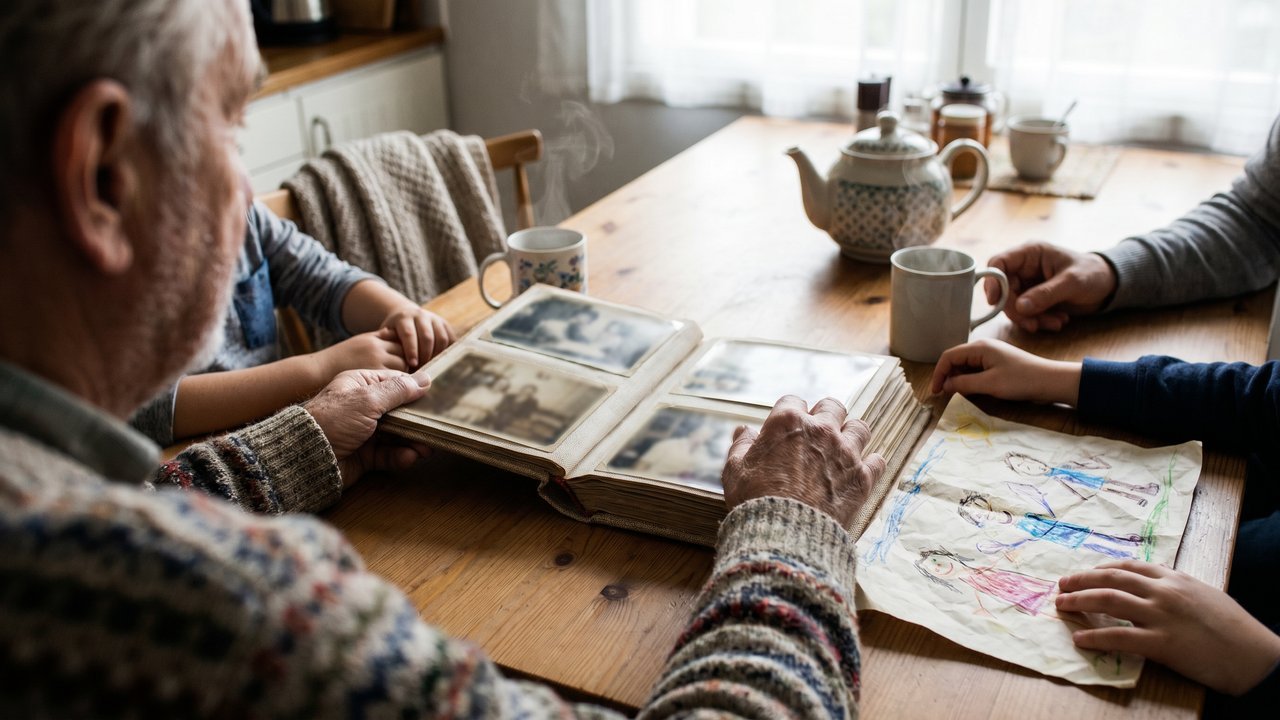
Listening to music, looking at old photo albums, or petting a dog are wonderful ways to bond. Simple crafts or baking cookies can also bring joy to both generations. For more ideas, explore our guide on meaningful activities for people with dementia.
Keep visits relatively short to avoid overwhelming the person living with dementia. Pay attention to their cues and end the visit on a positive note. The goal is to create happy moments, no matter how brief they are.
Creating a Safe Environment
When grandkids visit, we want to ensure the environment is safe for everyone. People living with dementia can sometimes become confused or unsteady on their feet. A safe home reduces stress for both the grandparent and the visiting children.
The National Institute on Aging highlights the importance of removing rugs, improving lighting, and reducing fall hazards. Make sure toys are picked up from the floor to prevent tripping. Keep loud noises and chaotic play to a minimum, as this can cause agitation.
Create a quiet space where the grandparent can retreat if they feel overwhelmed. Teach the children to approach their grandparent gently and from the front. This helps prevent startling them and keeps interactions positive.
Teaching Compassionate Communication
Children learn by watching how we interact with the person living with dementia. Model patience, respect, and kindness in your own communication. Show them that we still treat their grandparent with dignity.
Teach them to speak clearly and maintain eye contact. Remind them not to argue if their grandparent says something that is not true. Instead, they can learn to join their grandparent in their current reality.
This approach is often called the validation method. It focuses on the emotions behind the words rather than the facts. You can learn more about this technique in our article on effective communication: the validation method for dementia care.
Supporting the Parents
If you are the primary care partner, you are likely supporting both the grandparent and the parents of the grandchildren. This is a heavy load to carry. The middle generation often feels torn between caring for their children and their aging parent.
Encourage the parents to be honest with their kids about their own feelings. It is healthy for children to see that adults get sad sometimes too. This models healthy emotional expression for the whole family.
Remind the parents to carve out special time just for their children. The demands of caregiving can easily consume all available time and energy. Protecting the parent-child bond is essential during this difficult season.
Taking Care of Yourself
You cannot pour from an empty cup. Supporting a person living with dementia while helping grandkids understand the situation is exhausting work. You must prioritize your own well-being to sustain this level of care.
The National Institute on Aging suggests that caregiver self-care can include asking for help, joining support groups, and taking daily breaks. Make time for your own hobbies, exercise, and healthy meals. Do not skip your own regular doctor visits.
Reach out to friends, family, or professional counselors for support. You do not have to carry this burden alone. Taking care of yourself is the best way to ensure you can care for your family.
A Quick Reference Guide for Families
To help you remember the key points, we have created a simple reference table. You can use this as a quick reminder before a family visit.
| Age Group | Key Concept to Explain | Recommended Approach |
|---|---|---|
| Preschoolers | The brain is sick. | Keep it simple. Focus on behaviors they can see. |
| School-Aged | Messages in the brain get mixed up. | Introduce the word “dementia.” Encourage questions. |
| Teenagers | The disease is progressive. | Be honest about the future. Validate their complex emotions. |
| All Ages | The grandparent still loves them. | Reassure them that the changes are not their fault. |
Moving Forward Together
Explaining dementia to grandkids is not a single event, but a continuous journey of love and patience. There will be hard days, and there will be moments of unexpected joy. Give yourself grace as you guide your family through these changes.
Remember that children are incredibly resilient. With your honest guidance and support, they can learn to adapt to this new reality. They can still form beautiful, lasting memories with their grandparent.
Keep the lines of communication open and continue to answer their questions as they grow. You are doing a wonderful job in a very difficult situation. We are here to support you every step of the way.