For a person living with dementia, a seemingly simple task like getting dressed can become a source of frustration, anxiety, and confusion.
As the disease progresses, they may forget how to dress, be overwhelmed by choices, or not understand why they need to change clothes.
However, with a few simple strategies, caregivers can transform this daily challenge into a more positive and successful experience, promoting independence and preserving dignity.
Here are five key techniques to simplify the dressing process.
1. Simplify the Choices
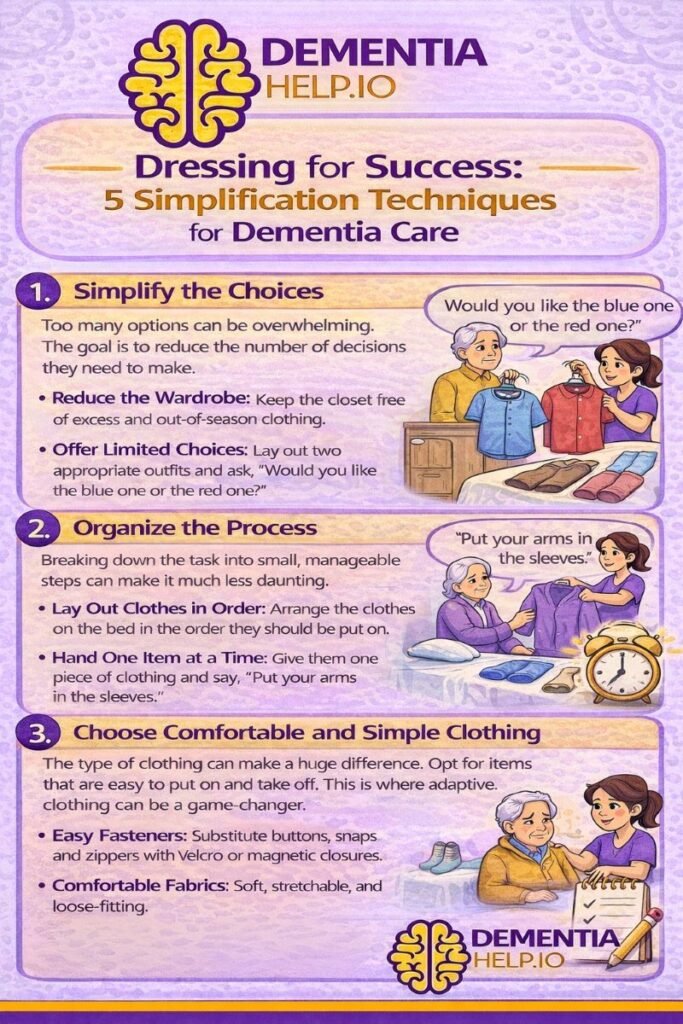
Too many options can be overwhelming. A closet full of clothes can be paralyzing for someone with cognitive decline. The goal is to reduce the number of decisions they need to make.
•Reduce the Wardrobe: Keep the closet free of excess and out-of-season clothing. A smaller selection is less intimidating.
•Offer Limited Choices: Instead of asking, “What do you want to wear?” lay out two appropriate outfits and ask, “Would you like to wear the blue shirt or the red one?” This gives them a sense of control without being overwhelming.
2. Organize the Process
Breaking down the task into small, manageable steps can make it much less daunting. The key is to provide clear, one-step-at-a-time instructions.
•Lay Out Clothes in Order: Arrange the clothes on the bed in the order they should be put on (e.g., underwear first, then pants, then shirt).
•Hand One Item at a Time: Give them one piece of clothing and a simple, direct instruction, such as, “Put your arms in the sleeves.” Avoid vague commands like “Get dressed.”
| Strategy | Why It Works |
| Simplify Choices | Reduces decision fatigue and overwhelm. |
| Organize the Process | Breaks a complex task into simple, sequential steps. |
| Choose Simple Clothing | Minimizes struggles with difficult fasteners. |
| Be Flexible | Reduces conflict and focuses on what’s important. |
| Maintain Routines | Provides comfort and predictability. |
3. Choose Comfortable and Simple Clothing
The type of clothing can make a huge difference. Opt for items that are easy to put on and take off. This is where adaptive clothing can be a game-changer.
•Easy Fasteners: Substitute buttons, snaps, and zippers with Velcro or magnetic closures. These are much easier to handle for someone with declining fine motor skills.
•Comfortable Fabrics: Choose soft, stretchable, and loose-fitting fabrics. Avoid anything that is tight or restrictive.
•Front-Opening Garments: Shirts and cardigans that button or zip in the front are much easier to manage than pullover tops.
•Elastic Waists: Pull-on pants with elastic waistbands eliminate the need to fumble with belts and zippers.
4. Be Flexible and Patient
Rigid expectations will only lead to frustration. It’s important to be flexible and focus on what truly matters: comfort, hygiene, and dignity.
•Allow for Repetition: If the person wants to wear the same outfit every day, consider buying duplicates. As long as the clothes are clean, it’s not a battle worth fighting.
•Ignore Mismatches: If their outfit is mismatched but they are dressed and comfortable, let it go. The goal is successful dressing, not a fashion show.
•Plan for Extra Time: Rushing will only increase anxiety. Build extra time into the morning routine so the process can be calm and unhurried.
5. Maintain Familiar Routines
People with dementia thrive on routine. Consistency provides a sense of security and predictability in a world that can feel confusing.
•Dress at the Same Time: Try to get dressed at the same time each day.
•Continue Grooming Habits: If the person always went to the barber or beauty shop, try to continue this routine for as long as it remains a positive experience. If it becomes too stressful, consider having a stylist come to the home.
By implementing these simplification techniques, you can reduce the stress associated with dressing and help the person with dementia maintain a sense of independence and self-esteem for as long as possible.
Save this infographic for future reference:
Disclaimer: This article is for informational purposes only and does not constitute medical advice. Please consult with a qualified healthcare professional for any health concerns or before making any decisions related to your health or treatment.
References
[1] Alzheimer’s Association. (n.d.). Dressing & Grooming. Retrieved from