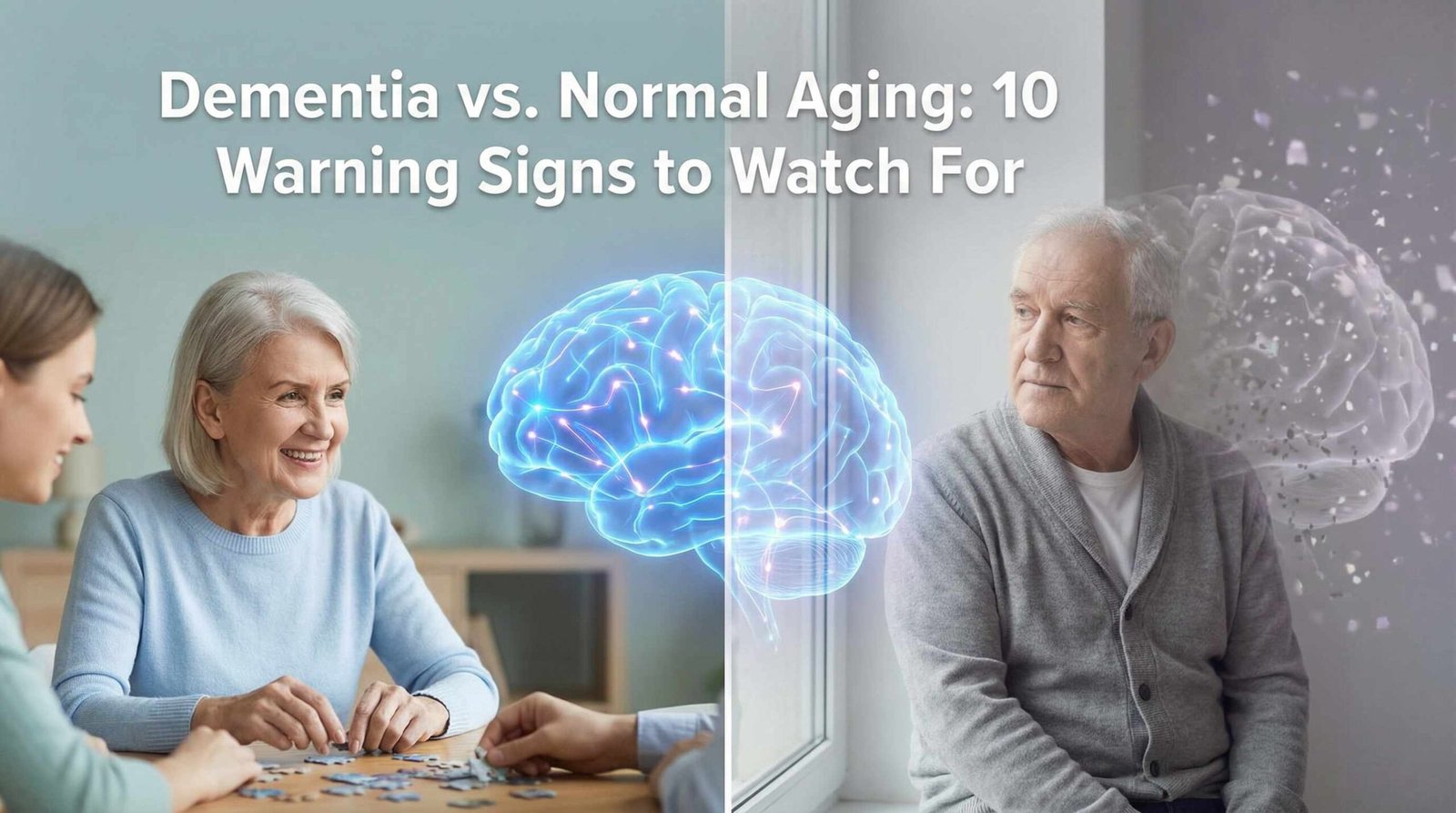
As we get older, it is common to worry about our memory. We might misplace our keys or forget the name of an acquaintance and wonder if it is a sign of something more serious.
While some memory changes are a normal part of aging, dementia is not. [3]
Understanding the difference between typical age-related changes and the warning signs of dementia is essential for early detection and intervention.
This article breaks down the 10 warning signs of dementia, based on information from the Alzheimer’s Association, and compares them to the normal process of aging. [1]
The Critical Difference: Dementia vs. Normal Aging
Forgetfulness can be a normal part of aging. The key difference is that in normal aging, memory lapses do not significantly interfere with your daily life. In contrast, dementia involves a decline in cognitive function—thinking, remembering, and reasoning—that is severe enough to impact a person’s ability to perform everyday activities. [3]
Here is a closer look at the 10 warning signs of dementia and how they differ from normal aging.
1. Memory Loss That Disrupts Daily Life
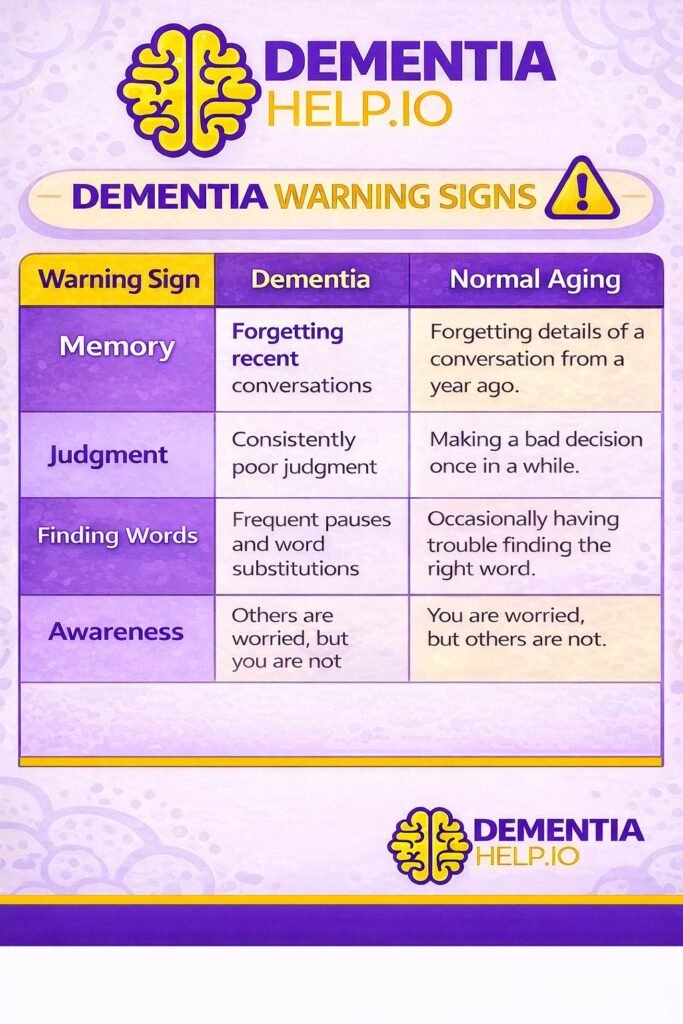
- Dementia Sign: Forgetting recently learned information, asking the same questions repeatedly, and an increasing reliance on memory aids or family members for things they used to handle themselves. [1]
- Normal Aging: Sometimes forgetting names or appointments but remembering them later. [1]
2. Challenges in Planning or Solving Problems
- Dementia Sign: Difficulty following a familiar recipe, keeping track of monthly bills, or concentrating on tasks. Things may take much longer to do than before. [1]
- Normal Aging: Making occasional errors when managing finances or household bills. [1]
3. Difficulty Completing Familiar Tasks
- Dementia Sign: Trouble driving to a familiar location, organizing a grocery list, or remembering the rules of a favorite game. [1]
- Normal Aging: Occasionally needing help with technology, like the settings on a microwave. [1]
4. Confusion with Time or Place
- Dementia Sign: Losing track of dates, seasons, and the passage of time. They may forget where they are or how they got there. [1]
- Normal Aging: Getting confused about the day of the week but figuring it out later. [1]
5. Trouble Understanding Visual Images and Spatial Relationships
- Dementia Sign: Vision problems that can lead to difficulty with balance, trouble reading, or problems judging distance and color. This can cause issues with driving. [1]
- Normal Aging: Vision changes related to cataracts or other age-related eye conditions. [1]
6. New Problems with Words in Speaking or Writing
- Dementia Sign: Difficulty following or joining a conversation. They may stop in the middle of a conversation, repeat themselves, or struggle to find the right word. [1]
- Normal Aging: Sometimes having trouble finding the right word. [1]
7. Misplacing Things and Losing the Ability to Retrace Steps
- Dementia Sign: Putting things in unusual places and being unable to go back over their steps to find them. This may lead to accusations of theft. [1]
- Normal Aging: Misplacing things from time to time but being able to retrace steps to find them. [1]
8. Decreased or Poor Judgment
- Dementia Sign: Changes in judgment or decision-making, such as using poor judgment with money or paying less attention to personal grooming. [1]
- Normal Aging: Making a bad decision once in a while. [3]
9. Withdrawal from Work or Social Activities
- Dementia Sign: Withdrawing from hobbies, social activities, or other engagements due to difficulty holding a conversation or keeping up with activities. [1]
- Normal Aging: Sometimes feeling uninterested in family or social obligations. [1]
10. Changes in Mood and Personality
- Dementia Sign: Experiencing mood and personality changes, such as becoming confused, suspicious, depressed, fearful, or anxious. They may be easily upset. [1]
- Normal Aging: Developing specific ways of doing things and becoming irritable when a routine is disrupted. [1]
When to See a Doctor
If you notice one or more of these warning signs in yourself or someone you know, it is important not to ignore them. Schedule an appointment with a doctor to discuss these changes. Early diagnosis of dementia allows for access to treatments that can help with symptoms and provides more time to plan for the future. [1]
References
[1] Alzheimer’s Association. (n.d.). 10 Early Signs and Symptoms of Alzheimer’s & Dementia. Retrieved from https://www.alz.org/alzheimers-dementia/10_signs
[2] Alzheimer Society of Canada. (n.d.). The differences between normal aging and dementia. Retrieved from https://alzheimer.ca/en/about-dementia/do-i-have-dementia/differences-between-normal-aging-dementia
[3] National Institute on Aging. (2023, November 22). Memory Problems, Forgetfulness, and Aging. Retrieved from https://www.nia.nih.gov/health/memory-loss-and-forgetfulness/memory-problems-forgetfulness-and-aging
This article is for informational purposes only and does not constitute medical advice. Always consult with a qualified healthcare professional for any health concerns or before making any decisions related to your health or treatment.