Dementia Door Locks: A Caregiver’s Guide to Safety and Peace of Mind
Caring for someone with dementia means safety is always a priority. Wandering is a common challenge that can cause worry and stress for caregivers.
For extra support, explore our guide on GPS trackers for wandering.
Choosing the right door locks is a simple yet important step to help keep your loved one safe. The goal is to protect without making them feel confined.
This guide offers practical options, from basic locks to smart technology.
Understanding the Risk of Wandering
Wandering can occur at any stage of dementia and is more common than many expect. About six in 10 individuals with dementia will wander at least once [1].
Knowing this helps caregivers stay prepared and attentive.
People may wander because they feel confused or want to follow a familiar routine. Sometimes they are searching for someone or a place they remember.
Understanding these reasons helps us respond with patience and kindness.
When someone leaves the home unnoticed, they face serious risks such as getting lost, exposure to weather, or traffic accidents. If your loved one is missing for more than 15 minutes, call 911 immediately [1].
Choosing Safe Dementia Door Locks
Finding the right locks means balancing security with safety. You want to prevent wandering but also ensure your loved one can exit quickly in an emergency.
A helpful tip is to install deadbolts high or low on doors, where they are out of sight. People with dementia often do not look up or down, so this can reduce impulsive door opening [1].
Childproof doorknob covers are another option. They spin freely unless squeezed, making it harder to open the door accidentally.
Make sure everyone else in the home can open them easily in case of emergency.
Avoiding Fire-Trap Mistakes
Safety involves more than preventing wandering. Locks that require a key to open from the inside can be dangerous during a fire or panic.
Instead, use locks that are tricky for someone with dementia but easy for caregivers to open quickly. Slide bolts placed high on the door work well without needing a key.
Always have a clear escape plan and ensure caregivers can access all exits. Safety should never feel like a trap.
The Role of Smart Locks and Alarms
Technology can ease caregiving tasks. Smart locks let you control and monitor doors from your phone.
You can receive alerts if a door opens unexpectedly.
Some smart locks lock automatically after a set time, so doors are not accidentally left open. Choose systems that are reliable and simple to use.
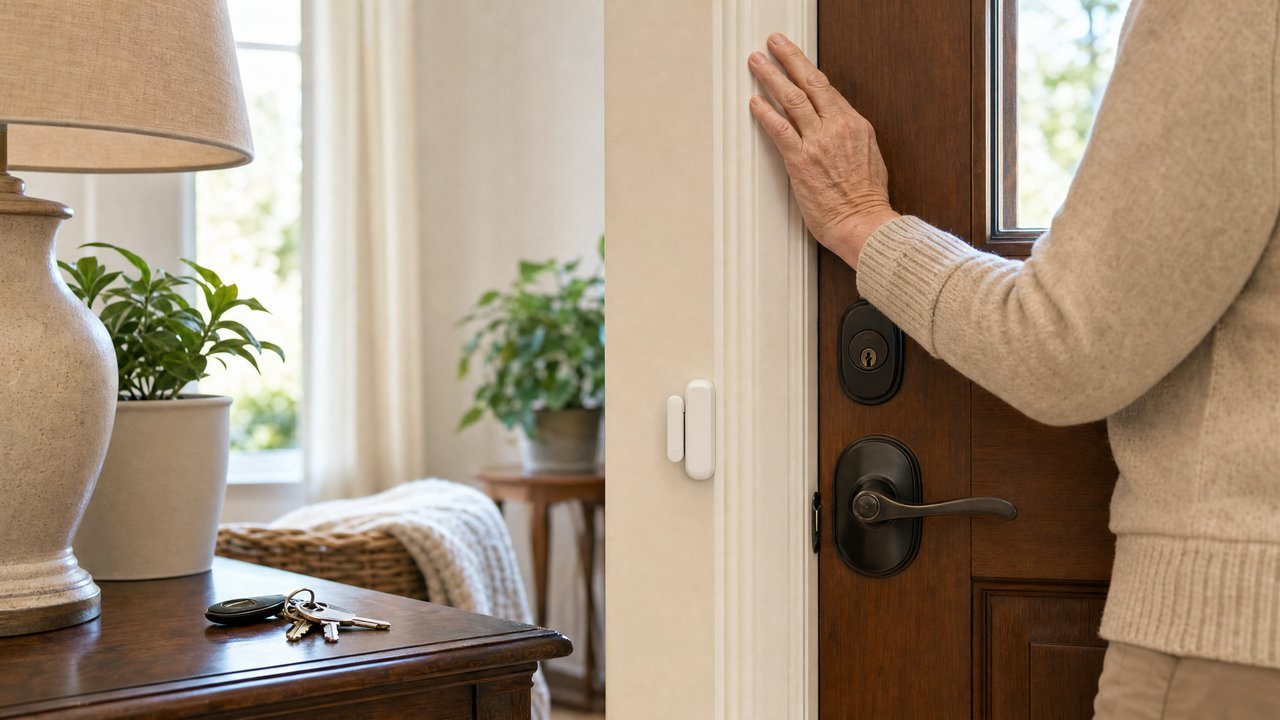
Door alarms or chimes can also help by notifying you when someone tries to leave. These small devices add another layer of protection without being intrusive [1].
Legal and Ethical Considerations
It is important to respect your loved one’s rights when adding safety measures. Restricting movement can feel upsetting, so aim for the least restrictive option that keeps them safe.
Talk openly with family and healthcare providers about your choices. Writing down why you installed certain locks can help everyone understand and protect you legally.
Check local fire codes and safety regulations before making changes. This ensures your home stays safe and compliant.
Practical Caregiver Checklist for Door Safety
Use this checklist to review your home’s door safety and make improvements where needed:
| Safety Measure | Description | Action Required |
|---|---|---|
| Assess Current Locks | Check if doors open too easily or with difficulty. | Upgrade to more secure locks if needed. |
| Install High/Low Locks | Place deadbolts out of normal sight lines. | Install locks near top or bottom of doors [1]. |
| Add Door Alarms | Use chimes or electronic alarms. | Test alarms regularly to ensure they work. |
| Camouflage Doors | Make doors less noticeable. | Paint doors to match walls or add curtains. |
| Secure Windows | Prevent windows from opening wide enough. | Install window stops or locks. |
Regularly revisit this list as your loved one’s needs change.
Creating a Supportive Environment
Locks and alarms help, but so does creating a calm, supportive space. Meaningful activities can reduce restlessness and the urge to wander.
Learn more about coping with dementia behaviors.
Sometimes wandering signals a need like hunger, thirst, or needing the bathroom. Watching for these signs and responding kindly can prevent wandering before it starts.
Don’t forget to care for yourself too. Constantly watching can be exhausting.
Using respite care or adult day programs gives you a break while your loved one stays safe.
Supporting Safety with Compassion
Choosing the right door locks is just one part of keeping your loved one safe. It takes patience, kindness, and flexibility.
What works today might need adjusting tomorrow.
Remember, your care shows deep love and respect. You are not alone—reach out to support groups and professionals for help and encouragement.
Together, you can create a safe, loving home.
How to Match the Lock to the Real Risk
The best lock is the one that matches the current pattern, not the one that looks strongest online.
If the person living with dementia only checks the front door during sundowning, a door alarm and a high latch may be enough.
If they have already left the home alone, we need a stronger plan that includes alarms, neighbor awareness, identification, and a fast search routine.
Think of this like adding guardrails on a mountain road.
The guardrail does not insult the driver.
It simply accepts that the road has risk and gives everyone a better chance to stay safe.
Questions to Ask Before Buying
Before ordering a device, walk through the home during the time of day when exit-seeking is most likely.
Look at the door from the person’s eye level, then ask what they can see, reach, and repeat.
| Question | Why It Matters |
|---|---|
| Can the person reach the lock easily? | A lock in plain sight may become part of the leaving routine. |
| Can a caregiver open it in seconds? | Emergency exits must stay practical. |
| Does the alarm wake the caregiver at night? | A quiet alert is useless if nobody hears it. |
| Does the lock need Wi-Fi or batteries? | Backup plans matter during outages. |
| Could the device frustrate or frighten the person? | Safety works best when it also preserves calm. |
A Layered Door Safety Plan
Door locks should be one layer, not the whole plan.
A good system combines prevention, alerts, and quick response.
Start with a visible routine that reduces restlessness.
Add calming activities, bathroom reminders, hydration, and a safe walking path inside the home.
Then add the door hardware that fits the risk.
This may include a high latch, a door chime, a smart sensor, or a simple pressure mat near the exit.
Finally, prepare for the moment nobody wants.
Keep a recent photo, a list of familiar places, and emergency contacts ready.
If the person leaves and cannot be found quickly, call 911 and clearly state that the missing person is living with dementia.
That is not overreacting.
That is caregiving with a backbone.
References
[1] Alzheimer’s Association. “Wandering.” Available at: https://www.alz.org/help-support/caregiving/safety/wandering