Caring for a person with dementia can be a journey filled with love, but it can also bring unexpected challenges.
One of the most difficult to manage is when your loved one expresses anger or aggression. It can be hurtful and confusing, but it is important to understand that this behavior is often a result of the disease.
This article will explore why anger and aggression occur in dementia and provide caregivers with strategies to cope with these difficult situations.
Understanding Anger in Dementia
Aggressive behavior in dementia can be verbal or physical. It can range from shouting and swearing to hitting and pushing.
It is crucial to remember that this is not a deliberate choice but a reaction to something they are experiencing.
The primary cause is the damage to the brain from dementia. This damage can affect personality, impulse control, and the ability to communicate needs and frustrations.
Often, anger is a way of communicating an unmet need or distress.
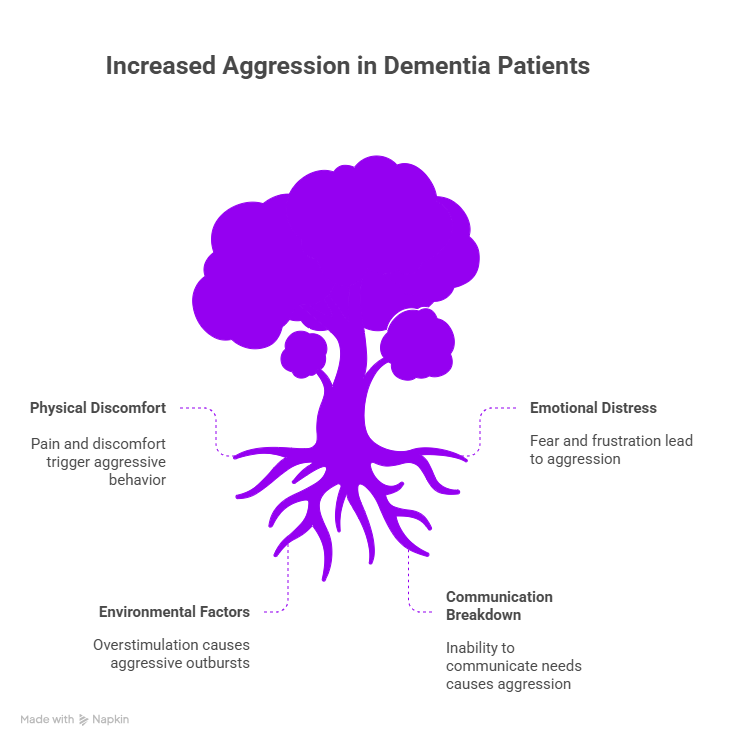
Common Triggers for Anger and Aggression
Instead of being a direct symptom of dementia, aggression is often triggered by underlying issues.
Identifying these triggers is key to managing the behavior.
How to Respond to Anger and Aggression
Your response can either escalate or de-escalate the situation. The goal is to remain calm and try to understand the person’s feelings.
- Rule out pain first: Pain is a common and often overlooked cause of aggression. Look for nonverbal signs of pain, such as wincing or guarding a part of their body.
- Don’t take it personally: The anger is not about you. It is a symptom of the dementia. Reminding yourself of this can help you stay calm.
- Listen and validate: Try to understand what they are feeling. You can say, “I can see you’re upset. Let’s figure this out together.”
- Give them space: If you are not concerned about their immediate safety, sometimes stepping away for a few minutes can allow them to calm down.
- Use a calm, soothing voice: Speak slowly and in a low-pitched voice. This can have a calming effect.
- Redirect their attention: Once they are calmer, try to engage them in an activity they enjoy.
Creating a Supportive Environment
Modifying the environment and daily routines can help prevent aggressive behaviors.
- Maintain a predictable routine: This helps the person with dementia feel more secure.
- Simplify tasks: Break down activities into simple, manageable steps to reduce frustration.
- Encourage exercise: Regular physical activity can help reduce stress and improve mood.
- Ensure personal comfort: Make sure they are comfortable, have eaten, and have used the toilet regularly.
If aggressive behavior is persistent or severe, it is important to speak with a doctor. They can help rule out any medical causes and suggest other interventions.
Remember to seek support for yourself as well; caregiver support groups can be an invaluable resource.
This article is for informational purposes only and does not constitute medical advice. Always consult with a qualified healthcare professional for any health concerns or before making any decisions related to your health or treatment.