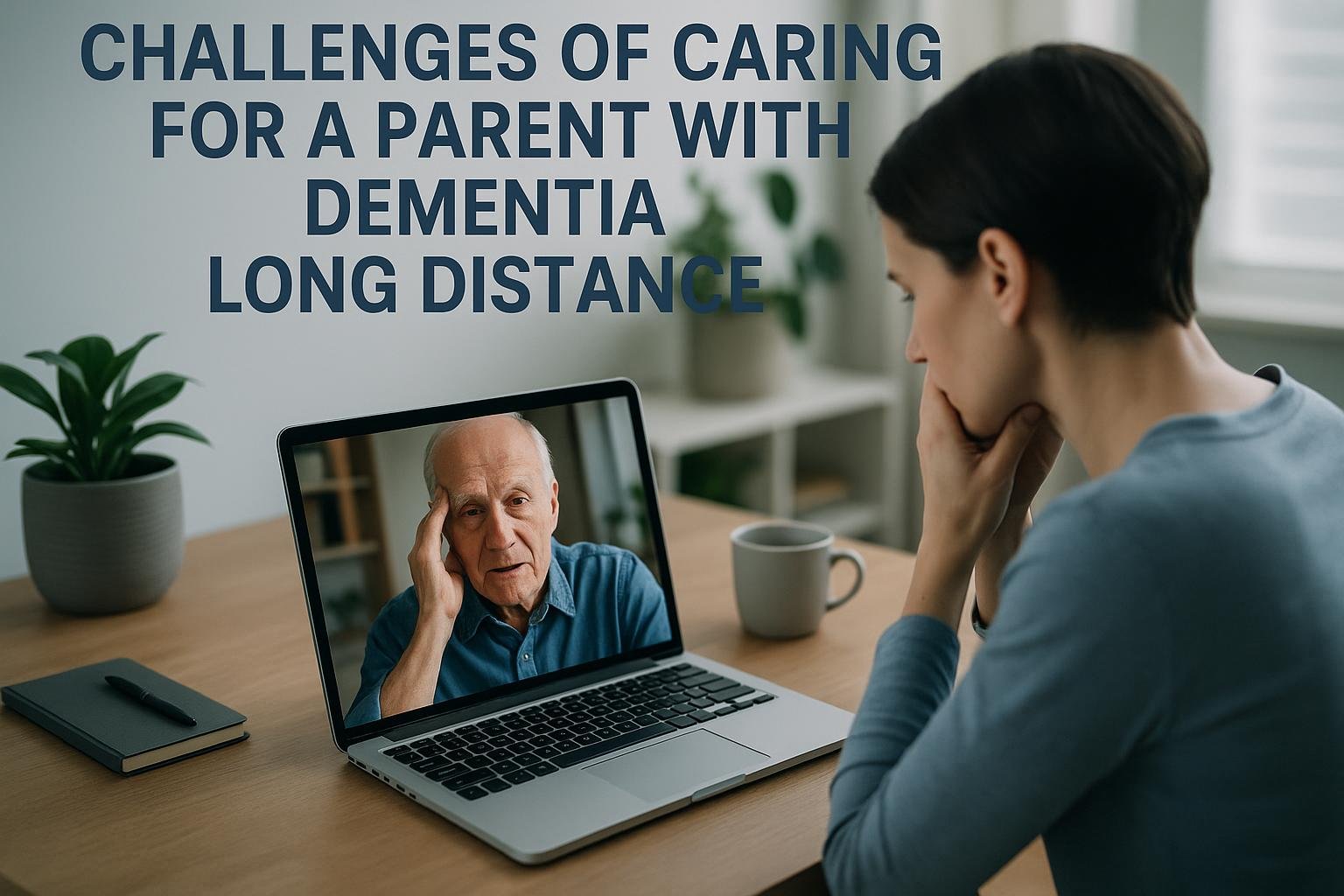
Caring for a parent with dementia is a challenging journey, and when you live far away, the challenges are magnified.
Long-distance caregivers face a unique set of emotional, practical, and financial hurdles. However, with the right strategies and support, it is possible to provide effective care and stay connected with your loved one.
This article will explore the challenges of long-distance caregiving for a parent with dementia and offer practical strategies to help you manage their care from afar.
The Unique Challenges of Long-Distance Caregiving
Long-distance caregivers often experience feelings of guilt, worry, and helplessness. You may feel like you are not doing enough, or you may worry about your parent’s safety and well-being. Some of the specific challenges include:
•Limited Hands-On Involvement: Not being there in person makes it difficult to assess your parent’s needs and to provide the hands-on care they may require.
•Coordinating Care from a Distance: Arranging for medical appointments, in-home care, and other services can be complicated when you are not in the same location.
•Staying Informed: It can be challenging to get accurate and up-to-date information about your parent’s condition and care when you are relying on others.
•Managing Emergencies: When a crisis occurs, it can be stressful and difficult to respond quickly from a distance.
•The Financial Burden: The costs of travel, as well as the expenses of care, can be a significant financial strain.
Strategies for Effective Long-Distance Caregiving
Despite the challenges, there are many things you can do to be an effective long-distance caregiver. The key is to be organized, proactive, and to build a strong support system.
Build a Local Support Network
You cannot do it alone. It is essential to have a team of people on the ground who can help you. This network may include:
•Family and Friends: Other family members and friends who live nearby can be a valuable source of support.
•A Primary Caregiver: If possible, designate one person who lives near your parent to be the primary point of contact.
•A Geriatric Care Manager: These professionals can help you assess your parent’s needs, create a care plan, and coordinate services.
•In-Home Care Providers: A home health aide or a certified nursing assistant can provide hands-on care and assistance with daily activities.
Utilize Technology to Stay Connected
Technology can be a powerful tool for bridging the distance. Use video calls, email, and text messaging to stay in regular contact with your parent and their care team. Shared online calendars and documents can also be helpful for keeping everyone on the same page.
| Strategy | Description |
| Local Network | Build a team of family, friends, and professionals to help on the ground. |
| Technology | Use video calls, shared documents, and other tools to stay connected. |
| Regular Visits | Plan regular visits to assess your parent’s needs and to provide support. |
| Stay Organized | Keep important documents and information in one place. |
Plan Regular Visits
If possible, plan regular visits to see your parent. These visits are an opportunity to:
•Assess their condition and living situation
•Meet with their care team
•Take care of any necessary tasks, such as legal or financial matters
•Spend quality time with your parent
During your visits, try to observe your parent in their daily environment. Pay attention to their physical appearance, their mood, and their ability to manage daily activities. This will give you a better sense of how they are doing and whether any changes need to be made to their care plan.
Communicate with the Care Team
Maintaining open communication with your parent’s care team is essential. This includes their doctors, nurses, home health aides, and any other professionals involved in their care. Make sure you have contact information for everyone on the team and that they know how to reach you.
Schedule regular phone calls or video conferences with the care team to discuss your parent’s condition and any concerns you may have. Don’t be afraid to ask questions and to advocate for your parent’s needs.
Stay Organized
Keep all of your parent’s important information in one place, such as a binder or a secure online document. This should include:
•Medical records and a list of medications
•Contact information for their doctors and other care providers
•Legal and financial documents
•A list of their daily routines and preferences
Taking Care of Yourself
Long-distance caregiving can be stressful. It is important to take care of your own well-being so that you can continue to be an effective caregiver. Make sure to:
•Acknowledge your feelings of guilt, anger, and frustration.
•Seek support from friends, family, or a support group.
•Set boundaries and don’t be afraid to say no.
•Take breaks and make time for your own interests and hobbies.
Caregiver burnout is a real risk, especially for long-distance caregivers who may feel like they are never doing enough. It is important to recognize the signs of burnout, such as exhaustion, irritability, and depression, and to take steps to address them. This may include seeking professional help from a therapist or counselor.
A Team Effort
Long-distance caregiving is a team effort. By building a strong support network, staying organized, and using technology to your advantage, you can provide the best possible care for your parent with dementia, no matter how many miles separate you. Remember that you are not alone, and there are resources available to help you on this journey [1, 2].
References
[1] Alzheimer’s Association. (n.d.). Long Distance Caregiving. https://www.alz.org/help-support/caregiving/care-options/long-distance-caregiving
[2] National Institute on Aging. (2023, October 12). What Is Long-Distance Caregiving?. https://www.nia.nih.gov/health/long-distance-caregiving/what-long-distance-caregiving
[3] Caregiver Action Network. (n.d.). Tips for Long-Distance Alzheimer’s Caregivers in the US. https://www.caregiveraction.org/long-distance-alzheimers-caregiving/
[4] University of Wisconsin-Madison School of Medicine and Public Health. (2024, October 10). Long-Distance Caregiving: Navigating the Challenges and Finding Solutions. https://morapinzonlab.medicine.wisc.edu/2024/10/10/long-distance-caregiving-navigating-the-challenges-and-finding-solutions/