Are you shocked by how quickly your loved one’s memory and thinking abilities have declined? Did they seem fine just weeks or months ago, only to now show significant confusion and cognitive problems? Are you wondering if dementia can really develop this rapidly, or if something else might be causing these sudden changes? These concerns arise when families witness what appears to be rapid cognitive decline.
Dementia can appear to come on suddenly, but the reality is more complex than it first appears. While most dementia types develop gradually over years, certain conditions can cause rapid decline that mimics sudden-onset dementia. Understanding the difference between rapidly progressive dementia and conditions that cause sudden cognitive changes helps families seek appropriate medical care.
Learn what causes sudden changes in thinking and memory. Rapidly progressive conditions affect approximately 15-20% of all dementia cases. These conditions require immediate medical attention because some have an underlying cause that is treatable, and early intervention can significantly impact outcomes for patients and families.
Understanding Sudden vs. Gradual Dementia Onset
Dementia is not a single disease but rather a collection of symptoms that affect memory, thinking, and daily functioning. Most different types of dementia develop gradually over several years, with subtle changes that families may not notice initially. Alzheimer’s disease, the most common form of dementia, typically tends to progress slowly with symptoms of alzheimer’s becoming apparent only after significant brain damage has occurred.
Sudden change in cognitive function differs from typical dementia progress in several important ways. While dementia often develops slowly, some conditions can cause dementia symptoms to appear rapidly or worsen suddenly.
Timeline Differences
- Gradual dementia develops over 2-10 years with slow, progressive changes
- Rapidly progressing dementia shows significant decline within weeks to months
- Sudden cognitive changes appear within days to weeks
Symptom Patterns
Gradual onset dementia:
- Problems with memory appear first
- Language difficulties develop slowly
- Personality changes occur gradually
- Daily functioning declines over time
Rapid progression:
- Multiple cognitive areas affected simultaneously
- Dramatic personality changes
- Quick loss of daily functioning skills
- Physical symptoms may accompany cognitive decline
Understanding Different Dementia Types
Dementia types vary in how they progress. Alzheimer’s disease typically shows gradual decline in memory and thinking. Vascular dementia can progress in a step-wise pattern, sometimes appearing to worsen suddenly after strokes. Lewy body dementia may show fluctuating symptoms that can get worse unpredictably.
People with dementia in the early stage may not notice early symptoms of dementia, but families often observe changes. Symptoms of dementia can include memory loss, confusion, and difficulty with daily tasks. Dementia symptoms typically get worse over time, but the rate of progression varies significantly.
| Onset Type | Timeline | Reversibility | Common Causes |
|---|---|---|---|
| Gradual dementia | 2-10 years | Usually irreversible | Alzheimer’s, disease and vascular dementia |
| Rapidly progressive dementia | Weeks to months | Sometimes treatable | Infections, metabolic disorders |
| Sudden worsening of dementia symptoms | Days to weeks | Often reversible | Delirium, medication effects |
| Acute confusion | Hours to days | Usually reversible | Medical emergencies, infections |
Types of Rapidly Progressive Dementia
Rapidly progressive conditions encompass several distinct diseases that cause dementia symptoms to develop much faster than typical dementia. Understanding these forms of rpd helps families and healthcare providers identify appropriate treatments.
Creutzfeldt-Jakob Disease (CJD)
CJD represents the most well-known rapidly progressive dementia, caused by different abnormal prion disease proteins that damage brain tissue. This rare condition affects approximately 1 in 1 million people annually.
CJD characteristics:
- Rapid progression from normal function to severe dementia within months
- Myoclonus (involuntary muscle jerks)
- Visual disturbances and coordination problems
- Distinctive EEG patterns and brain imaging changes
- No current treatment available
Autoimmune Encephalitis
Autoimmune encephalitis occurs when the immune system attacks brain tissue, causing rapid decline that may be reversible with prompt treatment.
Key features:
- Sudden onset of confusion and memory loss
- Psychiatric symptoms including hallucinations and behavioral changes
- Seizures in many cases
- Responds to immunotherapy when diagnosed early
- Better outcomes with rapid treatment
Normal Pressure Hydrocephalus (NPH)
NPH causes cognitive impairment through fluid accumulation in brain ventricles, creating pressure that affects brain function.
NPH triad symptoms:
- Gait disturbances (difficulty walking)
- Urinary incontinence
- Cognitive decline affecting memory and thinking
- Potentially treatable with surgical shunt placement
Rapidly Progressive Alzheimer’s Disease
Some Alzheimer’s cases progress quickly, showing significant decline within 1-2 years rather than the usual 8-10 years.
Characteristics:
- Younger onset (often under age 65)
- Genetic factors may contribute
- Multiple cognitive domains affected simultaneously
- Faster functional decline than typical alzheimer’s disease
Conditions That Mimic Sudden Dementia
Many treatable conditions can cause a sudden worsening of cognitive function that appears similar to new dementia. Identifying these conditions is crucial because prompt treatment can often reverse cognitive symptoms.
Delirium
Delirium represents acute confusion that develops rapidly and fluctuates throughout the day. Unlike dementia, delirium is usually reversible when causes of delirium are treated.
Delirium characteristics:
- Rapid onset over hours to days
- Fluctuating symptoms that change throughout the day
- Attention problems and difficulty focusing
- Altered consciousness levels
- Often reversible with appropriate treatment
Common delirium causes:
- Infections (especially urinary tract infections)
- Medication effects or interactions
- Dehydration and electrolyte imbalances
- Anesthesia and surgery effects
- Alcohol withdrawal
Medication Effects
Medication-induced cognitive impairment can develop rapidly when new drugs are started or dosages changed, causing dementia symptoms to appear or worsen.
High-risk medications:
- Anticholinergic drugs (antihistamines, bladder medications)
- Benzodiazepines (anxiety and sleep medications)
- Opioid pain medications
- Blood pressure medications causing low blood pressure
- Multiple drug interactions (polypharmacy effects)
Metabolic Disorders
Metabolic imbalances can cause dementia symptoms to appear rapidly, but these improve when underlying conditions are corrected.
Common metabolic causes:
- Thyroid disorders (both overactive and underactive)
- Vitamin B12 deficiency
- Severe diabetes with blood sugar fluctuations
- Kidney or liver dysfunction
- Electrolyte imbalances (sodium, calcium)
Psychiatric Conditions
Severe depression and other psychiatric conditions can cause dementia symptoms that mimic true dementia, particularly in older adults.
Pseudodementia characteristics:
- Depression-related cognitive decline
- Rapid onset of memory and thinking problems
- Responds to depression treatment
- Reversible with appropriate psychiatric care
| Condition | Onset Speed | Reversibility | Key Features |
|---|---|---|---|
| Delirium | Hours to days | Usually reversible | Fluctuating confusion, attention problems |
| Medication effects | Days to weeks | Often reversible | Related to new drugs or dose changes |
| Metabolic disorders | Days to weeks | Usually reversible | Systemic symptoms, lab abnormalities |
| Severe depression | Weeks to months | Reversible | Mood symptoms, responds to treatment |
| Autoimmune encephalitis | Days to weeks | Often reversible | Seizures, psychiatric symptoms |
Warning Signs Requiring Immediate Attention
Recognizing warning signs of rapid decline helps families seek prompt medical evaluation that can be life-saving when treatable causes are identified. People with dementia may experience a sudden worsening that requires immediate attention.
Cognitive Red Flags
Sudden cognitive changes that require immediate medical attention include the 10 early signs and symptoms healthcare providers watch for:
- Rapid memory loss over days to weeks
- Severe confusion about time, place, or people
- Dramatic personality changes unlike the person’s normal behavior
- New difficulty with previously mastered skills
- Language problems that develop quickly
Physical Symptoms
Physical signs that may accompany rapid decline:
- Fever suggesting infection
- Severe headaches that are new or different
- Seizures or muscle jerks
- Vision changes or double vision
- Difficulty walking or coordination problems
- Tremors or involuntary movements
Behavioral Changes
Behavioral symptoms requiring urgent evaluation:
- Hallucinations (seeing or hearing things that aren’t there)
- Paranoid thoughts or delusions
- Extreme agitation or aggression
- Catatonia (not moving or responding)
- Rapid mood swings between extremes
Functional Decline
Rapid loss of abilities:
- Sudden inability to perform daily activities
- Getting lost in familiar places
- Forgetting how to use common objects
- Difficulty recognizing family members
- Problems with eating, dressing, or hygiene
People with advanced dementia may notice a sudden worsening of existing symptoms. Someone with dementia in later stages may show new or worsening symptoms that differ from their usual pattern. Caregiver observations are crucial for identifying these changes.
Diagnostic Approach and Medical Evaluation
Comprehensive medical evaluation is essential when rapid decline occurs, as many causes of rpd are treatable if identified quickly. Early detection can significantly improve outcomes.
Initial Assessment
Emergency evaluation should include:
- Detailed medical history including recent medications, illnesses, and surgeries
- Physical examination focusing on neurological signs
- Mental status testing to assess cognitive function
- Laboratory tests to identify treatable causes
Essential Laboratory Tests
Blood tests to identify reversible causes:
- Complete blood count to check for infections
- Comprehensive metabolic panel for electrolyte and organ function
- Thyroid function tests
- Vitamin B12 and folate levels
- Inflammatory markers (ESR, CRP)
- Autoimmune antibodies when autoimmune encephalitis suspected
Brain Imaging
Neuroimaging studies help identify structural causes:
- CT scan to rule out strokes, bleeding, or tumors
- MRI for detailed brain structure evaluation
- Specialized MRI sequences for specific conditions
- PET scans when certain type of dementia suspected
Specialized Testing
Additional tests when indicated:
- Lumbar puncture (spinal tap) for infections or autoimmune conditions
- EEG to detect seizure activity or specific patterns
- Neuropsychological testing for detailed cognitive assessment
- Genetic testing for hereditary conditions
Medication Review
Comprehensive medication evaluation:
- Review all medications including over-the-counter drugs
- Identify high-risk medications that affect cognition
- Check for drug interactions
- Consider medication timing and dosage effects
Treatment and Management Strategies
Treatment approaches for rapid decline depend on underlying causes, with some conditions being completely reversible while others require supportive care. Caregiver education and support are essential components of management.
Treatable Causes
Conditions with potential for improvement:
Infections:
- Antibiotic treatment for bacterial infections
- Antiviral medications when appropriate
- Supportive care during recovery
Medication-related decline:
- Medication discontinuation or dose reduction
- Alternative medications with fewer cognitive effects
- Gradual improvement over weeks to months
Metabolic disorders:
- Thyroid hormone replacement for hypothyroidism
- Vitamin B12 supplementation for deficiency
- Blood sugar management for diabetes
- Electrolyte correction for imbalances
Autoimmune conditions:
- Immunosuppressive therapy (steroids, immunoglobulins)
- Plasma exchange for severe cases
- Long-term immunotherapy to prevent recurrence
Supportive Care
Management for irreversible conditions:
Safety measures:
- Home safety modifications to prevent falls and injuries
- Supervision appropriate to cognitive level
- Medical alert systems for emergencies
Symptom management:
- Behavioral interventions for agitation or confusion
- Sleep hygiene to improve rest
- Nutrition support to maintain health
- Physical therapy to maintain mobility
Family support:
- Education about the condition and prognosis
- Caregiver resources and support groups
- Legal and financial planning assistance
- Respite care options
Managing Different Stages
People living with dementia have varying needs depending on stages of dementia. Symptoms vary significantly between individuals and dementia types. Symptoms usually get worse over time, but the rate varies.
Early stage management:
- Focus on maintaining independence
- Early symptoms monitoring
- Safety planning
Advanced stage care:
- People with advanced dementia need comprehensive support
- Symptoms are unpredictable and require flexible approaches
- Caregiver stress management becomes crucial
Monitoring and Follow-up
Ongoing care coordination:
- Regular medical monitoring to track progression
- Medication adjustments as needed
- Functional assessments to guide care planning
- Family meetings to discuss care goals
| Condition Type | Treatment Approach | Expected Outcome | Timeline |
|---|---|---|---|
| Infections | Antimicrobial therapy | Often complete recovery | Days to weeks |
| Medication effects | Drug modification | Usually significant improvement | Weeks to months |
| Metabolic disorders | Specific replacement therapy | Variable improvement | Weeks to months |
| Autoimmune encephalitis | Immunotherapy | Often good recovery | Months |
| Rapidly progressive dementia | Supportive care | Symptom management | Ongoing |
When to Seek Emergency Medical Care
Immediate medical attention is required when rapid decline occurs, as early intervention can be life-saving for treatable conditions. Caregiver recognition of warning signs is crucial.
Call 911 immediately for:
- Sudden severe confusion with fever
- Seizures or loss of consciousness
- Severe headache with cognitive changes
- Signs of stroke (weakness, speech problems, facial drooping)
- Difficulty breathing or chest pain with confusion
Seek urgent medical evaluation within hours for:
- Swift decline in memory over days to weeks
- New hallucinations or delusions
- Extreme behavioral changes unlike the person’s normal behavior
- Inability to recognize family members suddenly
- New difficulty walking or coordination problems
Schedule prompt medical appointment within days for:
- Gradual cognitive decline over weeks to months
- Memory problems affecting daily function
- Personality changes that concern family
- New medication effects on thinking
Emergency department evaluation should include:
- Comprehensive medical assessment
- Laboratory testing for treatable causes
- Brain imaging to rule out structural problems
- Medication review for cognitive effects
Caregiver should document person’s symptoms and any sudden deterioration to help healthcare providers understand the timeline and severity of changes.
Understanding Specific Dementia Types and Progression
Dementia encompasses many conditions, each with distinct patterns of progression. Understanding how dementia may progress helps families prepare for changes.
Alzheimer’s Disease Progression
Alzheimer’s disease typically shows gradual progression, but some cases can worsen more rapidly. Symptoms of alzheimer’s include memory loss, confusion, and behavioral changes. Person’s dementia may progress differently than expected patterns.
Vascular Dementia Patterns
Vascular dementia results from reduced blood flow to the brain. Symptoms of vascular dementia can include sudden changes after strokes. This type of dementia may show step-wise progression rather than gradual decline.
Lewy Body Dementia Features
Lewy body dementia shows fluctuating symptoms and may include visual hallucinations. This form of dementia can progress unpredictably, with symptoms that get worse and improve cyclically.
Factors That Can Trigger Sudden Worsening
Several factors can trigger a sudden worsening of existing dementia symptoms:
- Fall or a stroke can cause a sudden worsening of cognitive function
- Infections can worsen dementia symptoms temporarily
- Medication changes may cause dementia symptoms to appear worse
- Anesthesia and surgery can trigger a sudden decline
- Dehydration and illness can worsen existing symptoms
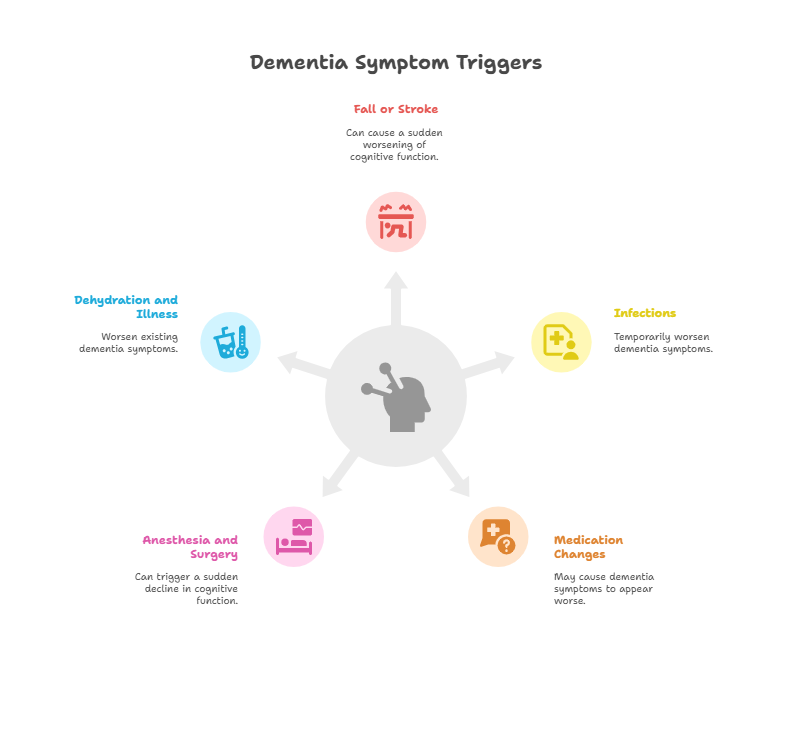
Dementia patients and families should be aware that symptoms suddenly worsening may indicate treatable conditions rather than natural disease progression.
Frequently Asked Questions
Can dementia really develop overnight?
True overnight dementia is extremely rare. What appears as dementia suddenly developing is usually either delirium (acute confusion from treatable causes) or rapid progression of an underlying condition. Most cases of apparent “dementia suddenly” appearing have treatable causes that require immediate medical evaluation.
What causes dementia to progress rapidly?
Rapidly progressive dementia can result from prion disease (like CJD), autoimmune encephalitis, infections, medication effects, or metabolic disorders. Some cases represent fast-progressing forms of common cause dementias like alzheimer’s disease, particularly in younger patients.
How can you tell the difference between delirium and dementia?
Delirium develops rapidly (hours to days), fluctuates throughout the day, and primarily affects attention and consciousness. Dementia develops gradually (months to years), remains relatively stable day-to-day, and primarily affects memory and thinking. Delirium is usually reversible; most dementia is not.
Are there warning signs of rapidly progressive dementia?
Warning signs include rapid memory loss over weeks, dramatic personality changes, new difficulty with familiar tasks, physical symptoms like seizures or coordination problems, and sudden behavioral changes. Any rapid decline requires immediate medical evaluation.
Can rapid cognitive decline be reversed?
Many causes of rapid decline are treatable and potentially reversible, including infections, medication effects, metabolic disorders, and autoimmune conditions. Early detection and medical evaluation are crucial because prompt treatment significantly improves outcomes for treatable causes.
Key Takeaways
Dementia can appear to come on suddenly, but true sudden-onset dementia is rare. Most cases of rapid decline have underlying causes that require immediate medical evaluation to identify treatable conditions.
Rapidly progressive dementia affects 15-20% of dementia cases and includes conditions like Creutzfeldt-Jakob disease, autoimmune encephalitis, and fast-progressing alzheimer’s disease. These conditions progress much faster than typical dementia.
Many treatable conditions can mimic sudden dementia, including delirium, medication effects, infections, metabolic disorders, and psychiatric conditions. Early detection and treatment of these conditions can often reverse cognitive symptoms completely.
Immediate medical evaluation is essential for any rapid decline because early intervention can be life-saving for treatable causes. Warning signs include rapid memory loss, dramatic personality changes, physical symptoms, and sudden functional decline.
The most important message for families is that rapid decline requires emergency medical attention. While some causes represent irreversible rapidly progressive dementia, many cases have treatable underlying conditions that can be reversed with prompt medical care, making immediate evaluation crucial for optimal outcomes.
References:
[1] UCSF Memory and Aging Center. “Rapidly Progressive Dementias.” 2023. https://memory.ucsf.edu/dementia/rapidly-progressive-dementias