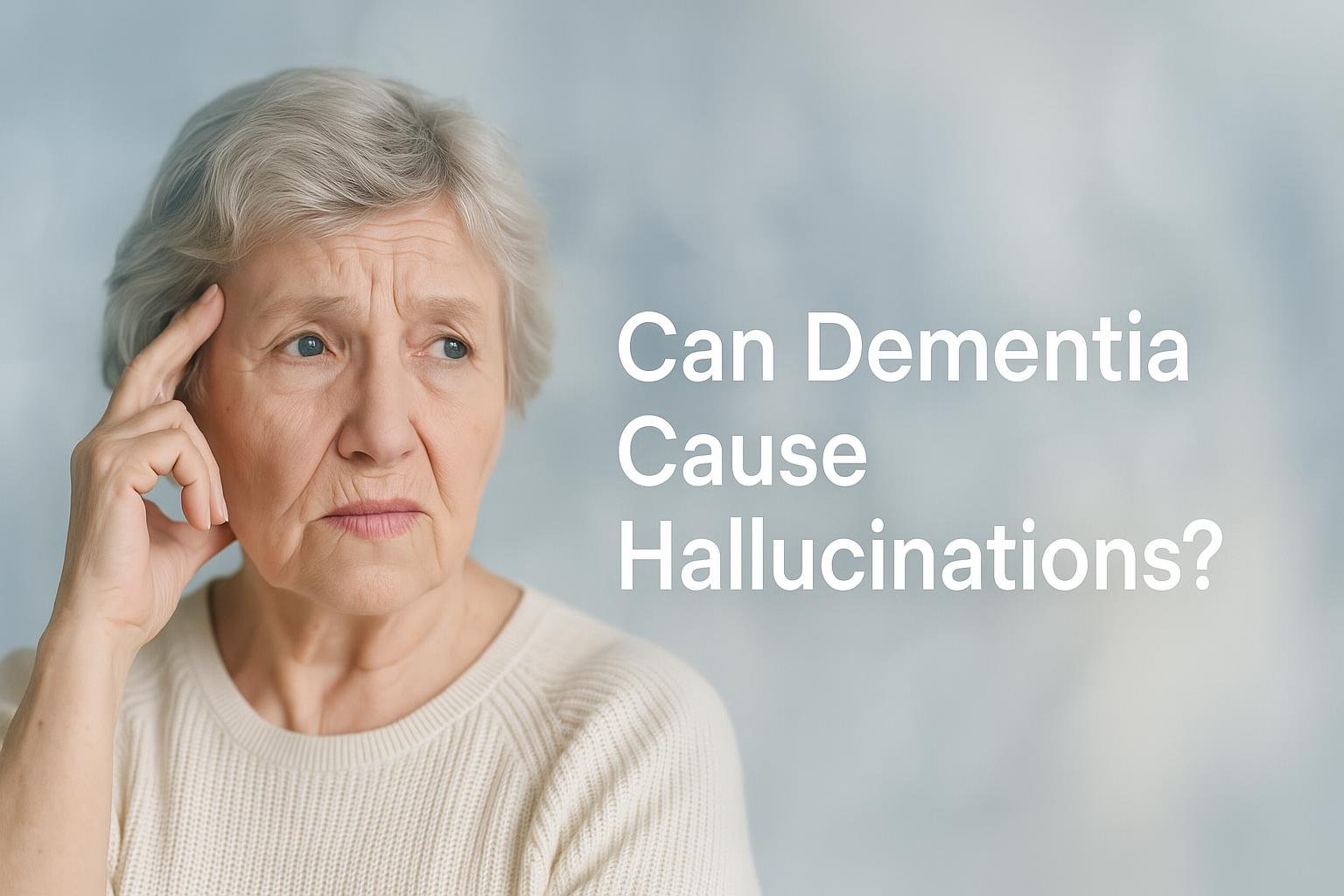
Are you concerned that your loved one with dementia is seeing or hearing things that are not there? Do they describe visitors who never came or animals that you cannot see? Are you wondering if these experiences are normal parts of dementia or signs of something more serious? These questions arise frequently as families witness their loved ones experiencing hallucinations.
Hallucinations in dementia are common symptoms that can affect patients at various stages of the disease. These false sensory experiences involve seeing, hearing, feeling, smelling, or tasting things that are not actually present in the environment. Understanding that hallucinations are neurological symptoms rather than signs of mental illness helps families respond more effectively.
Visual hallucinations represent the most frequent type in dementia patients, particularly those with Lewy body dementia. These experiences can be distressing for both patients and families, but understanding their causes and management strategies helps reduce anxiety and improve quality of life for everyone involved.
Understanding Hallucinations in Dementia

Hallucinations represent false sensory experiences where patients perceive things that are not actually present in their environment. In dementia, these experiences result from brain changes that affect how sensory information is processed and interpreted, leading to misperceptions that feel completely real to the patient.
Types and Prevalence
Types of hallucinations in dementia include:
•Visual (seeing things) – most common type
•Auditory (hearing things) – less frequent
•Tactile (feeling things) – uncommon
•Olfactory (smelling things) – rare
•Gustatory (tasting things) – rare
Prevalence varies significantly by dementia type, with visual hallucinations being most common across all conditions:
| Dementia Type | Hallucination Rate | Most Common Type | Typical Timing |
| Lewy body dementia | Up to 80% | Visual | Early in disease |
| Parkinson’s dementia | 60-70% | Visual | Variable timing |
| Alzheimer’s disease | 20-40% | Visual | Later stages |
| Vascular dementia | 10-30% | Visual | Variable timing |
| Frontotemporal dementia | 10-20% | Visual/auditory | Variable timing |
Neurological Basis
Brain changes that cause hallucinations involve damage to areas responsible for processing sensory information and distinguishing between internal thoughts and external reality. Key affected regions include:
•Occipital lobe – visual processing center
•Temporal lobe – memory and recognition
•Frontal lobe – reality monitoring and attention
Neurotransmitter changes contribute significantly to hallucination development:
•Acetylcholine deficiency affects visual processing in Alzheimer’s and Lewy body dementia
•Dopamine system changes in Parkinson’s disease and Lewy body dementia influence hallucination occurrence
•Alpha-synuclein protein deposits in Lewy body dementia accumulate in visual processing areas
Sleep-wake cycle disruptions common in dementia blur the boundary between sleep and wakefulness, leading to dream-like experiences during waking hours that patients perceive as real hallucinations.
Recognizing Hallucination Signs
Direct reports from patients may include statements about seeing people in their home, animals in their room, or objects that family members cannot see. Patients may ask about visitors who never came, point to empty spaces while describing what they see, or interact with hallucinated figures as if they were real.
Behavioral indicators often provide clues when patients cannot verbally report their experiences:
•Talking to empty spaces
•Reaching for objects that are not there
•Following with their eyes something others cannot see
•Showing emotional responses to invisible stimuli
•Sudden changes in mood without apparent cause
Common Hallucination Content
Visual hallucinations in dementia often follow predictable patterns:
•People – most common, including deceased relatives, children, or unfamiliar adults
•Animals – particularly small animals like cats or dogs
•Objects – bugs, patterns on walls, or moving shadows
Timing patterns help identify triggers:
•More frequent during evening hours (sundowning)
•Increased when lighting is dim
•Worsened when patients are tired or stressed
•May occur more in unfamiliar environments
Emotional responses vary significantly:
•Some patients find hallucinations comforting (seeing deceased loved ones)
•Others may be frightened or agitated
•Many patients show neutral responses to their hallucinations
•Insight levels vary – some recognize experiences aren’t real, others remain convinced
Causes and Risk Factors
Primary brain damage represents the fundamental cause of hallucinations in dementia. As brain regions responsible for visual processing, attention, and reality monitoring deteriorate, patients lose the ability to accurately distinguish between internal thoughts and external reality.
Medical and Environmental Factors
Medication effects can trigger or worsen hallucinations:
•Anticholinergic medications block acetylcholine activity
•Dopamine medications for Parkinson’s symptoms
•Pain medications and sleep aids
•Psychoactive drugs of various types
Environmental triggers influence hallucination occurrence:
•Poor lighting creates shadows and visual distortions
•Reflections in mirrors or windows
•Visual patterns in wallpaper or fabrics
•Unfamiliar environments increase confusion
•Noise and stress worsen cognitive function
Physical health problems can increase hallucination susceptibility:
•Infections (especially urinary tract infections)
•Dehydration and metabolic imbalances
•Pain that affects cognitive function
•Sensory impairments (vision or hearing problems)
•Sleep disturbances and poor sleep quality
| Risk Factor | Impact Level | Management Strategy |
| Lewy body dementia | Very high | Specialized medications, environmental modifications |
| Poor lighting | Moderate | Improve lighting throughout home |
| Medication effects | Variable | Regular medication reviews |
| Sensory impairments | Moderate | Correct vision/hearing problems |
| Sleep problems | Moderate | Establish good sleep hygiene |
| Infections/illness | High | Prompt medical treatment |
Effective Management Strategies
Comprehensive approaches to managing hallucinations focus on reducing distress and maintaining quality of life while ensuring patient safety. The goal is not necessarily to eliminate hallucinations but to help patients cope with them effectively.
Environmental Modifications
Lighting improvements significantly reduce hallucination frequency:
•Increase overall lighting throughout the home
•Eliminate shadows that can be misinterpreted
•Use nightlights to prevent dark areas
•Avoid harsh fluorescent lighting that creates glare
Visual environment changes help reduce triggers:
•Remove or cover mirrors if reflections cause distress
•Reduce visual clutter and simplify surroundings
•Avoid busy patterns in wallpaper or fabrics
•Ensure clear pathways free of obstacles
Safety modifications protect patients who may respond to hallucinations:
•Remove potential hazards from accessible areas
•Secure dangerous items like knives or medications
•Install safety locks if needed
•Provide supervision during high-risk periods
Communication and Support Strategies
Validation techniques acknowledge the patient’s experience without reinforcing hallucinations:
•”That must be interesting to see” validates without confirming reality
•”I can see this is important to you” acknowledges emotional impact
•”I don’t see what you’re seeing, but I believe it’s real to you” maintains honesty while showing support
Distraction methods redirect attention when hallucinations cause distress:
•Engaging activities that capture attention
•Familiar music or favorite songs
•Gentle touch or physical comfort
•Pleasant conversation about positive topics
•Change of location to different room
Routine establishment provides stability that may reduce hallucination frequency:
•Consistent daily schedules create predictability
•Familiar caregivers when possible
•Structured activities throughout the day
•Regular meal and sleep times
Response Techniques
When hallucinations occur, effective responses include:
•Remain calm and avoid arguing about reality
•Assess emotional impact – are they distressed or comfortable?
•Provide reassurance if patient seems frightened
•Gently redirect if hallucinations cause problems
•Ensure safety if patient might act on hallucinations
What NOT to do:
•Don’t argue or insist hallucinations aren’t real
•Don’t dismiss patient’s concerns
•Don’t reinforce frightening hallucinations
•Don’t become frustrated or impatient
When to Seek Medical Help
Medical evaluation becomes necessary when hallucinations significantly impact quality of life, safety, or daily functioning. Healthcare providers can assess underlying causes and recommend appropriate interventions.
Immediate medical attention is required for:
•Dangerous behaviors resulting from hallucinations
•Extreme agitation or fear that cannot be calmed
•Sudden onset of severe hallucinations
•Signs of delirium with rapid confusion changes
•Hallucinations with fever or other illness symptoms
Medication considerations may be appropriate for severe cases:
•Cholinesterase inhibitors (donepezil, rivastigmine) may help reduce hallucinations
•Antipsychotic medications for severe cases, but require careful monitoring
•Medication reviews to identify drugs that might be contributing
•Dosage adjustments of existing medications
Specialist consultations may be beneficial:
•Geriatric psychiatrists for complex medication management
•Neurologists for detailed brain function assessment
•Dementia specialists for comprehensive care planning
| Situation | Urgency | Action Needed |
| Dangerous behaviors from hallucinations | High | Immediate medical evaluation |
| Sudden severe hallucinations | High | Urgent medical assessment |
| Extreme distress from hallucinations | Moderate | Schedule medical appointment |
| New hallucinations with illness | High | Prompt medical evaluation |
| Medication-related hallucinations | High | Contact prescribing physician |
Frequently Asked Questions
Are hallucinations normal in dementia?
Hallucinations are common in dementia, particularly visual hallucinations, and represent neurological symptoms rather than mental illness. They occur most frequently in Lewy body dementia (up to 80%) but can occur in other dementia types. While common, new or worsening hallucinations should be evaluated by healthcare providers.
Should you correct dementia patients about their hallucinations?
Correcting or arguing about hallucinations is generally not helpful and may increase distress. Instead, validate the patient’s emotional experience while providing gentle reassurance. Focus on how the hallucination makes them feel rather than whether it’s real.
Can medications cause hallucinations in dementia?
Many medications can trigger or worsen hallucinations, including anticholinergic drugs, dopamine medications, pain medications, and sleep aids. New or worsening hallucinations should prompt a medication review with healthcare providers.
What’s the difference between hallucinations and delusions?
Hallucinations involve false sensory experiences (seeing, hearing things that aren’t there), while delusions are false beliefs (thinking someone is stealing). Both can occur in dementia but represent different types of symptoms requiring different management approaches.
Can hallucinations in dementia be treated?
Treatment approaches include environmental modifications, communication strategies, and medications when necessary. Many hallucinations can be managed effectively through non-drug approaches such as improving lighting, reducing stress, and providing reassurance.
Key Takeaways
Hallucinations are common in dementia, particularly visual hallucinations, and represent neurological symptoms resulting from brain changes rather than psychiatric problems. Understanding this helps families respond with empathy and develop effective management strategies.
Different dementia types show varying hallucination patterns, with Lewy body dementia having the highest rates. Visual hallucinations involving people, animals, or objects are most common across all dementia types.
Management focuses on environmental modifications, supportive communication, and ensuring safety rather than convincing patients their hallucinations aren’t real. Improving lighting, providing reassurance, and using distraction techniques prove more effective than confrontation.
Medical evaluation is important for new or worsening hallucinations to rule out treatable causes such as infections, medication effects, or other medical conditions. While hallucinations are common in dementia, they should not be dismissed without proper assessment.
The most important message for families is that hallucinations can be managed effectively with appropriate understanding and strategies. Many patients experience non-threatening hallucinations that can be managed through environmental modifications and supportive care that maintains dignity and comfort.
References:
[1] Alzheimer’s Society. “Hallucinations and dementia.” March 15, 2023. https://www.alzheimers.org.uk/about-dementia/symptoms-and-diagnosis/hallucinations