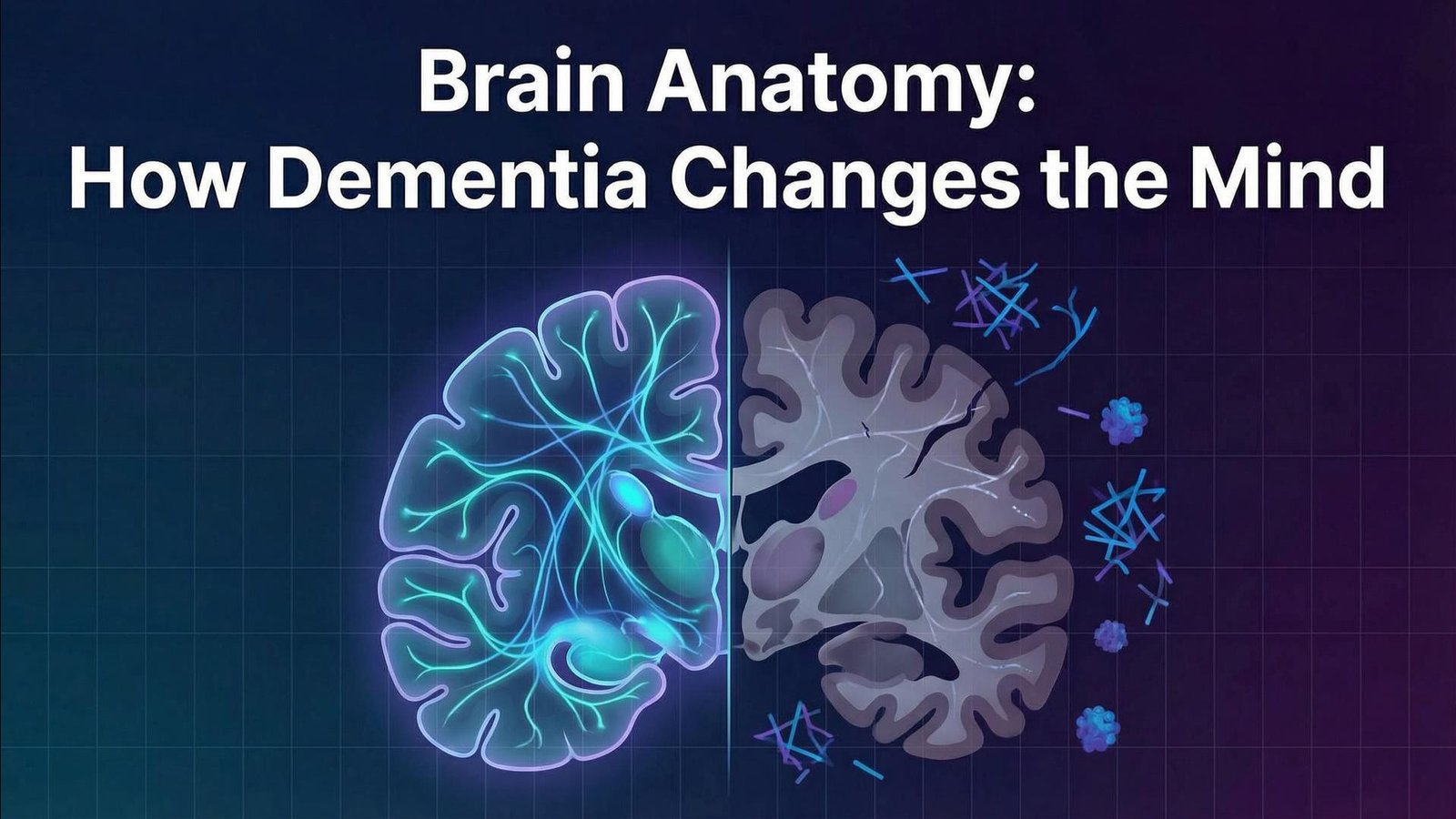
The healthy human brain is a marvel of biological engineering, containing tens of billions of neurons that process and transmit information. These specialized cells control everything from our memories to our movements. But in dementia, this intricate communication network is disrupted, leading to a widespread loss of brain function as neurons stop working, lose connections, and eventually die.
Understanding the physical changes that occur in the brain is key to grasping the profound impact of dementia. While a healthy brain shrinks to some degree with age, it doesn’t lose neurons in large numbers. In Alzheimer’s disease, the most common form of dementia, the damage is widespread and devastating.
The Hallmarks of a Brain with Alzheimer’s
Two primary culprits are responsible for the damage seen in the brain of a person with Alzheimer’s: amyloid plaques and neurofibrillary tangles.
Amyloid Plaques
Amyloid plaques are abnormal clusters of a protein called beta-amyloid that build up between neurons. In a healthy brain, this protein is broken down and eliminated. In Alzheimer’s, however, these protein fragments clump together, forming hard, insoluble plaques that disrupt cell function and communication. The beta-amyloid 42 form is thought to be especially toxic.
Neurofibrillary Tangles
Neurofibrillary tangles are abnormal accumulations of a protein called tau that collect inside neurons. In a healthy brain, tau helps stabilize microtubules, which are part of the cell’s internal support structure and transport system. In Alzheimer’s, tau proteins twist into abnormal tangles, causing the microtubules to disintegrate. This collapses the neuron’s transport system, leading to cell death.
| Brain Abnormality | Protein Involved | Location | Impact |
| Amyloid Plaques | Beta-amyloid | Between neurons | Disrupts cell communication |
| Neurofibrillary Tangles | Tau | Inside neurons | Collapses neuron transport system |
How Dementia Shrinks the Brain
As neurons die, the brain begins to shrink, a process known as brain atrophy. This shrinkage is not uniform and affects different regions of the brain at different stages of the disease.
The Progression of Brain Damage
The damage from Alzheimer’s typically begins in areas of the brain involved in memory before spreading to other regions.
1.Early Stage: The damage is first seen in the entorhinal cortex and hippocampus. These areas are critical for forming and storing memories. This is why memory loss is often one of the first symptoms of the disease.
2.Middle Stage: The disease spreads to the cerebral cortex, particularly the areas responsible for language, reasoning, and social behavior. This leads to difficulties with communication, problem-solving, and changes in personality.
3.Late Stage: In the final stages, the damage is widespread. The brain has shrunk significantly, affecting a person’s ability to live and function independently. Ultimately, the disease is fatal.
The Role of Glial Cells and Inflammation
Neurons aren’t the only cells affected by dementia. Glial cells, which support and protect neurons, also play a role. Microglia and astrocytes, two types of glial cells, are involved in the brain’s immune response. In Alzheimer’s, these cells can become over-activated, contributing to chronic inflammation that further damages neurons.
Hope Through Science
Thanks to advances in research, we can now detect these brain changes in living individuals through brain imaging (like PET scans) and blood tests. This allows for earlier and more precise diagnoses. Furthermore, new treatments are being developed that target the underlying brain changes. For example, anti-amyloid drugs like lecanemab and donanemab have been approved to reduce amyloid plaques and have been shown to slow cognitive decline in some people with early Alzheimer’s.
Understanding how dementia changes the brain is the first step toward developing more effective treatments and, one day, a cure.
Disclaimer: This article is for informational purposes only and does not constitute medical advice. Please consult with a qualified healthcare professional for any health concerns or before making any decisions related to your health or treatment.