Finding the right activities for someone with moderate stage Alzheimer’s can feel overwhelming. The key lies in understanding their current abilities and choosing activities that bring joy, maintain dignity, and create positive connections while reducing anxiety and improving mood.
Understanding Moderate Stage Alzheimer’s
Moderate stage Alzheimer’s typically lasts 2-10 years. People experience significant changes but retain many emotional and social connections.
What Changes
Memory and thinking:
- Difficulty remembering recent events
- Problems recognizing familiar people and places
- Confusion about time and dates
- Trouble following complex instructions
Daily living:
- Need help with personal care
- Difficulty managing medications and finances
- Problems with cooking and household tasks
- Getting lost in familiar environments
Communication:
- Trouble finding the right words
- Repeating stories or questions
- Difficulty following conversations
Behavior and emotions:
- Increased anxiety and agitation
- Mood swings and personality changes
- Wandering or restlessness
- Sleep pattern disruptions
What Abilities Remain
Emotional connections:
- Recognition of familiar faces and voices
- Response to affection and kindness
- Enjoyment of music and familiar activities
- Ability to express feelings and preferences
Physical and social abilities:
- Most motor skills remain intact
- Can participate in simple activities
- Enjoys sensory experiences
- Benefits from routine and structure
Activity Selection Principles
Focus on Abilities
Choose activities based on what the person can still do well. If they can no longer read books, they might enjoy picture books with large, clear images.
Simplify and Adapt
Break complex activities into simple steps. Instead of “set the table,” try “please put this plate here” while pointing to the spot.
Use Familiar Activities
Activities connected to past interests often bring the most joy. A former teacher might enjoy simple educational activities, while someone who loved gardening might find peace in tending plants.
Create Success
Choose activities where the person can succeed and feel accomplished. Success builds confidence and encourages participation.
Follow Their Lead
Pay attention to mood, energy level, and interests each day. What works one day might not work the next.
Physical Activities
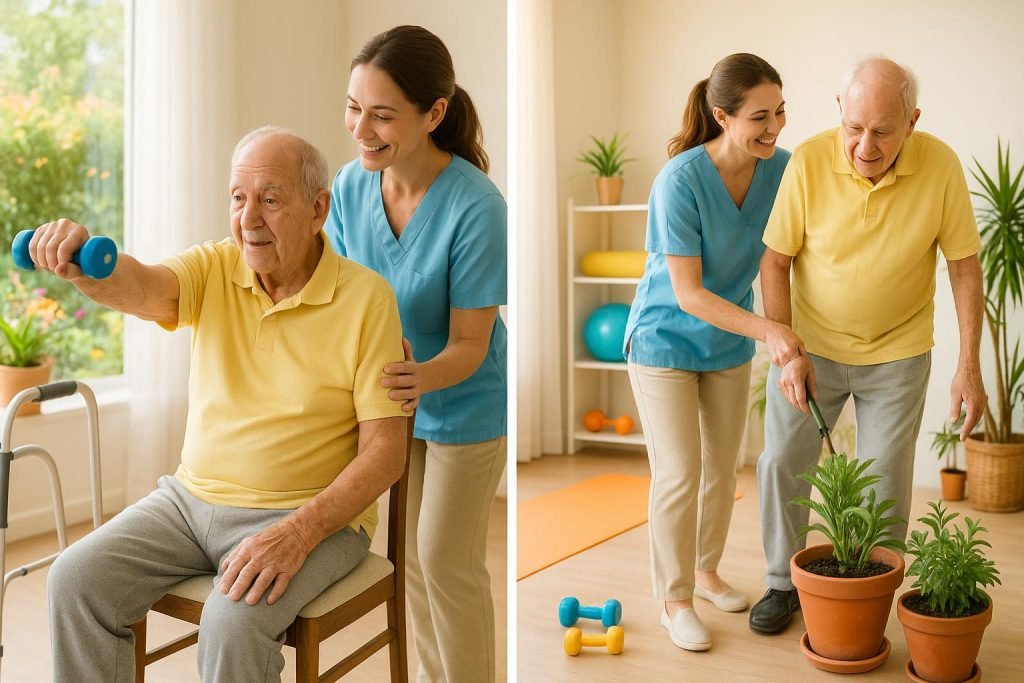
Physical activity provides improved mood, better sleep, and maintained mobility.
Exercise Options
Walking: Short walks in familiar areas, indoor walking during bad weather, walking with purpose like checking mailbox
Chair exercises: Gentle stretching, arm circles and leg lifts, simple dance movements to music, balloon toss
Balance activities: Standing and sitting exercises, simple yoga poses with support, adapted tai chi movements
Household Tasks
Light cleaning: Wiping tables, folding washcloths, sorting items by color, watering plants with assistance
Gardening: Planting seeds in containers, watering with small watering can, picking flowers, arranging flowers in vases
| Activity | Benefits | Safety Notes |
|---|---|---|
| Walking | Cardiovascular health, mood | Non-slip shoes, supervision |
| Chair exercises | Flexibility, circulation | Stable chair, clear instructions |
| Gardening | Purpose, sensory stimulation | Non-toxic plants, supervision |
| Light cleaning | Sense of contribution | Safe products only |
Cognitive Activities
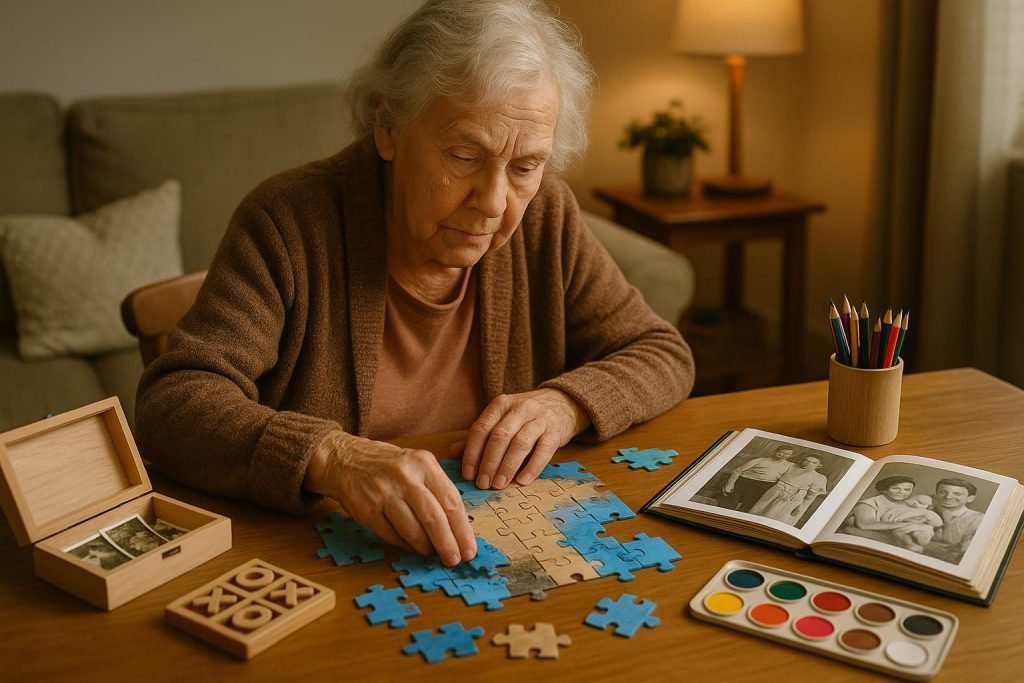
Memory and Reminiscence
Photo activities: Looking through family photos, creating simple photo books, discussing memories, labeling photos
Memory boxes: Collections of meaningful objects, items that trigger positive memories, objects with different textures
Storytelling: Sharing childhood stories, looking at picture books, listening to simple audio books
Puzzles and Games
Large-piece puzzles: 12-24 pieces with familiar images like animals or landscapes, wooden puzzles with knobs
Matching games: Pictures to words, color matching, sorting by category, simple card games with large cards
Word activities: Completing familiar sayings, simple word searches with large print, naming items in categories
Creative Activities
Art and Crafts
Painting and drawing: Watercolor with large brushes, finger painting, coloring books with simple designs, thick markers
Craft projects: Simple collages with magazines, decorating picture frames, seasonal decorations, clay or play dough
Textile activities: Simple knitting projects, sorting buttons by color, feeling fabric textures
Music and Movement
Listening: Familiar songs from their era, classical music for relaxation, religious music if meaningful
Participation: Singing along, simple rhythm instruments, clapping to beats, dancing or swaying
Benefits: Reduces anxiety, triggers positive memories, provides emotional outlet, encourages social interaction
Social Activities
Family Interactions
Structured visits: Short, regular visits work better than long ones. Focus on being present rather than testing memory. Share current family news and include children and pets when appropriate.
Communication strategies: Speak slowly and clearly, use simple sentences, give time to process, focus on feelings rather than facts.
Group Activities
Adult day programs: Structured activities with trained staff, social interaction with peers, professional supervision
Community activities: Modified religious services, senior center programs adapted for dementia, intergenerational programs, pet therapy visits
Sensory Activities
Touch and Texture
Sensory bins: Containers with rice, beans, or sand for exploration, different textures, hidden objects to find
Texture boards: Different materials like fabrics, sandpaper, fur, and smooth surfaces
Massage and touch: Gentle hand or foot massage, brushing hair, applying lotion, weighted blankets for comfort
Visual and Auditory
Nature activities: Bird watching from windows, looking at flowers and plants, watching fish in aquariums
Sound activities: Nature sounds, wind chimes, recordings of familiar voices, sound identification games
Daily Living Activities
Meal Preparation
Simple cooking tasks: Washing fruits and vegetables, stirring ingredients, setting napkins, decorating cookies
Mealtime activities: Choosing between meal options, helping clear table, wiping surfaces, arranging flowers
Personal Care
Grooming: Brushing hair with assistance, choosing between clothing options, applying lotion, simple makeup
Organizing: Sorting socks by color, organizing items in drawers, matching shoes, folding washcloths
Creating Structure
Daily Routine Benefits
Predictable schedules reduce anxiety, improve cooperation, maintain abilities longer, and provide daily purpose.
Sample Schedule
Morning (9:00-11:00 AM): Personal care, breakfast conversation, simple physical activity, cognitive activity
Midday (11:00 AM-2:00 PM): Creative activity, lunch preparation involvement, rest period, social interaction
Afternoon (2:00-5:00 PM): Sensory activity, light household tasks, snack conversation, quiet activity
Evening (5:00-8:00 PM): Dinner preparation help, family time, calming activities, personal care routine
Safety and Professional Support
Essential Safety Guidelines
Supervision: Never leave alone during activities, ensure safe materials, remove small objects, keep dangerous items away
Environment: Good lighting, remove tripping hazards, non-slip mats, stable furniture, emergency contacts available
Physical safety: Monitor for fatigue or frustration, adapt to current abilities, proper body mechanics, first aid accessible
When to Stop Activities
Warning signs: Increased agitation, repetitive movements, difficulty following instructions, physical stress signs
Responses: Move to quieter environment, simplify activity, take breaks, switch to familiar activities
Professional Resources
Occupational therapists: Assess abilities, recommend activities, train family members, provide equipment recommendations
Recreation therapists: Design programs, lead group activities, provide specialized training
Music and art therapists: Use creative activities therapeutically, address behavioral issues, guide family activities
Family Caregiver Support
Self-care: Take regular breaks, ask for help, join support groups, maintain personal interests
Resources: Adult day programs for respite, professional caregiver assistance, volunteer programs, online training
Adapting as Abilities Change
Progression Recognition
Activities need adaptation as abilities change throughout moderate stage.
Early moderate stage: Simplify but maintain challenge, provide structure, use familiar materials, allow more time
Later moderate stage: Focus on sensory and comfort activities, reduce cognitive demands, emphasize emotional connection, prioritize safety
Flexibility Strategies
Keep multiple activity versions available, be prepared to switch activities, focus on person’s response rather than completion, remember some days are better than others.
Success indicators: Person appears calm and content, shows interest or engagement, moments of joy or connection occur, activity provides daily structure.
Key Takeaways
Essential principles: Focus on remaining abilities, simplify activities, use familiar themes, create success experiences, follow their daily lead.
Activity categories: Include physical exercise, cognitive stimulation, creative expression, social interaction, sensory experiences, and daily living participation.
Safety first: Always supervise activities, use safe materials, maintain good lighting, monitor for signs of distress, have professional support available.
Caregiver support: Take care of yourself, use available resources, build support networks, adapt activities as needed, celebrate small successes.
Remember: The goal is connection, joy, and maintaining dignity. Perfect participation isn’t required – moments of engagement and happiness are what matter most.