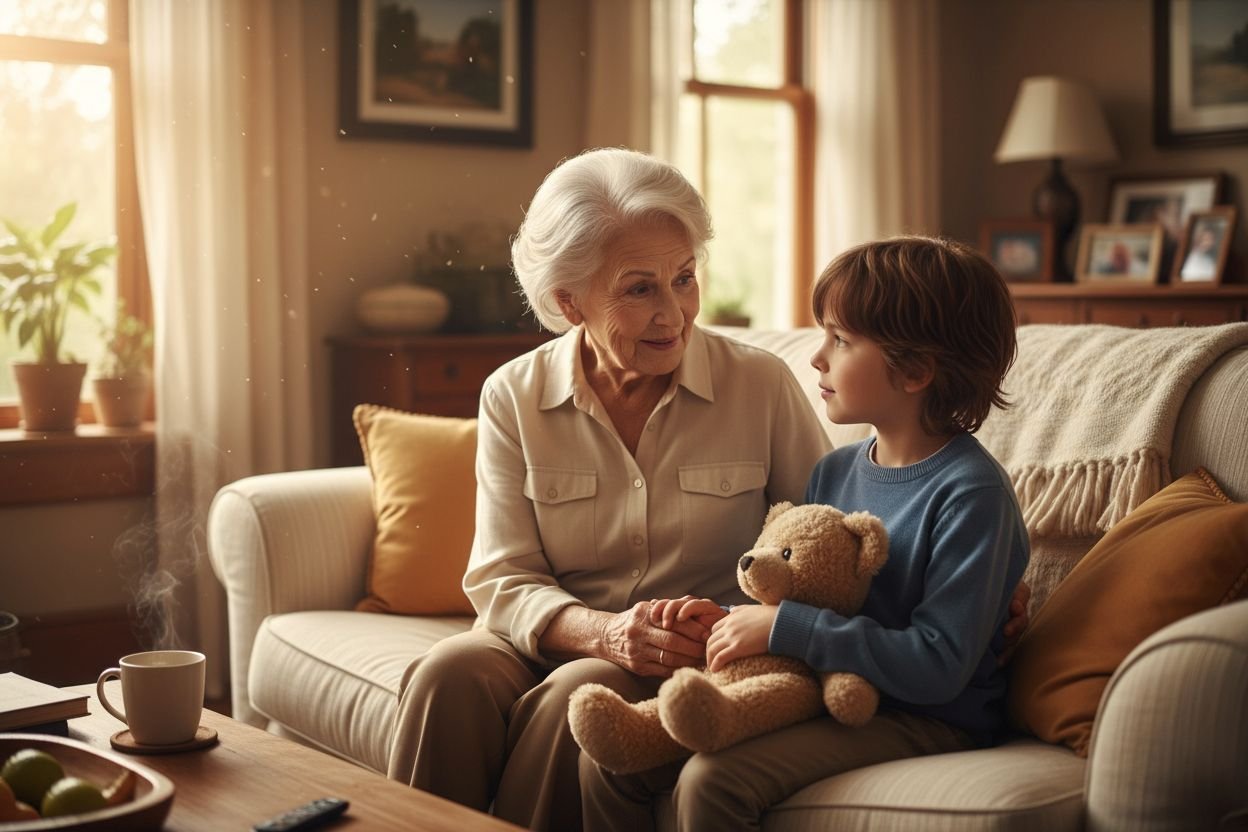
When a grandparent is diagnosed with dementia, it affects the entire family, including the youngest members.
Children are perceptive and will notice changes in their grandparent’s behavior. Having an open and honest conversation about the diagnosis can help them understand what is happening and reduce their fear and confusion.
This article provides a guide for families on how to explain a dementia diagnosis to grandchildren. We will offer tips on how to approach the conversation in an age-appropriate and reassuring way, and how to help children maintain a positive relationship with their grandparent.
Why It’s Important to Talk to Children
It may be tempting to shield children from the difficult reality of a dementia diagnosis. However, avoiding the topic can often do more harm than good.
Children may create their own explanations for their grandparent’s behavior, which can be more frightening than the truth. They might think they did something to cause the changes or that their grandparent no longer loves them.
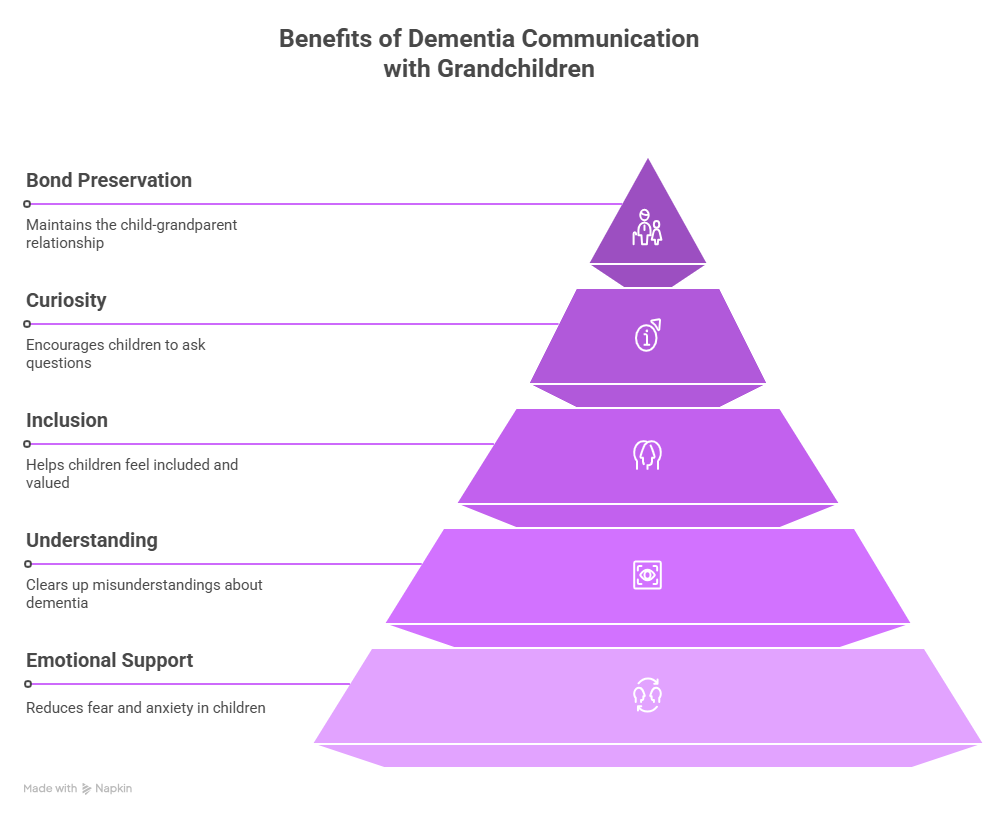
Talking to children about dementia can:
•Reduce fear and anxiety
•Clear up misunderstandings
•Help them feel included and valued
•Encourage them to ask questions
•Preserve the bond between the child and grandparent
Tips for Explaining Dementia to Grandchildren
How you explain dementia will depend on the child’s age and developmental level. Here are some general tips from the Alzheimer’s Association and other experts [1, 2]:
Be Honest and Simple
Use clear, simple language that the child can understand. You might say something like, “Grandma has an illness called dementia that affects her brain. It makes it hard for her to remember things.” Avoid using complex medical terms.
Reassure Them It’s Not Their Fault
It is crucial to reassure children that they did not cause the illness and that it is not contagious. Young children, in particular, may worry that they are to blame for their grandparent’s behavior. Explain that dementia is an illness, just like a cold or the flu, but it affects the brain.
Explain the Changes They Might See
Prepare children for the changes they might observe in their grandparent. For example, you could say:
•“Grandpa might forget your name sometimes, but he still loves you very much.”
•“Grandma might ask the same question over and over. It’s okay to answer her each time.”
•“Sometimes Grandpa might get confused or upset. It’s not because of you. It’s the illness.”
| Age Group | Communication Strategy |
| Young Children (4-7) | Use simple analogies. For example, “Grandma’s brain is like a broken remote control. Sometimes the buttons don’t work right.” |
| School-Aged Children (8-12) | Provide more concrete information. Explain that dementia is a disease that affects memory and thinking. |
| Teenagers (13-18) | Have a more in-depth conversation. Discuss the impact of the disease on the family and how they can help. |
Encourage Questions
Create a safe space for children to ask questions. Let them know that no question is silly or off-limits. If you don’t know the answer, it’s okay to say so and to look for the information together.
Focus on What’s Still Possible
While it is important to be honest about the challenges, it is also important to focus on the positive. Emphasize that the grandparent is still the same person inside and that there are still many ways to connect with them. Suggest activities that they can do together, such as:
•Looking at old photos
•Listening to music
•Doing a simple craft
•Going for a walk
Maintaining the Grandparent-Grandchild Bond
Helping children maintain a relationship with their grandparent is one of the most important things you can do. This bond can be a source of comfort and joy for both the child and the grandparent.
Encourage children to continue showing affection and to talk to their grandparent, even if the conversation is one-sided. The warmth of their presence can be very meaningful.
Activities to Do Together
Finding activities that both the grandparent and grandchild can enjoy is a great way to maintain their connection. Consider activities that are simple, engaging, and adapted to the grandparent’s abilities. Some ideas include:
•Looking at old family photos and telling stories
•Listening to music from the grandparent’s younger years
•Doing simple crafts like coloring or painting
•Going for short walks in the park
•Baking cookies or preparing a simple meal together
•Playing simple card games or board games
Addressing Difficult Behaviors
Children may witness difficult behaviors from their grandparent, such as agitation, confusion, or even aggression. It is important to prepare children for these possibilities and to help them understand that these behaviors are caused by the disease, not by the grandparent’s feelings about them.
If a difficult behavior occurs, calmly remove the child from the situation and reassure them that they are safe. Explain that the grandparent is having a hard time because of the illness and that it is not their fault.
A Family United
Explaining a dementia diagnosis to grandchildren is not a one-time conversation. It is an ongoing dialogue that will evolve as the disease progresses and as the child grows older.
By being open, honest, and supportive, you can help your children navigate this challenging journey and maintain a loving relationship with their grandparent.
References
[1] Alzheimer’s Association. (n.d.). Talking to Kids About Alzheimer’s and Dementia. https://www.alz.org/help-support/resources/kids/talking-kids-about-dementia
[2] Alzheimer’s Society UK. (n.d.). Explaining dementia to children and young people. https://www.alzheimers.org.uk/get-support/living-with-dementia/explain-dementia-children-young-people
[3] National Institute on Aging. (2024, July 8). Helping Family and Friends Understand Alzheimer’s Disease. https://www.nia.nih.gov/health/alzheimers-and-relationships/helping-family-and-friends-understand-alzheimers-disease
[4] AARP. (2025, February 26). What to Tell Grandkids When a Grandparent Has Dementia. https://www.aarp.org/caregiving/home-care/talk-to-grandkids-about-dementia/