
You walk into the bedroom and find the dresser emptied onto the bed. You just put everything away this morning. Now your loved one is opening the next drawer.
It’s understandable to feel frustrated, especially if you’re tired or trying to get out the door. If nothing is unsafe, you don’t have to start putting everything back. Try asking, “Are you looking for something? I can help.”
Why they might be opening the drawers
Your loved one may be looking for their glasses, checking that a favorite item is still there, or simply enjoying sorting familiar things. They may put something away for safekeeping and then forget where they left it. You won’t always know why, and you don’t have to figure it out every time. Start with what you can see: do they seem worried, or are they content with what they’re doing? National Institute on Aging · Alzheimer’s Society
What to do in the moment
If they’re looking for something, help them look. Try, “Let’s check by your chair together.” Start with the places they usually keep the item. If they’re worried someone took it, take the concern seriously without guessing what happened: “I can see you’re worried about your wallet. Let’s look together.” Avoid turning it into a memory test by asking where they put it.
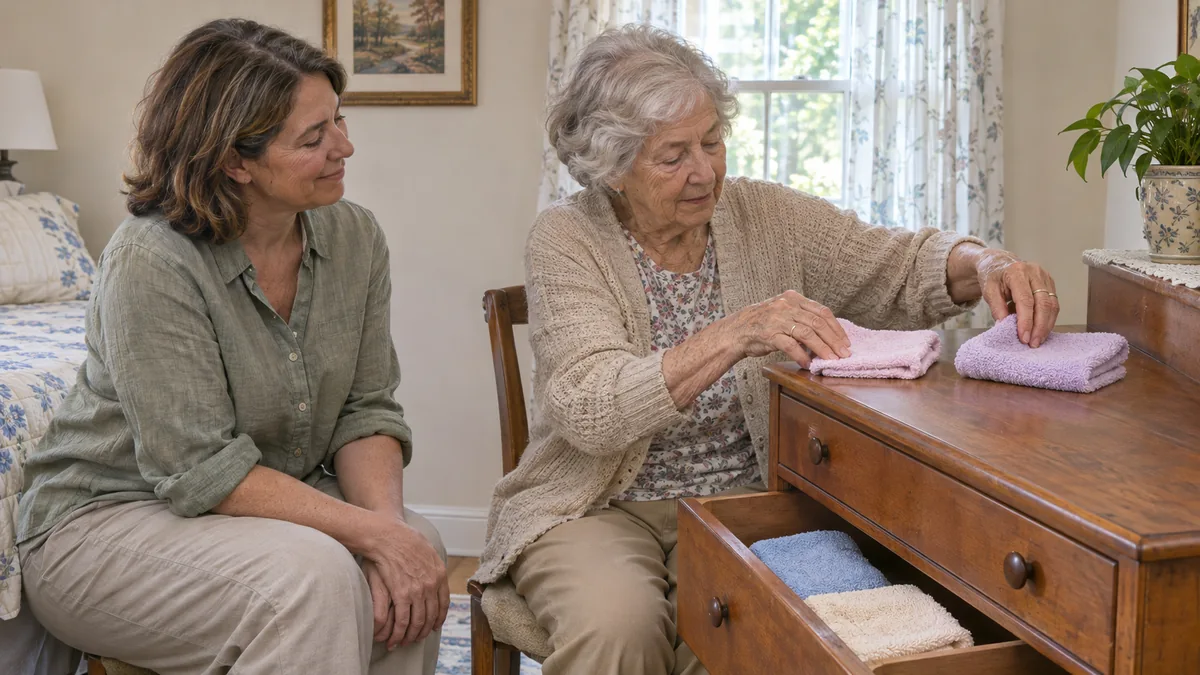
If they’re calmly sorting and it’s safe, let them continue. Matching socks or folding washcloths may be something your loved one enjoys. If they’re happy sorting on the bed but you need the space, try offering a basket: “Would you like to finish these at the table?”
If there’s a safety concern, step in calmly. Move sharp objects, medications, and other hazards to secure storage. If belongings on the floor are in the way, clear a path. If your loved one still wants to sort, offer familiar items they can handle safely. National Institute on Aging guidance on making rummaging safer
Set up one drawer they can explore
You don’t need to reorganize the whole house. Try one easy-to-reach drawer or basket.
- Pick it together if you can. Choose somewhere your loved one already likes to sit or look.
- Add a few familiar things. Try washcloths, scarves, or a small stack of photo prints. Choose items they can handle safely and leave originals or valuables elsewhere.
- Give everyday essentials a familiar home. If glasses often go missing, try a tray by their favorite chair. A photo label can help if they find it useful. Alzheimer’s Society tips for misplaced belongings
If another family member helps with care, note where everyday items belong and what usually helps in your one-page dementia care handoff.
When to get extra help
If searching is new, getting more frequent, or regularly leaving your loved one distressed or unsafe, share what you’ve noticed with their healthcare team. If they suddenly become much more confused than usual, get medical help immediately rather than assuming it’s part of their dementia.
Some days, the drawer can wait. If your loved one is safe and content, it’s okay to leave the socks on the bed and give yourself a minute.