
When you are caring for a loved one with dementia, your own needs often fall to the bottom of an endless to-do list.
Whether you are navigating the healthcare system in the United States, the UK, or anywhere else in the world, the weight of the “long goodbye” is a universal experience.
During my six + years in helping as a caregiver, I realized that if one doesn’t find a way to sustain themselves, it becomes very easy to be not be able to show up for the rest of your family and your own personal needs. Self-care is not a luxury; it is a professional requirement for the role of a care partner.
The Myth of the Caregiver Martyr
Many of us fall into the trap of thinking that if we aren’t exhausted, we aren’t doing enough. We feel guilty for taking an hour to ourselves or for feeling frustrated.
- The Reality: Burnout doesn’t just hurt you; it affects the quality of care your loved one receives.
- The Shift: We must move from a mindset of martyrdom to one of sustainability. You are a long-distance runner, not a sprinter. You have to pace yourself.
Universal Strategies for the Global Care Partner
While resources vary by country, these emotional and practical strategies apply to every care partner, regardless of location.
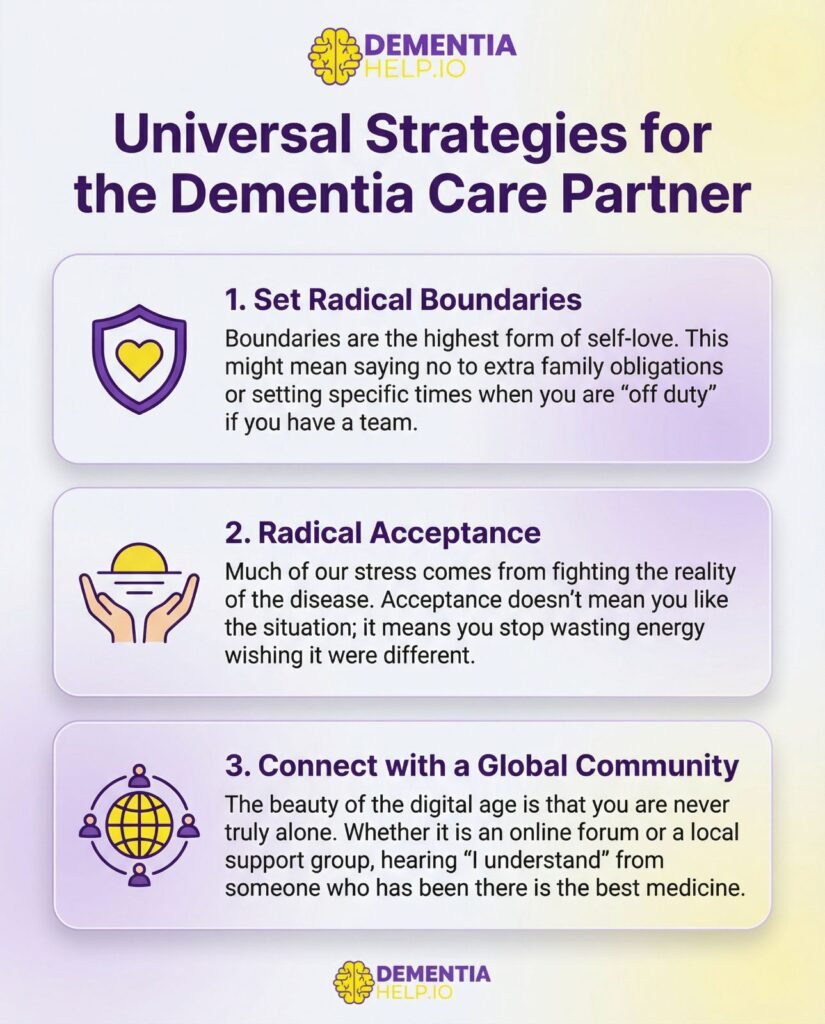
1. Set Radical Boundaries
Boundaries are the highest form of self-love. This might mean saying no to extra family obligations or setting specific times when you are “off duty” if you have a team—like the way my cousin and I shared responsibilities.
- Action: Identify one task this week that you can delegate or simply stop doing.
2. Radical Acceptance
Much of our stress comes from fighting the reality of the disease. Acceptance doesn’t mean you like the situation; it means you stop wasting energy wishing it were different.
- Action: When a loved one living with dementia repeats a question for the tenth time, practice deep breathing instead of correction. Protect your peace of mind.
3. Connect with a Global Community
The beauty of the digital age is that you are never truly alone. Whether it is an online forum or a local support group, hearing “I understand” from someone who has been there is the best medicine.
- Action: Join a global community like the one we are building here at DementiaHelp.io to share stories and strategies with people who “get it”.
The “Micro-Self-Care” Method
If you can’t take a week off, take five minutes.
- Sensory Grounding: Use a familiar scent or a favorite song to reset your nervous system.
- Movement: A short walk, whether in the Florida sun or a snowy park, changes your physiology and clears your head.
- Forgiveness: Forgive yourself for the moments you lost your temper or felt overwhelmed. You are human, and you are doing one of the hardest jobs on earth.
Save the following infographic for future reference:
Disclaimer: The information provided is for educational and supportive purposes. If you are experiencing symptoms of clinical depression or severe burnout, please seek support from a mental health professional.