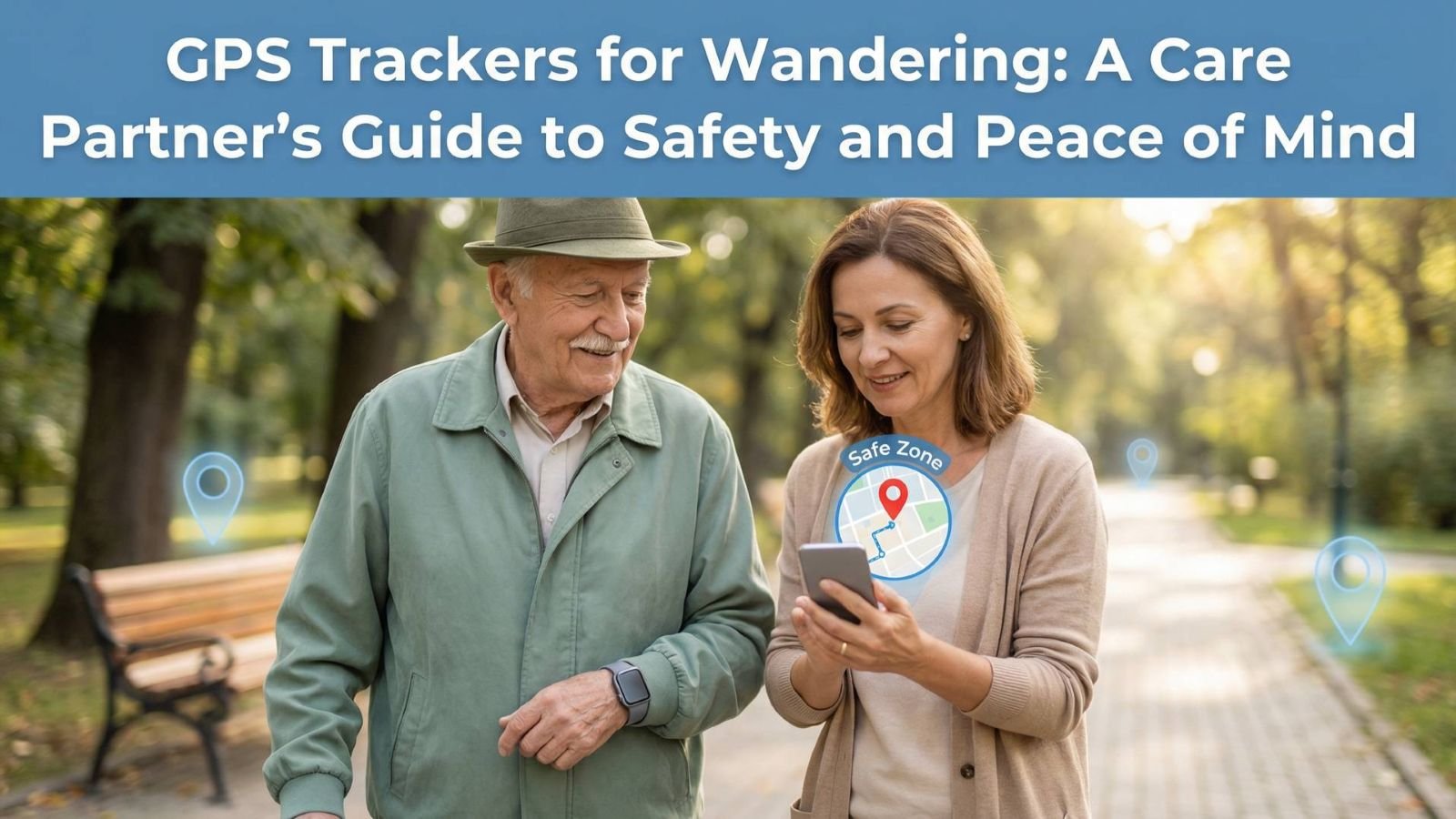
For those living with dementia, the urge to “go home” or “go to work” can lead to wandering, even in familiar neighborhoods.
During my six + years of caregiving, I learned that while we want to encourage independence, we must balance it with safety.
GPS tracking technology has evolved to become a discreet, effective tool to bridge that gap.
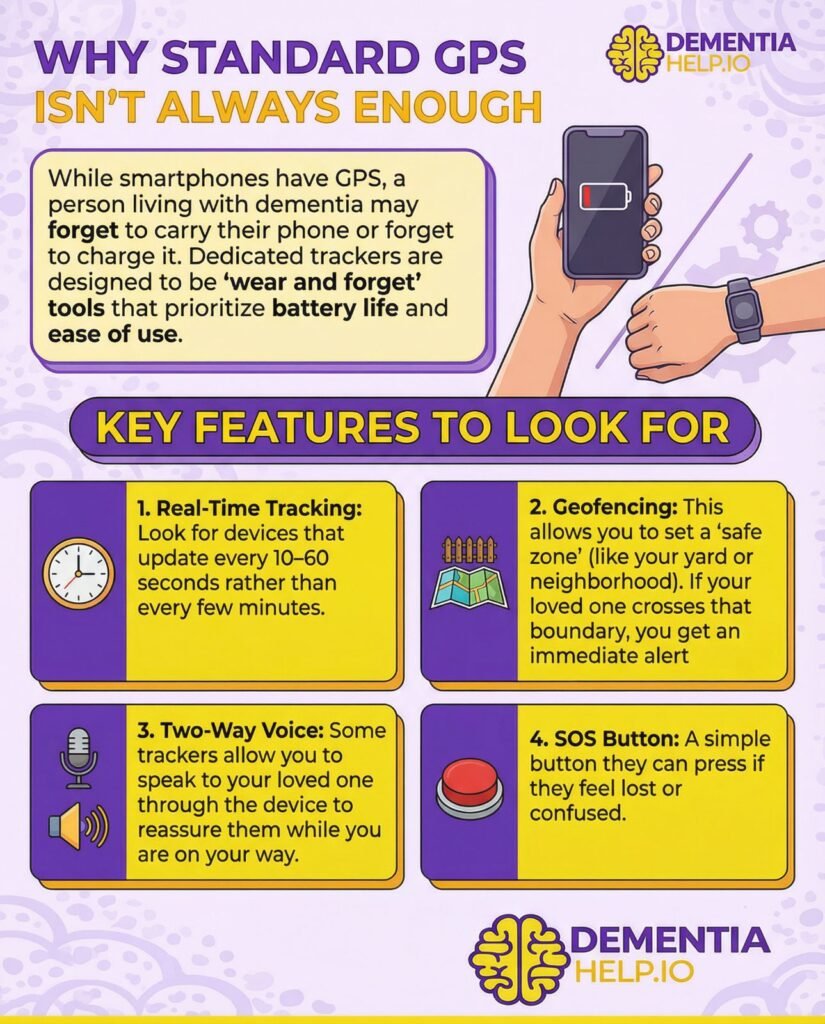
Why Standard GPS Isn’t Always Enough
While smartphones have GPS, a person living with dementia may forget to carry their phone or forget to charge it. Dedicated trackers are designed to be “wear and forget” tools that prioritize battery life and ease of use.
Key Features to Look For
- Real-Time Tracking: Look for devices that update every 10–60 seconds rather than every few minutes.
- Geofencing: This allows you to set a “safe zone” (like your yard or neighborhood). If your loved one crosses that boundary, you get an immediate alert on your phone.
- Two-Way Voice: Some trackers allow you to speak to your loved one through the device to reassure them while you are on your way.
- SOS Button: A simple button they can press if they feel lost or confused.
Top Tracking Solutions for Different Stages
- Wearable Watches: These look like standard smartwatches but are locked so they cannot be easily removed. They are great for those in the early to middle stages.
- Shoe Inserts (GPS SmartSole): For those who resist wearing jewelry or watches, these specialized insoles fit inside their favorite pair of shoes. It is a discreet way to provide safety without causing agitation.
- Discreet Pendants: These can be clipped to a belt loop or worn as a necklace. They are often water-resistant, which is critical in Florida’s climate.
- The AirTag Debate: While Apple AirTags are affordable, they rely on a nearby network of iPhones to update their location. In rural areas or parks, they may not be as reliable as a dedicated cellular GPS tracker.
The Ethics of Tracking
Using a tracker is a significant decision. It is important to involve your loved one in the conversation if they are still able to participate.
- Respect Dignity: Frame the tracker as a “safety tool” or a “way for us to find each other” rather than a surveillance device.
- Legal Authority: If your loved one can no longer provide consent, ensure your Durable Power of Attorney or Guardianship documents are in order, as this falls under your responsibility to ensure their safety.
Practical Integration Tips
- Test the Battery: Create a routine where you charge the device every night or every other night, just like a cell phone.
- Notify Local Police: In many Florida communities, you can register your loved one with the local sheriff’s office. If they go missing, the police will already have their photo and information on file.
Save this infographic for future reference:
Disclaimer: The information provided is for educational purposes. GPS technology is a tool to assist caregivers but does not replace the need for active supervision and a comprehensive safety plan.
References
- [1] Alzheimer’s Association. (2024). Wandering and Safety.
- [2] Caring.com. (2025). Best GPS Trackers for Seniors.
- [3] National Institute on Aging. (2024). Home Safety and Alzheimer’s.