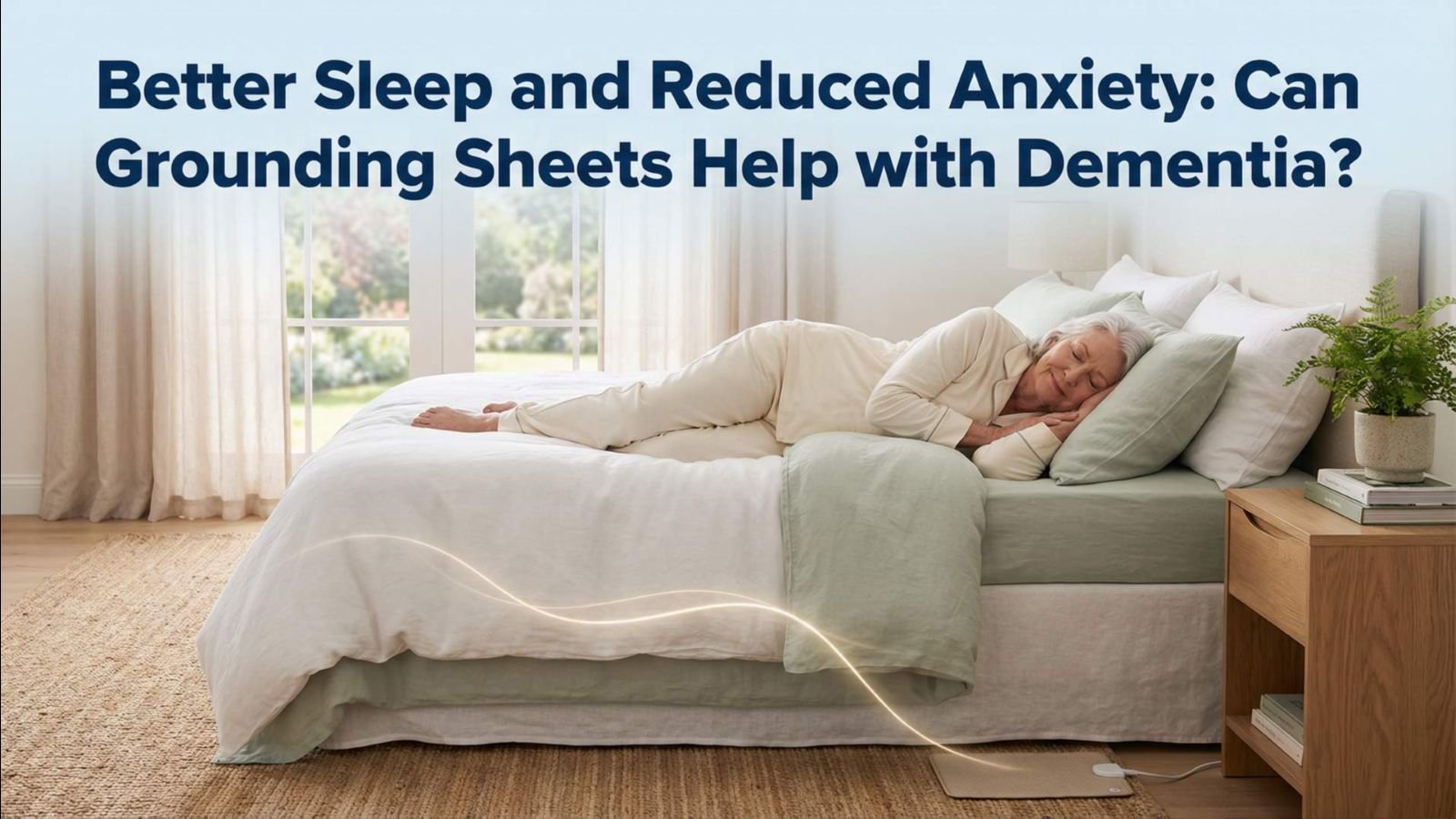
Sleep disturbances and “sundowning” are among the most exhausting challenges for both people living with dementia and their caregivers.
In my own home, I have seen how quality of sleep directly impacts mood and cognitive clarity. Through my research into natural wellness and personal experience with my fiancée, who tracked a noticeable improvement in her sleep quality, I began to explore the potential benefits of grounding sheets for the dementia community.
Grounding, or “earthing,” involves making a physical connection with the Earth’s natural electrical charge. Grounding sheets allow you to achieve this connection indoors by plugging into the grounded port of a home electrical outlet.
The Science of Cortisol and Circadian Rhythms
The primary benefit of grounding is its ability to help regulate cortisol, the body’s main stress hormone.
- The “Sundowning” Connection: Many people with dementia experience heightened agitation in the evening, often linked to disrupted cortisol levels. Grounding has been shown to help normalize these levels, potentially leading to a calmer evening transition.
- Sleep Architecture: Research suggests that grounding during sleep can lead to deeper, more restorative rest by aligning the body with the Earth’s 24-hour circadian rhythm.
Potential Benefits for People with Dementia
While clinical trials specifically for dementia are ongoing, the general benefits of grounding address several core symptoms of the disease:
- Reduced Inflammation: Chronic inflammation is a hallmark of many types of dementia. Grounding provides the body with a source of electrons, which act as natural antioxidants to neutralize free radicals.
- Pain Management: Better sleep and reduced inflammation often lead to a reduction in chronic pain, which is a common but frequently under-communicated trigger for agitation in memory care patients.
- Anxiety Reduction: By calming the sympathetic nervous system (the “fight or flight” response), grounding can provide a sense of security and groundedness for those who feel frequently disoriented.
Practical Tips for the Caregiver
If you are considering adding grounding sheets to your list of smart home tech for a loved one’s care plan, keep these practical points in mind:
- Direct Skin Contact: For the sheet to work effectively, there must be direct skin contact. Ensure your loved one’s legs or arms are touching the silver-threaded surface.
- Safety First: Grounding sheets are safe and do not use electricity in the traditional sense; they only connect to the ground wire. However, always ensure the outlet is properly grounded using a simple outlet tester.
- Consistency is Key: Like many natural interventions, the benefits of grounding are cumulative. It may take several nights of consistent use before you notice a change in sleep patterns or daytime behavior.
Personal Reflection: A Natural Tool in the Toolkit
In my six + years of caregiving, I learned that there is no “magic bullet” for dementia. However, creating a calming environment is essential. Integrating natural tools like grounding sheets, alongside proper nutrition and medical care, can be a gentle way to support a loved one’s well-being without the side effects often associated with sleep medications.
Disclaimer: This article is for informational purposes and is not a substitute for professional medical advice. Always consult with a physician before starting new wellness treatments, especially for those with existing medical conditions or implanted devices like pacemakers.
References
- [1] Chevalier, G., et al. (2012). Earthing: Health Implications of Reconnecting the Human Body to the Earth’s Surface Electrons.
- [2] Ghaly, M., & Teplitz, D. (2004). The Biologic Effects of Grounding the Human Body During Sleep as Measured by Cortisol Levels.
- [3] Earthing Institute. (2024). Grounding and the Aging Population.