The Critical Difference: Avoiding the “Too Late” Problem
For over six years, I was in the trenches of dementia care with my uncle. The biggest lesson I learned was this: the window of opportunity to make legal decisions can close with shocking speed. We were fortunate, but many families are not.
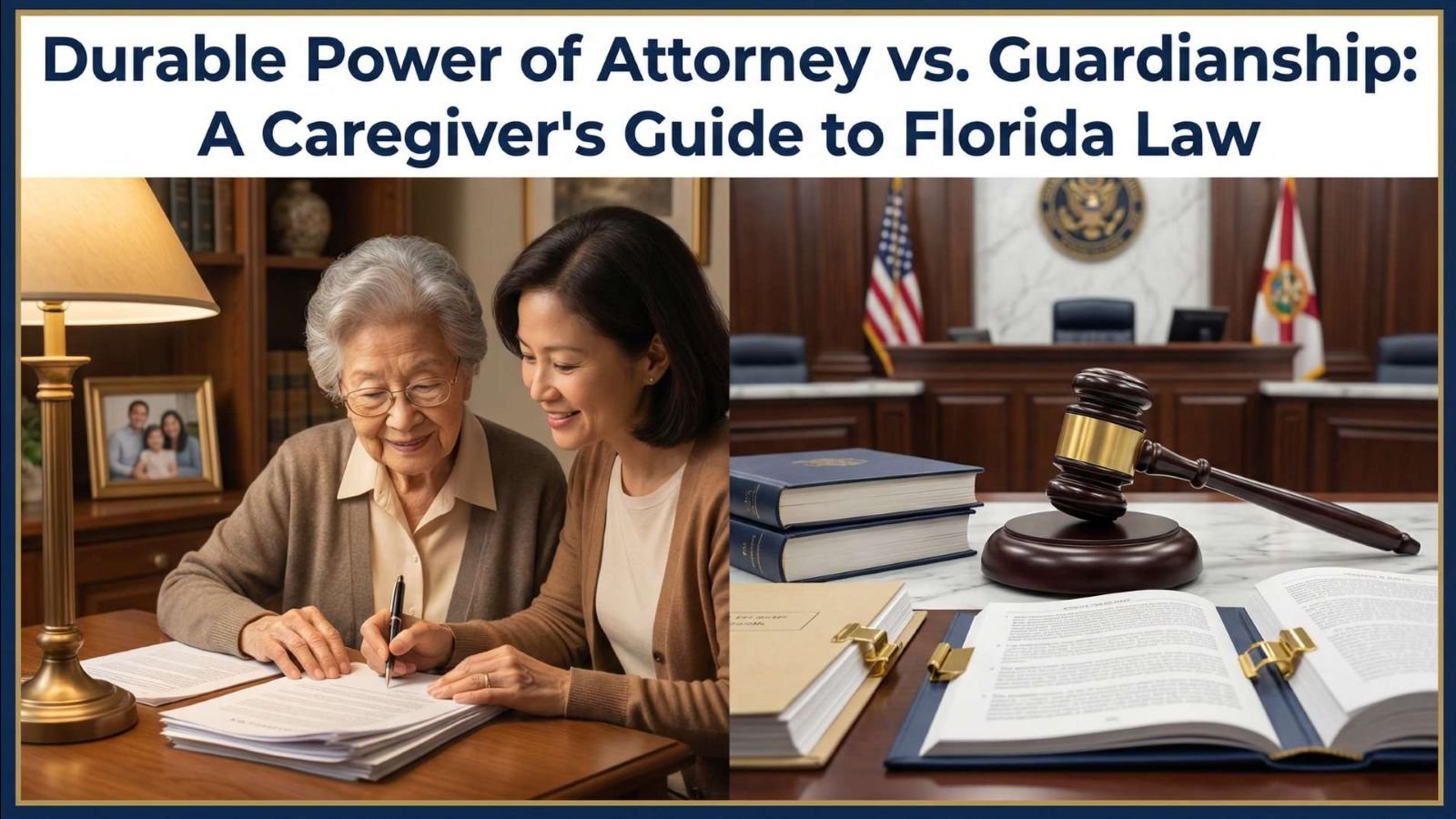
Here is the core rule every caregiver must understand: a Power of Attorney (POA) must be signed while the person is still mentally competent. Once they can no longer understand the document they are signing, the only path left is often a court-ordered Guardianship.
Durable Power of Attorney (DPOA): Your Most Important Tool
In Florida, “Durable” is the magic word. A regular Power of Attorney becomes invalid the moment your loved one is incapacitated. A Durable Power of Attorney (DPOA) is specifically designed to remain in effect precisely when dementia progresses.
Control and Simplicity
A DPOA allows the “principal” (your loved one) to choose a trusted “agent” to make decisions on their behalf. In my uncle’s case, he chose me and my cousin. This gave us the authority to manage his finances and healthcare without court intervention.
As long as the document is signed correctly, in front of two witnesses and a notary public in Florida, it is a private agreement. No judge needs to approve you paying a bill or speaking to a doctor.
Florida Guardianship: The Last Resort
Guardianship is what happens when no DPOA exists, or when an existing one is contested or abused. It is a court-supervised process where a judge appoints a “guardian” to make decisions for a “ward”—the person deemed incapacitated by the court.
The Court-Controlled Process
Unlike a DPOA, guardianship is an involuntary process that removes many of your loved one’s legal rights. The process is public, expensive, and slow.
It involves:
1.Filing a Petition: A formal petition to determine incapacity is filed with the court.
2.Appointing an Examining Committee: The court appoints a committee of three professionals to assess the person’s mental state.
3.A Judge’s Ruling: A hearing is held where a judge decides if the person is incapacitated and who will be appointed as guardian.
Once appointed, a guardian’s work is never truly done. They must file detailed annual reports with the Florida probate court, accounting for every penny spent and every major decision made.
Why You Want to Avoid Guardianship
My six years in the trenches taught me that avoiding the court system is paramount. Guardianship should be avoided if at all possible for several practical reasons.
Cost
The legal fees for establishing and maintaining a guardianship can easily run into thousands of dollars. These costs are paid from your loved one’s assets, draining the funds meant for their care.
Loss of Privacy
Guardianship is a public process. Your family’s financial details and your loved one’s health status become part of a public court record, accessible to anyone who looks.
Family Conflict
If family members cannot agree on who should serve as guardian, the situation can become a bitter court battle. In these cases, a judge may decide to appoint a “Professional Guardian”, a stranger who will be paid to manage your loved one’s life.
Summary: POA vs. Guardianship at a Glance
| Feature | Durable Power of Attorney (DPOA) | Florida Guardianship |
| Who Chooses? | The individual (while competent) | A Florida Probate Judge |
| Court Involved? | No (unless contested) | Yes, mandatory and ongoing |
| Cost | Low (legal drafting fees) | High (court fees, attorneys, reports) |
| Privacy | Private | Public court record |
Planning ahead with a Durable Power of Attorney is one of the greatest gifts you can give to your loved one and yourself. It ensures their wishes are respected and keeps private family matters out of a public courtroom.
Disclaimer: This article provides general information and is not a substitute for legal advice. Consult with a qualified Florida elder law attorney to address your specific situation.
References
[1] The Florida Bar. (n.d.). Consumer Pamphlet: Power of Attorney in Florida. Retrieved from