Communicating with a person living with dementia can be one of the most challenging aspects of caregiving.
As memory and reasoning fade, logic and correction often lead to frustration, agitation, and a breakdown in trust.
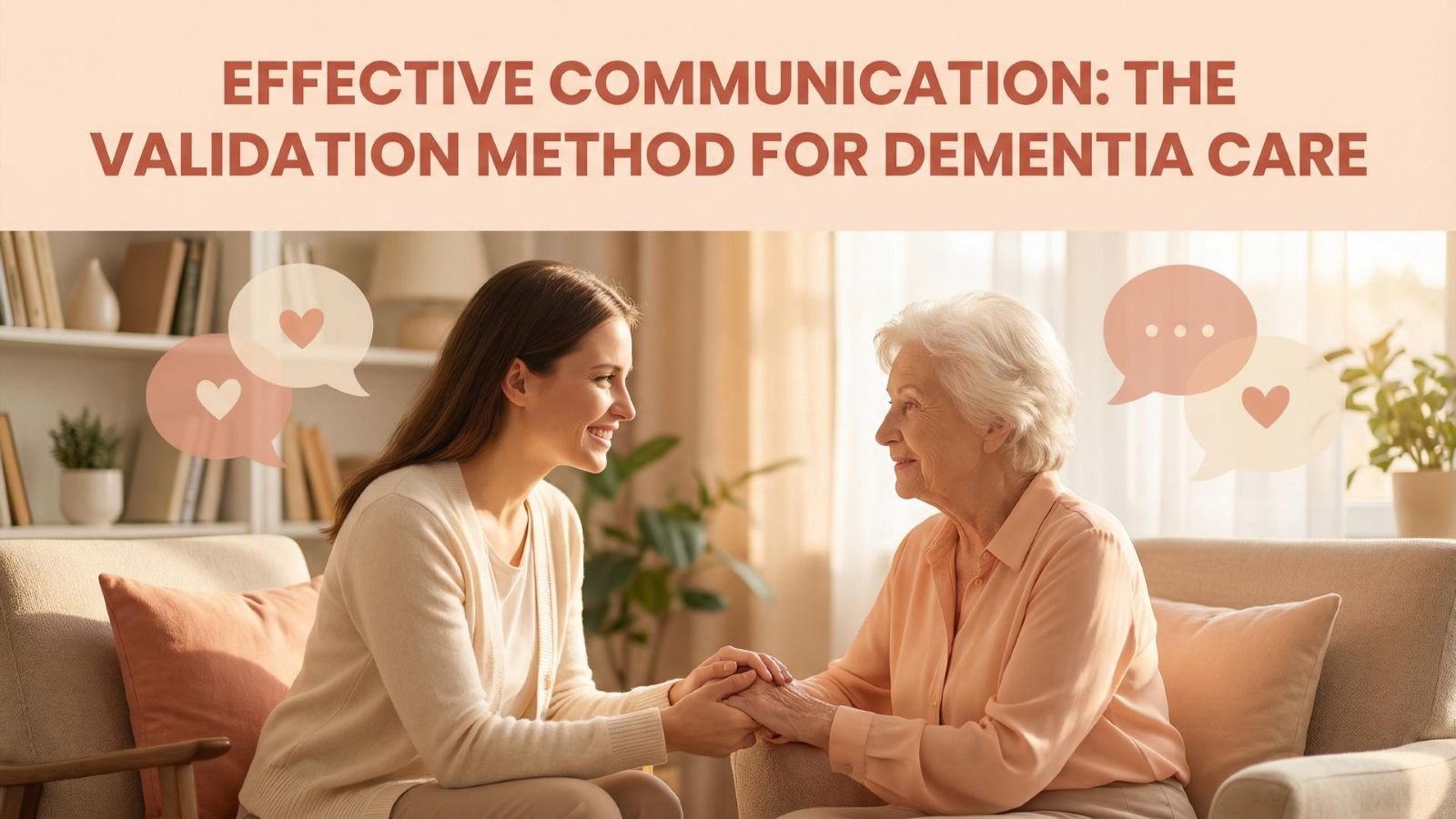
The Validation Method, developed by social worker Naomi Feil, offers a more compassionate and effective approach. It’s a way of communicating that prioritizes empathy over facts, helping to reduce stress and restore dignity.
What is the Validation Method?
Validation is not about agreeing with things that aren’t true. It’s about acknowledging the feelings and emotions behind the words.
Instead of trying to force a person with dementia back into our reality, we step into theirs. The core principle is that the often-confusing behaviors and words of people with dementia are an attempt to express unmet needs or unresolved life issues.
By validating their feelings, we show that we hear them and that their emotions are important, even if the context is based on a false reality. This can significantly decrease anxiety and agitation.
Why Reality Orientation Often Fails
For decades, “reality orientation” was the standard approach. If a person with dementia said they were waiting for their mother (who passed away years ago), the caregiver would correct them: “Your mother is no longer with us.”
While factually accurate, this approach can be emotionally devastating, forcing the person to relive the trauma of their loss over and over again.
Validation, on the other hand, avoids this direct confrontation. It recognizes that the feeling of wanting one’s mother is real, and it addresses that emotional need.
Key Techniques of the Validation Method
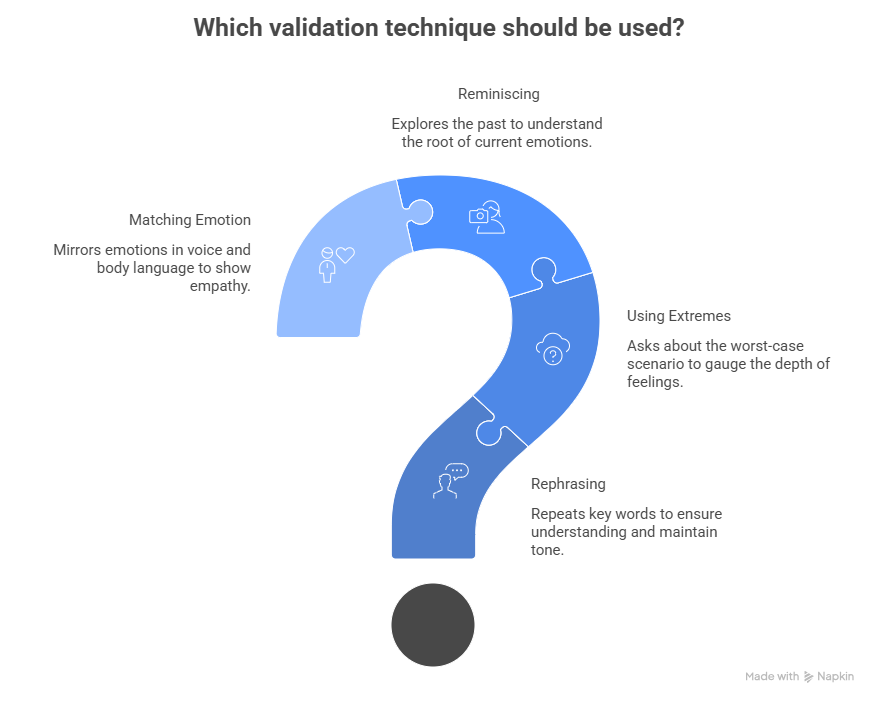
Validation is more than just being nice; it involves specific techniques to build trust and encourage communication.
| Technique | Description | Example |
| Rephrasing | Repeat the person’s key words or phrases back to them using their tone of voice. | Person: “I need to go home!” Caregiver: “You need to go home right now?” |
| Using Extremes | Ask if this is the worst it’s ever been to help them express the depth of their feelings. | Person: “No one ever visits me.” Caregiver: “Does it feel like you’re always alone?” |
| Reminiscing | Explore the past to understand the root of the current emotion. | Person: “I want my mother.” Caregiver: “Your mother was a wonderful person. What was she like?” |
| Matching Emotion | Mirror the person’s emotions in your voice and body language to show you understand. | If they are sad, use a soft, empathetic tone. If they are angry, use a strong, controlled voice. |
A Practical Example
Imagine your father, who has dementia, becomes agitated and insists he needs to go to work, even though he has been retired for 20 years.
•Reality Orientation (Less Effective): “Dad, you don’t go to work anymore. You’re retired.”
•Result: This can lead to confusion, anger, and a feeling of being dismissed.
•Validation Method (More Effective):
1.Center Yourself: Take a breath. Don’t react with logic.
2.Rephrase: “You need to go to work?”
3.Reminisce: “You were a great provider for our family. What did you do at your job?”
4.Explore the Feeling: “It sounds like you feel a need to be productive and useful.”
By validating his need to feel productive, you can then redirect him to a meaningful activity, such as helping with a simple chore.
You have acknowledged his feelings, honored his life’s work, and avoided a stressful confrontation.
The Benefits of Validation
While research on the effectiveness of Validation Therapy is mixed, many caregivers and professionals report significant benefits. A 2024 study found that validation techniques improved cooperation with care and limited agitation and distress in people with dementia. The key benefits include:
•Reduced Stress and Agitation: For both the person with dementia and the caregiver.
•Improved Communication: Fosters a sense of connection and trust.
•Enhanced Dignity: Shows respect for the person’s feelings and life experiences.
•Prevents Behavioral Escalation: Can de-escalate difficult situations before they become crises.
Validation is a skill that takes practice, but it can transform the caregiving experience from one of constant conflict to one of connection and compassion.
Disclaimer: This article is for informational purposes only and does not constitute medical advice. Please consult with a qualified healthcare professional for any health concerns or before making any decisions related to your health or treatment.