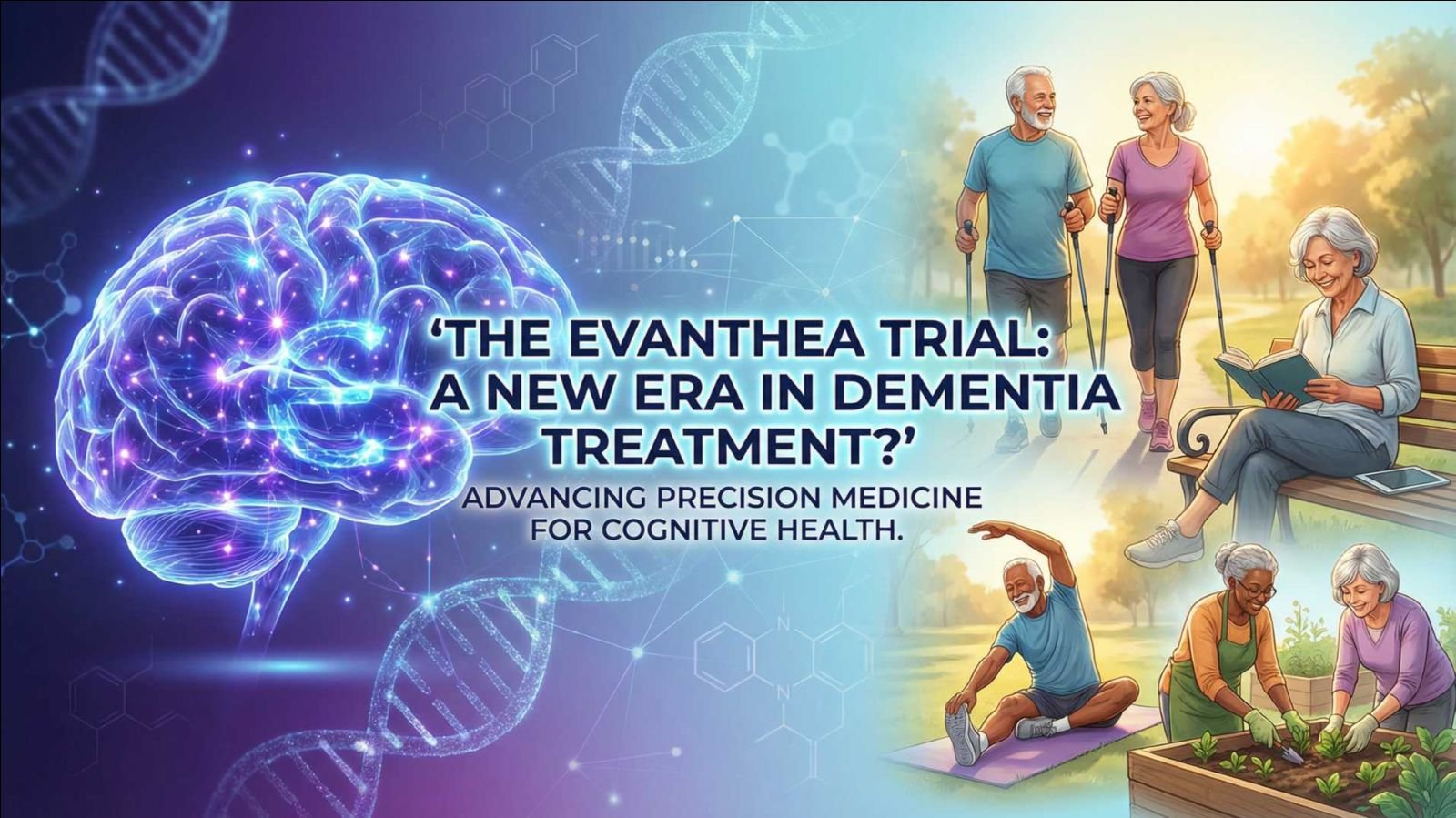
For decades, the fight against Alzheimer’s disease and dementia has been a story of incremental gains and frustrating setbacks. But a groundbreaking clinical trial is rewriting the narrative, offering a new level of hope for reversing cognitive decline.
The Evanthea Dementia Reversal Trial has delivered extraordinary results, demonstrating that a personalized, precision medicine approach can not only halt but actually improve cognitive function in individuals with mild cognitive impairment (MCI) and early-stage dementia. [1]
What is the Evanthea Trial?
The Evanthea trial (NCT05894954) is a randomized, controlled study that moves away from a one-size-fits-all approach to dementia care. Instead of focusing on a single drug, it uses a comprehensive, lifestyle-based intervention tailored to each individual’s unique biology. [2]
The trial’s core principle is to identify and treat the multiple underlying drivers of cognitive decline. This is a significant departure from conventional medicine, which rarely evaluates these factors.
The Precision Medicine Approach
Participants in the Evanthea trial undergo extensive testing—over 150 data points—to create a personalized treatment plan. This includes lab work, brain scans, and genomic evaluations. [2]
The intervention then focuses on a core set of lifestyle changes, combined with treatments targeting specific root causes.
| Core Interventions | Targeted Root Causes |
| Diet Optimization | Toxin Exposure (e.g., mold) |
| Physical & Mental Exercise | Metabolic Imbalances |
| Sleep Optimization | Microbiome & Inflammation |
| Stress Reduction | Genetic Factors (Epigenetics) |
This personalized strategy is designed to address the specific factors contributing to each person’s cognitive decline, from inflammation and insulin resistance to nutrient deficiencies and toxic exposures.
The Astonishing Results
The preliminary findings from the Evanthea trial are nothing short of remarkable. According to Dr. Dale Bredesen, a key figure in the field, the results surpass anything previously published for Alzheimer’s treatment. [1]
Here’s a breakdown of the key outcomes:
•Cognitive Improvement, Not Just Slowing Decline: The trial demonstrated a significant improvement in cognitive scores. The CNS Vital Signs neurocognitive index, a key measure of brain function, improved by more than 18 points in the treatment group compared to the standard-of-care group. [3]
•700% More Effective Than Standard Drugs: The cognitive improvement seen in the Evanthea trial was over 700% greater than that of Lecanemab (Lequembi), a leading Alzheimer’s drug. [3]
These results suggest that by addressing the root causes of cognitive decline, it is possible to achieve a level of recovery previously thought unattainable.
What This Means for the Future of Dementia Care
The Evanthea trial represents a paradigm shift in how we approach dementia. It moves the focus from a single-target drug model to a holistic, systems-based approach that empowers individuals to take control of their brain health.
While the full, peer-reviewed results are expected in the spring of 2026, the initial findings offer a powerful message of hope. They suggest that for many, cognitive decline may not be an inevitable, one-way street.
As this precision medicine approach becomes more widely understood and implemented, it has the potential to transform the lives of millions of people affected by mild cognitive impairment and early-stage dementia.
References
•[1] Kemper Wellness. (2026, January 19). Breakthrough Findings From The Evanthea Dementia Reversal Trial. Retrieved from https://kemperwellness.com/news/breakthrough-findings-from-the-evanthea-dementia-reversal-trial/
•[2] ClinicalTrials.gov. (2025, March 11 ). Precision Medicine Approach for Early Dementia & Mild Cognitive Impairment (EVANTHEA). Retrieved from https://clinicaltrials.gov/study/NCT05894954
•[3] Rezilir Health. (2026, January 10 ). Evanthea Alzheimer’s Trial: Future of Dementia Care. Retrieved from https://www.rezilirhealth.com/blog/evanthea-trial-future-of-alzheimers-care/
This article is for informational purposes only and does not constitute medical advice. Always consult with a qualified healthcare professional for any health concerns or before making any decisions related to your health or treatment.