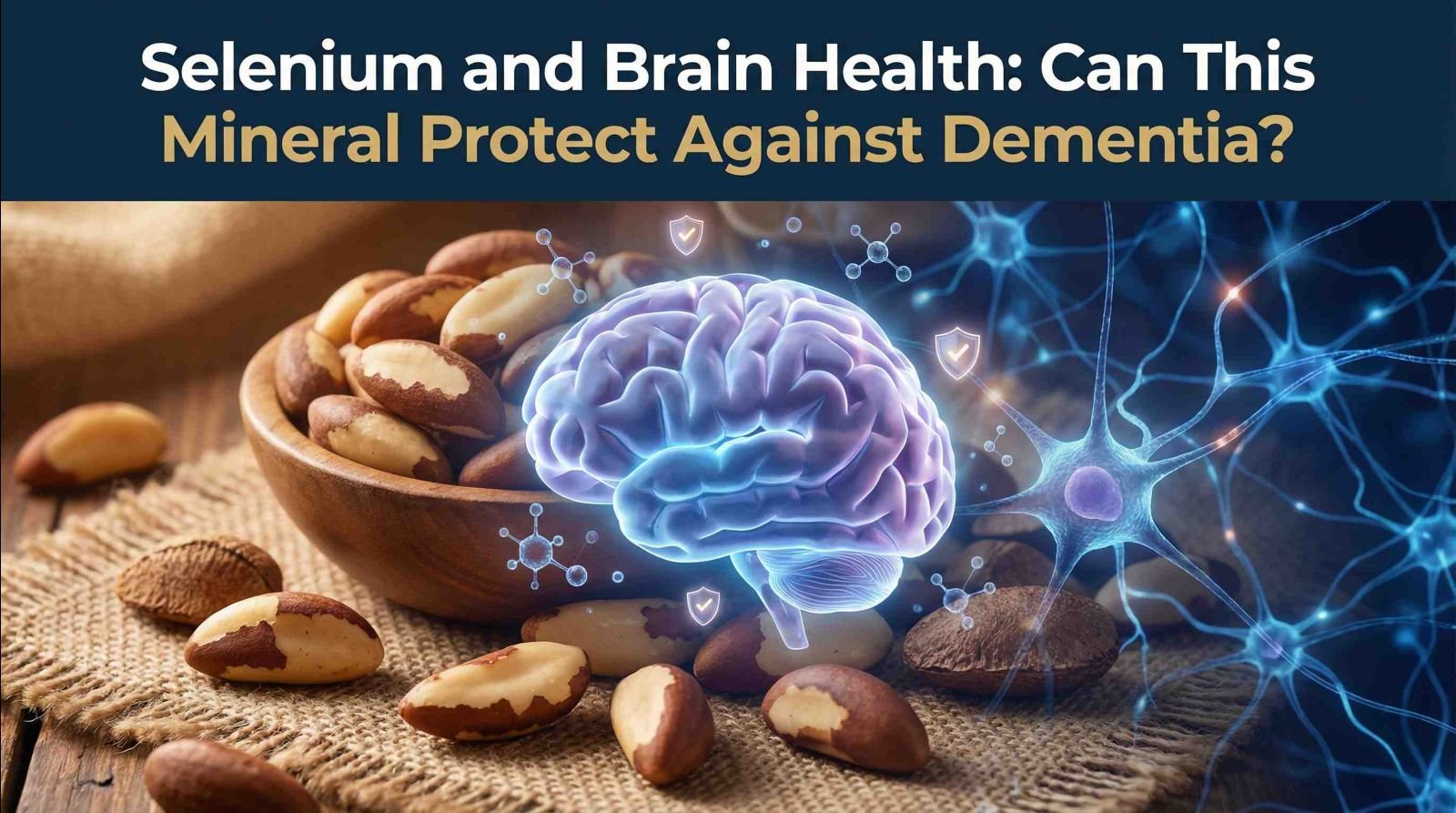
In the search for ways to protect our brains as we age, a powerful trace mineral is gaining attention: selenium.
Found naturally in the soil and in certain foods, selenium is essential for many bodily functions, but its role as a potent antioxidant has researchers particularly interested in its connection to brain health and dementia.
But can getting enough of this nutrient truly make a difference in preventing cognitive decline? Let’s look at what the science says.
What is Selenium and Why Does the Brain Need It?
Selenium is an essential mineral that your body needs to function correctly. It plays a critical role in reproduction, thyroid hormone metabolism, and DNA synthesis. Most importantly for brain health, it helps protect against damage from oxidative stress. [1]
Oxidative stress is a key factor in brain aging and the development of neurodegenerative diseases like Alzheimer’s. Selenium is a vital component of antioxidant enzymes, particularly glutathione peroxidase (GPX), which act as the brain’s personal bodyguards, neutralizing harmful free radicals and reducing inflammation. [2]
The Evidence: Selenium’s Link to Dementia
The relationship between selenium and dementia is complex, with research showing both promising links and a need for caution.
Observational studies have found an association between low selenium levels and an increased risk of cognitive decline and dementia. [3] However, when it comes to supplementation, the evidence is more nuanced.
For individuals who already have adequate selenium levels from their diet, clinical trials have not shown that taking extra selenium supplements prevents dementia. A major six-year study, the PREADViSE trial, found that selenium supplementation had no effect on dementia rates in older men. [4]
However, for people already experiencing Mild Cognitive Impairment (MCI) or Alzheimer’s disease, some research suggests a potential benefit. A 2022 systematic review found that selenium supplementation (sometimes with other nutrients) helped improve selenium levels, antioxidant activity, and some measures of cognitive function in these patients. [2]
Can Selenium Reverse Cognitive Decline?
Exciting research in animal models has opened up new possibilities. A 2022 study from the Queensland Brain Institute found that selenium supplementation could increase the generation of new neurons and reverse cognitive deficits in aging mice. [5]
The study also found that selenium supplements helped restore learning and memory function in mice that had experienced a stroke. While this research is promising, it’s important to remember that results in mice do not always translate directly to humans.
Food First: How to Get Enough Selenium
Before you reach for a supplement bottle, experts agree that the best approach is to get selenium from your diet. The Recommended Daily Allowance (RDA) for adults is 55 micrograms (mcg).
Exceeding 400 mcg per day can lead to selenium toxicity (selenosis), which can cause hair loss, fatigue, and other health problems. [1]
| Food Source | Approximate Selenium Content |
| Brazil Nuts | 68–91 mcg per nut |
| Tuna (yellowfin, 3 oz) | 92 mcg |
| Sardines (3 oz) | 45 mcg |
| Beef (3 oz) | 28 mcg |
| Chicken (3 oz) | 22 mcg |
| Brown Rice (1 cup) | 19 mcg |
| Whole Wheat Bread (1 slice) | 13 mcg |
As you can see, just one Brazil nut can provide more than your entire daily requirement.
Should You Take a Selenium Supplement?
For most people with a balanced diet, selenium supplements are not necessary for dementia prevention. The evidence does not support taking supplements if your levels are already adequate. [4]
However, if you are concerned about your selenium intake or have a diagnosed neurological condition, it is essential to speak with your doctor. They can assess your nutritional status and determine if a supplement is appropriate for you.
While selenium is not a magic bullet, ensuring you have adequate levels through a healthy diet is a smart step for supporting your overall brain health.
References
•[1] National Institutes of Health. (2021). Selenium: Fact Sheet for Health Professionals. Retrieved from https://ods.od.nih.gov/factsheets/Selenium-HealthProfessional/
•[2] Pereira, M. E., et al. (2022 ). Effects of Selenium Supplementation in Patients with Mild Cognitive Impairment or Alzheimer’s Disease: A Systematic Review and Meta-Analysis. Nutrients, 14(15), 3205.
•[3] Loef, M., et al. (2011). Selenium and Alzheimer’s Disease: A Systematic Review. Journal of Alzheimer’s Disease, 26(1), 81-104.
•[4] Kryscio, R. J., et al. (2017). Association of Antioxidant Supplement Use and Dementia in the Prevention of Alzheimer’s Disease by Vitamin E and Selenium Trial (PREADViSE). JAMA Neurology, 74(5), 567–573.
•[5] Queensland Brain Institute. (2022, February 8). Natural mineral may reverse memory loss. Retrieved from https://qbi.uq.edu.au/article/2022/02/natural-mineral-may-reverse-memory-loss
This article is for informational purposes only and does not constitute medical advice. Always consult with a qualified healthcare professional for any health concerns or before making any decisions related to your health or treatment.