When we think of dementia, we often picture someone in their later years. However, for a growing number of people, the devastating symptoms of dementia begin much earlier.
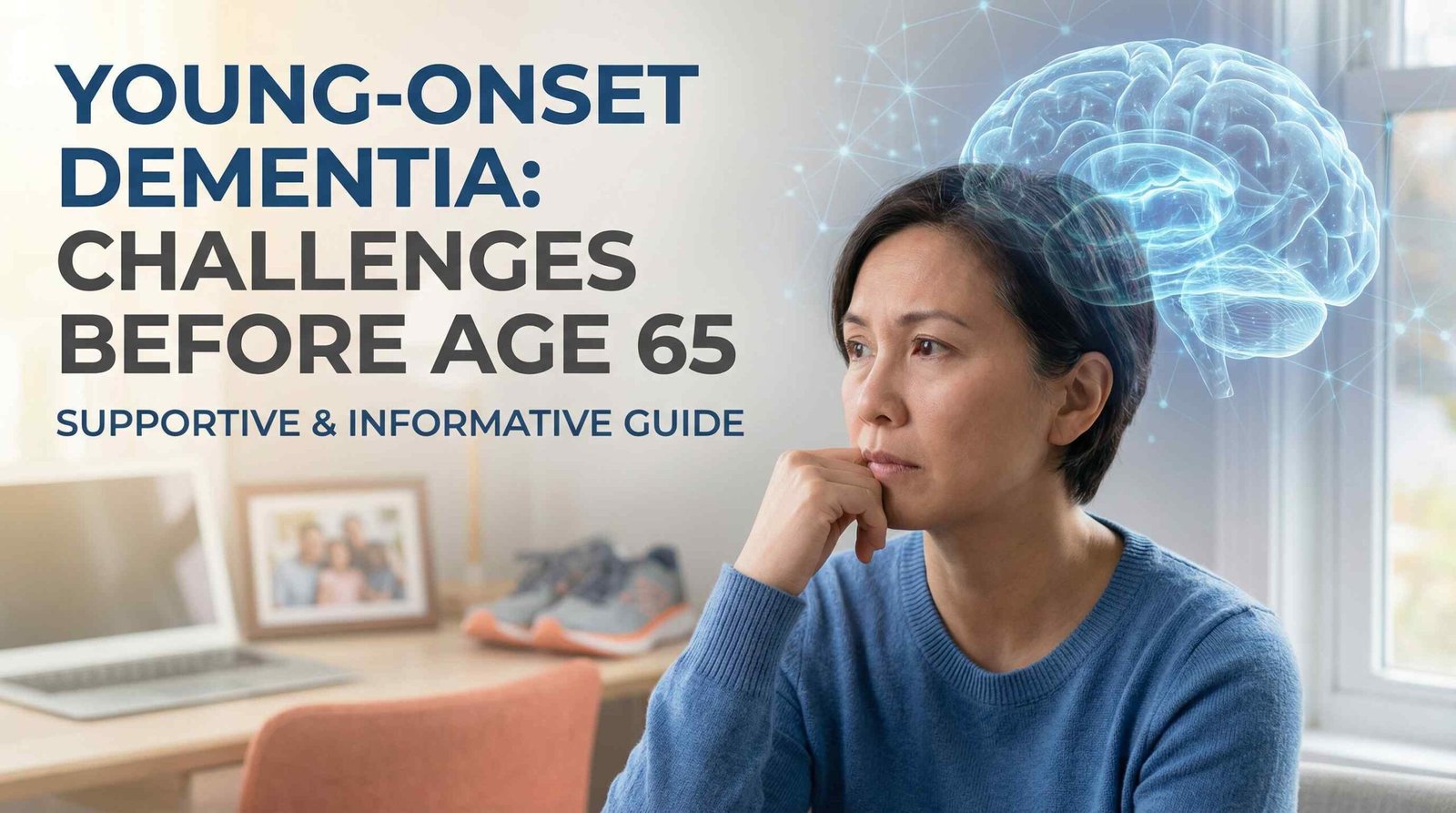
Young-onset dementia, also known as early-onset dementia, is diagnosed in people under the age of 65. [1] This diagnosis brings a unique and often overwhelming set of challenges that can impact every aspect of a person’s life, from their career and finances to their family and social relationships.
What is Young-Onset Dementia?
Young-onset dementia is relatively uncommon, affecting about 110 out of every 100,000 adults between the ages of 30 and 64. [2]
While Alzheimer’s disease is the most common cause, other conditions like frontotemporal dementia (FTD) are more prevalent in this younger age group. [3]
Unlike later-onset dementia, memory loss may not be the first symptom. Instead, a younger person might first experience changes in behavior, language, or vision. [4]
The Unique Challenges of a Younger Diagnosis
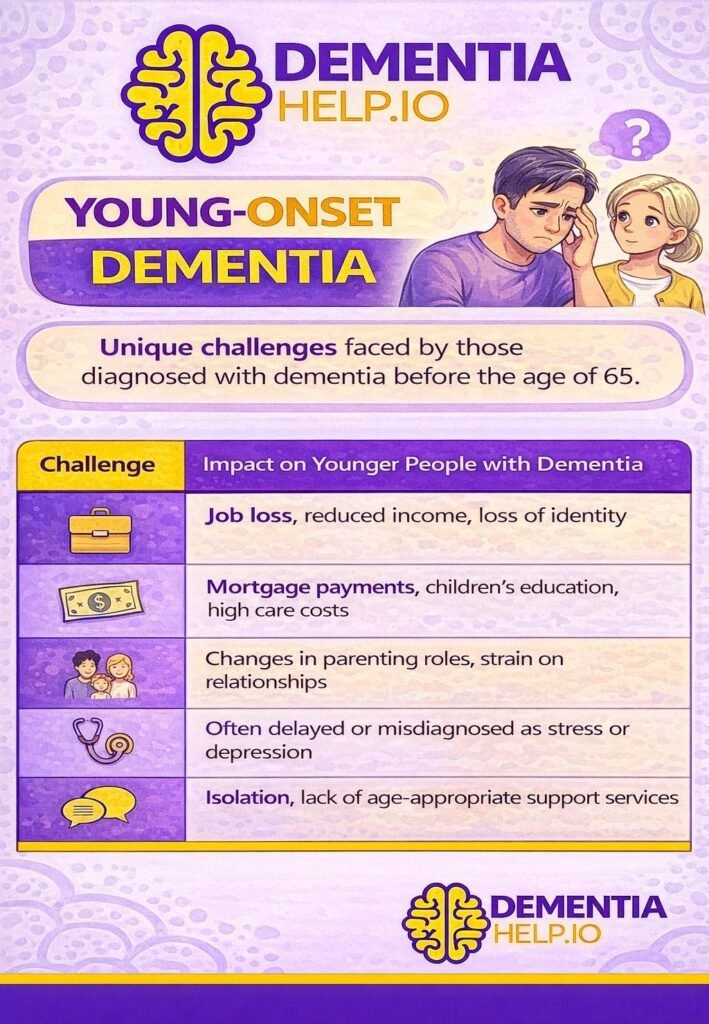
A dementia diagnosis at any age is life-altering, but for younger people, it presents a distinct set of hurdles. Many are at the peak of their careers, raising families, and have significant financial commitments. The diagnosis can feel isolating, as peers may not understand the condition, and most support services are designed for older adults.
1. Employment and Career Impact
For many, the first signs of young-onset dementia appear at work. Difficulties with planning, problem-solving, or memory can lead to performance issues and, eventually, job loss. [5] This not only affects a person’s sense of identity and purpose but also creates significant financial strain. Many partners and family members are forced to reduce their work hours or leave their jobs entirely to become caregivers. [6]
2. Financial Strain
The loss of income from unemployment, combined with the high cost of care, can be financially devastating. Younger families often have mortgages, car payments, and children’s educational expenses to consider. [7] Accessing financial support can also be a challenge, as many disability benefits are structured for older adults.
3. Family and Parenting Roles
A diagnosis of young-onset dementia can turn family dynamics upside down. A person who was once a primary caregiver or provider may now need care themselves. When there are dependent children at home, the impact is profound. Children may have to take on caregiving responsibilities while navigating their own education and emotional development. [8]
4. Misdiagnosis and Delayed Treatment
Because dementia is less common in younger people, symptoms are often misattributed to stress, depression, or other conditions. This can lead to a delayed diagnosis, preventing the person from accessing treatment and support that could help manage their symptoms and improve their quality of life. [2]
Finding Support and Hope
While the challenges are significant, there is hope. Early diagnosis is key to unlocking access to treatments, support services, and clinical trials. Connecting with other younger people living with dementia can provide a sense of community and understanding. Organizations like the Alzheimer’s Association and Dementia UK offer resources and support specifically for those with young-onset dementia and their families.
References
•[1] Alzheimer’s Association. (n.d.). Younger/Early-Onset Alzheimer’s. Retrieved from https://www.alz.org/alzheimers-dementia/what-is-alzheimers/younger-early-onset
•[2] Mayo Clinic. (2024, April 10 ). Young-onset Alzheimer’s: When symptoms begin before age 65. Retrieved from https://www.mayoclinic.org/diseases-conditions/alzheimers-disease/in-depth/alzheimers/art-20048356
•[3] Alzheimer’s Society. (n.d. ). What causes young-onset dementia? Retrieved from https://www.alzheimers.org.uk/about-dementia/types-dementia/what-causes-young-onset-dementia
•[4] Dementia UK. (n.d. ). What is young onset dementia? Retrieved from https://www.dementiauk.org/information-and-support/young-onset-dementia/what-is-young-onset-dementia/
•[5] Kilty, C., et al. (2022 ). Young onset dementia: implications for employment and finances. Frontiers in Psychiatry, 13, 1036891.
•[6] Dementia UK. (n.d.). Employment and young onset dementia. Retrieved from https://www.dementiauk.org/information-and-support/living-with-dementia/employment-and-young-onset-dementia/
•[7] Alzheimer’s Association. (n.d. ). If You Have Younger-Onset Alzheimer’s Disease. Retrieved from https://www.alz.org/help-support/i-have-alz/younger-onset
•[8] Sikes, P., et al. (2018 ). The impact of parental young onset dementia on children and young people’s educational careers. Dementia, 17(8), 1016-1031.
This article is for informational purposes only and does not constitute medical advice. Always consult with a qualified healthcare professional for any health concerns or before making any decisions related to your health or treatment.