For many caregivers, the night is the hardest part of the day. Sleep disturbances are a common and challenging aspect of dementia, affecting the person with the condition and leading to exhaustion for their caregivers.
Understanding why these changes happen is the first step toward finding solutions.
This article explores the common sleep problems associated with dementia, including sundowning, and offers practical strategies to help everyone get a better night’s sleep.
Why Does Dementia Affect Sleep?
Dementia causes changes in the brain that can disrupt the body’s internal clock, or circadian rhythm. This can lead to a reversal of the normal sleep-wake cycle, causing confusion, agitation, and activity at night, and sleepiness during the day.
As dementia progresses, these sleep problems often become more severe. It is a cycle that can be difficult to break, as poor sleep can worsen other dementia symptoms like confusion and irritability.
Common Sleep Problems in Dementia
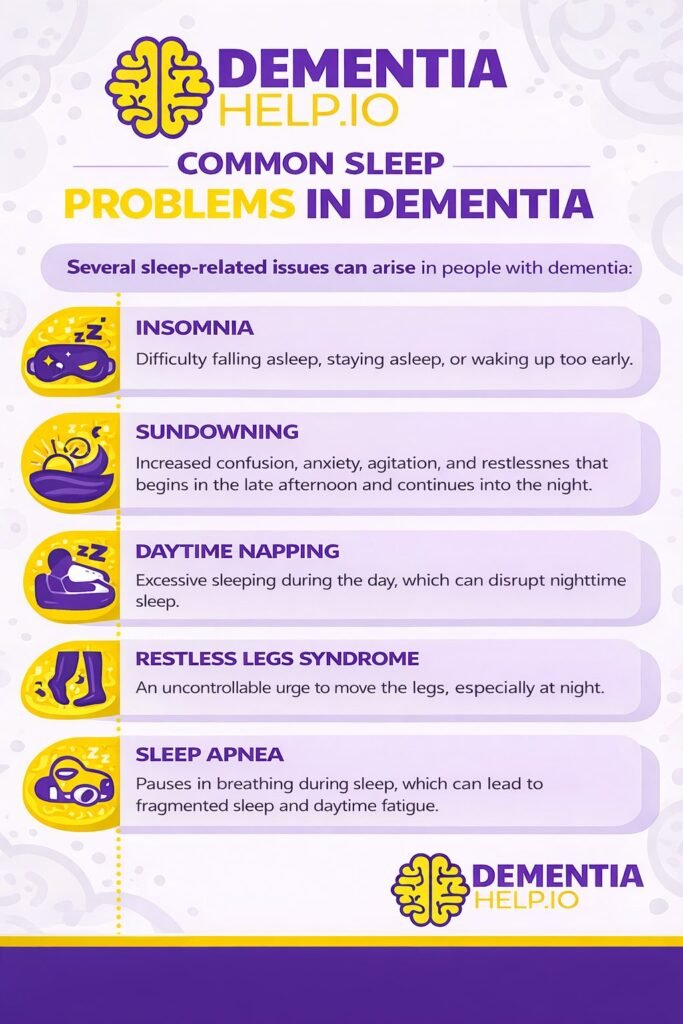
Several sleep-related issues can arise in people with dementia.
What is Sundowning?
Sundowning is not a disease but a pattern of behavior that occurs in the late afternoon and evening. As the sun sets, a person with dementia may become more agitated and confused.
The exact cause is unknown, but it is thought to be related to the fading light, fatigue, and changes in the brain’s sleep-wake cycle.
Strategies for Better Sleep
While medication is generally not the first choice for treating sleep problems in dementia due to potential side effects, many non-drug approaches can be very effective.
- Create a Soothing Bedtime Routine: A consistent and calming routine can signal to the body that it is time to sleep. This might include a warm bath, listening to soft music, or reading.
- Encourage Daytime Activity: Physical activity and exposure to natural sunlight during the day can help regulate the sleep-wake cycle. Avoid long naps, especially in the late afternoon.
- Make the Bedroom a Sanctuary: Ensure the bedroom is dark, quiet, and at a comfortable temperature. Use nightlights to reduce fear and disorientation if they wake up at night.
- Limit Caffeine and Large Meals Before Bed: Avoid stimulants like caffeine and sugar in the evening. A light snack before bed may be helpful.
- Address Underlying Issues: Rule out and treat any other medical conditions that could be disrupting sleep, such as pain, urinary tract infections, or sleep apnea.
If sleep problems persist and are causing significant distress, it is important to consult a doctor. They can help identify any underlying causes and recommend the most appropriate course of action.
This article is for informational purposes only and does not constitute medical advice. Always consult with a qualified healthcare professional for any health concerns or before making any decisions related to your health or treatment.