When a person with dementia begins to experience hallucinations, it can be a distressing and confusing time for them and their caregivers. Understanding what hallucinations are and why they happen is the first step toward managing them effectively.
This article provides a guide for caregivers on the different types of hallucinations, their causes, and practical strategies for providing support.
What Are Hallucinations?
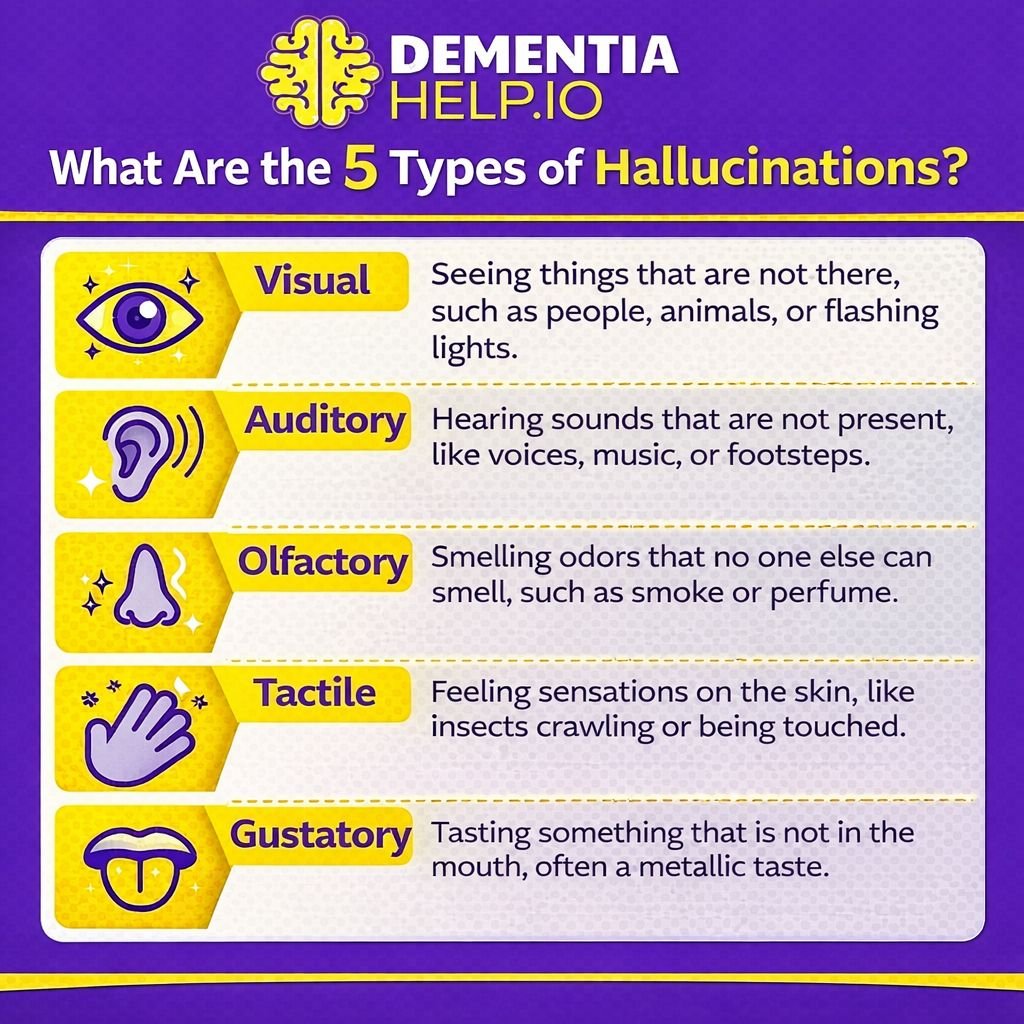
A hallucination is a sensory experience of something that is not actually present. While visual hallucinations are the most common in dementia, they can involve any of the five senses.
It is important to distinguish hallucinations from illusions or misperceptions, where a real object is mistaken for something else. For example, seeing a face in a patterned curtain is a misperception, while seeing a person in an empty room is a hallucination.
Types of Hallucinations in Dementia
Hallucinations can manifest in several ways. Understanding the type of hallucination can help in providing the right support.
What Causes Hallucinations in Dementia?
Hallucinations are primarily caused by changes in the brain due to dementia. The damage to brain cells can interfere with how a person interprets sensory information.
Certain types of dementia are more commonly associated with hallucinations. They are a hallmark symptom of dementia with Lewy bodies (LBD) and can also occur in Parkinson’s disease dementia. People with Alzheimer’s disease may also experience hallucinations, typically in the later stages.
Other factors that can trigger hallucinations include:
- Physical illnesses, such as infections or fever
- Dehydration
- Vision or hearing loss
- Side effects of certain medications
How to Respond to Hallucinations
Your response to a hallucination can significantly impact your loved one’s emotional state. The goal is to be reassuring and calm, not to argue or dismiss their experience.
- Stay Calm and Reassuring: Approach the person in a calm manner. Acknowledge what they are experiencing without confirming the hallucination is real. You could say, “I know this is frightening for you, but I am here.”
- Don’t Argue: Trying to convince the person that what they are seeing or hearing isn’t real can cause more distress. Remember, the experience is very real to them.
- Offer Comfort: A gentle touch or a soothing voice can be very comforting. Let them know they are safe.
- Modify the Environment: Sometimes, hallucinations are triggered by poor lighting or confusing patterns. Try improving the lighting or removing objects that might be misinterpreted.
- Distract and Redirect: Gently try to shift their focus to a pleasant and real activity, like listening to music, looking at a photo album, or going for a short walk.
If hallucinations are frequent, severe, or causing significant distress, it is important to consult a doctor. They can rule out any underlying medical causes and discuss potential treatment options.
This article is for informational purposes only and does not constitute medical advice. Always consult with a qualified healthcare professional for any health concerns or before making any decisions related to your health or treatment.