Caring for someone with dementia presents many challenges. One of the most distressing is when they begin to experience paranoia and delusions. It can be frightening and confusing for both the person with dementia and their caregivers.
This article will help you understand why paranoia happens in dementia. We will also provide practical strategies for how to respond and support your loved one.
What is Dementia-Related Paranoia?
Paranoia is a type of delusion, which is a strongly held false belief. For a person with dementia, these beliefs feel very real. They may become suspicious of people around them, even close family and friends.
Someone experiencing paranoia may feel like they are being watched or that others are trying to harm them. This can lead to accusations of theft, infidelity, or even poisoning. It is important to remember that these beliefs are a symptom of the disease and not a reflection of reality.
Why Does Paranoia Occur in Dementia?
Dementia damages the brain, affecting a person’s ability to process information and memories correctly. This can lead them to draw false conclusions and develop paranoid thoughts. As dementia progresses, these delusions may become more common.
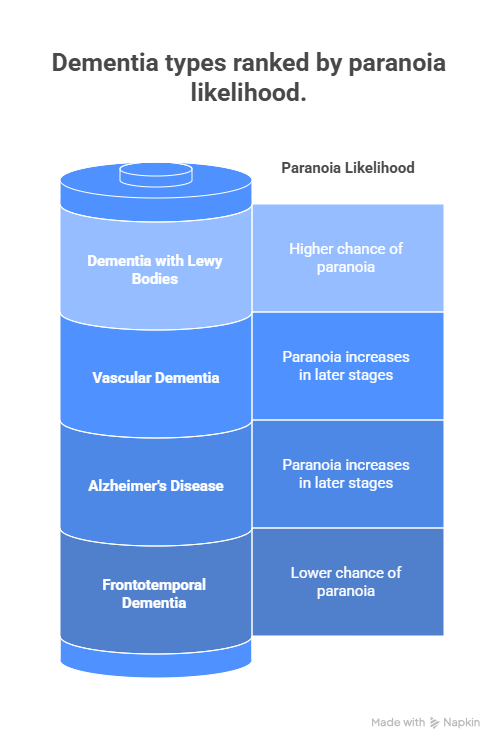
Paranoia is particularly common in certain types of dementia, such as dementia with Lewy bodies. It can also affect people with Alzheimer’s disease and vascular dementia, especially in the later stages. It is less common in frontotemporal dementia.
How to Respond to Paranoia and Delusions
When a loved one is experiencing a paranoid delusion, it is natural to want to correct them. However, arguing or trying to reason with them is often ineffective and can increase their distress. Here are some more helpful approaches:
- Acknowledge their feelings: Validate their emotions by saying something like, “It sounds like you are feeling scared.” This shows you are listening and taking their concerns seriously.
- Offer reassurance: Gently reassure them that you are there to help and keep them safe.
- Avoid arguing: Do not try to convince them that their belief is wrong. This will likely only increase their agitation.
- Look for the cause: Try to understand what might be triggering the paranoid thought. For example, if they believe something is stolen, it may be because they have misplaced it.
- Gently redirect: After acknowledging their feelings, try to redirect their attention to a different activity or topic.
Strategies for Preventing Paranoia
While it may not be possible to prevent paranoia completely, there are steps you can take to reduce its frequency and intensity:
- Establish routines: A consistent daily routine can help a person with dementia feel more secure and less confused.
- Create a calm environment: Reduce noise and clutter to minimize overstimulation.
- Keep things in their place: Have designated spots for commonly misplaced items like keys and glasses to reduce accusations of theft.
- Ensure regular check-ups: Regular medical check-ups, including hearing and vision tests, can help rule out other issues that may be contributing to paranoia.
Dealing with paranoia in dementia is a difficult journey. Remember to be patient and compassionate with your loved one, and also to take care of your own well-being. Seeking support from other caregivers and healthcare professionals can make a significant difference.
This article is for informational purposes only and does not constitute medical advice. Always consult with a qualified healthcare professional for any health concerns or before making any decisions related to your health or treatment.