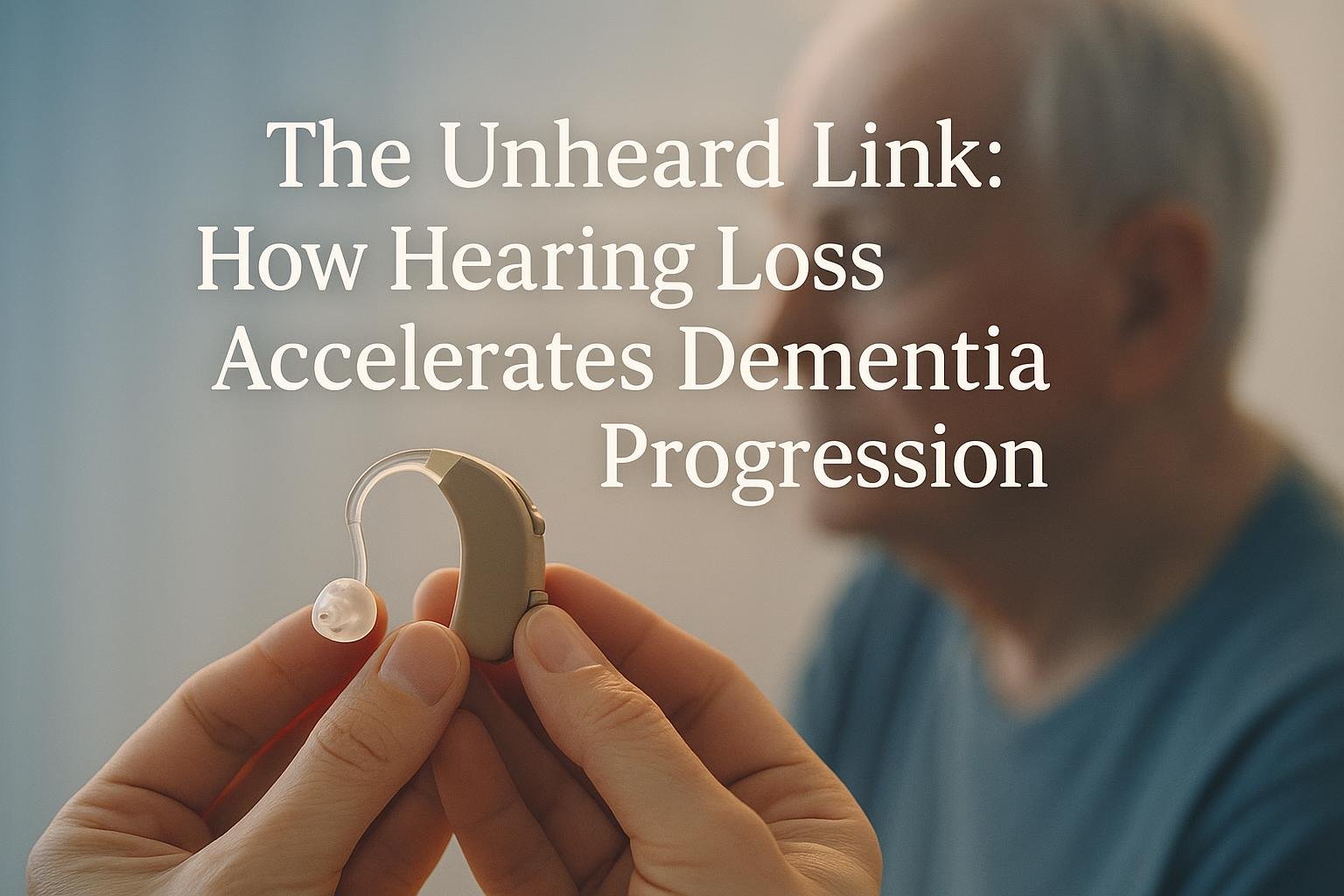
In the quest to protect our brain health as we age, we often focus on diet, exercise, and mental puzzles. However, a growing body of compelling research points to a significant, yet often overlooked, risk factor for dementia: untreated hearing loss.
The connection is so strong that experts now consider addressing hearing impairment a critical step in preserving cognitive function.
For the millions of older adults experiencing age-related hearing loss, this information is a crucial call to action.
Understanding the profound impact of hearing on the brain is the first step toward mitigating the risk of dementia and safeguarding our long-term mental well-being.
The link between hearing loss and dementia is not a fringe theory; it is a conclusion supported by major scientific studies.
A landmark 2020 report from the Lancet Commission identified hearing loss in midlife as one of the top modifiable risk factors for developing dementia [1].
Research from institutions like Johns Hopkins University has been pivotal in uncovering the depth of this relationship.
One of their studies, which followed hundreds of adults for over a decade, provided stark evidence: the greater the hearing loss, the higher the dementia risk [2]. This elevates the conversation about hearing loss from a simple inconvenience to a serious public health concern, demanding greater awareness and proactive management.
How Hearing Loss Rewires the Brain
Scientists have proposed several interconnected mechanisms to explain how hearing loss may contribute to cognitive decline and dementia. These theories highlight the intricate relationship between our auditory system and overall brain function.
First, the cognitive load theory suggests that when you have hearing loss, your brain has to work much harder to decode and interpret sounds. It is constantly straining to fill in the auditory gaps. This immense effort diverts crucial mental resources away from other important cognitive processes, such as memory and executive function [3].
Over time, this chronic brain strain can exhaust its reserves, leaving it more vulnerable to the changes that lead to dementia.
Second, there is evidence of structural brain changes. Brain imaging studies have shown that hearing loss is associated with a faster rate of brain atrophy, or shrinkage [2].
The parts of the brain responsible for processing sound can weaken from lack of stimulation, and this effect can cascade to other brain regions involved in higher-order thinking.
This physical impact on the brain underscores the seriousness of untreated hearing impairment.
Finally, social isolation plays a critical role. An older adult with hearing problems often finds it difficult to follow conversations, especially in noisy environments.
This can lead to frustration, embarrassment, and a gradual withdrawal from social activities. This isolation is a well-established risk factor for dementia in its own right, as social engagement is vital for keeping the brain active, stimulated, and healthy [4].
Quantifying the Dementia Risk
The correlation between the severity of hearing loss and the likelihood of developing dementia is alarmingly direct.
The research provides clear data on how the risk of dementia escalates as hearing ability declines. A pivotal study from Johns Hopkins Medicine quantified this increased risk with striking precision [2].
| Severity of Hearing Loss | Increased Risk of Developing Dementia |
|---|---|
| Mild Hearing Loss | 2x (Doubled Risk) |
| Moderate Hearing Loss | 3x (Tripled Risk) |
| Severe Hearing Loss | 5x (Five-Times Risk) |
These statistics paint a clear picture: even a mild hearing loss significantly increases a person’s dementia risk.
For individuals with severe hearing loss, the risk becomes five times greater than that of a person without hearing loss.
This dose-dependent relationship emphasizes that every level of hearing loss matters and should be addressed to help reduce the risk of cognitive decline.
A Sound Solution: The Protective Power of Hearing Aids
While the link between hearing loss and dementia is concerning, there is a powerful and accessible intervention: the hearing aid.
A growing body of evidence suggests that treating hearing loss is not just about improving communication; it is a proactive step toward protecting the brain.
The use of a hearing aid can significantly mitigate the associated dementia risk.
A groundbreaking clinical trial known as the ACHIEVE study, funded by the National Institutes of Health (NIH), provided some of the most definitive evidence to date. The study found that among older adults at a higher risk for cognitive decline, the use of hearing aids slowed their rate of cognitive decline by nearly 50% over a three-year period [5].
This suggests that hearing aids may work by alleviating the cognitive load, reducing brain strain, and encouraging social engagement by making it easier to communicate.
By restoring access to sound, a hearing aid allows the brain to function more efficiently, freeing up cognitive resources.
It helps people with hearing loss reconnect with their environment and their loved ones, combating the detrimental effects of social isolation.
Therefore, proper hearing aid use is emerging as a key strategy for anyone looking to proactively manage their brain health and lower their risk of dementia.
Taking Action for Your Hearing and Brain Health
The evidence is undeniable: protecting your hearing is a critical component of protecting your brain. The first step is to acknowledge the importance of your auditory health and to not dismiss hearing loss as an inevitable or trivial part of aging.
For any older adult, regular hearing evaluations should be a standard part of routine medical care.
If a hearing impairment is detected, the next step is to explore treatment options. For the vast majority of people with hearing, this means getting fitted for a hearing aid.
Modern hearing aids are discreet, technologically advanced devices that can dramatically improve quality of life.
Overcoming the stigma or hesitation associated with hearing aid use is essential, as studies show that people wait an average of 10 years before seeking help [2].
In conclusion, the connection between hearing loss and dementia represents one of the most important recent discoveries in preventative health.
The strain that hearing loss places on the brain, combined with the resulting social isolation, creates a dangerous pathway toward cognitive decline.
However, we are not helpless.
By treating age-related hearing loss with interventions like the hearing aid, we can significantly reduce the risk and empower ourselves to live not only longer, but also more cognitively vibrant lives.
Don’t wait—make your hearing health a priority today.
References
[1] Hearing loss and the risk of dementia [2] The Hidden Risks of Hearing Loss [3] Hearing Loss and the Dementia Connection [4] Hearing loss and the risk of dementia [5] Hearing aids slow cognitive decline in people at high risk