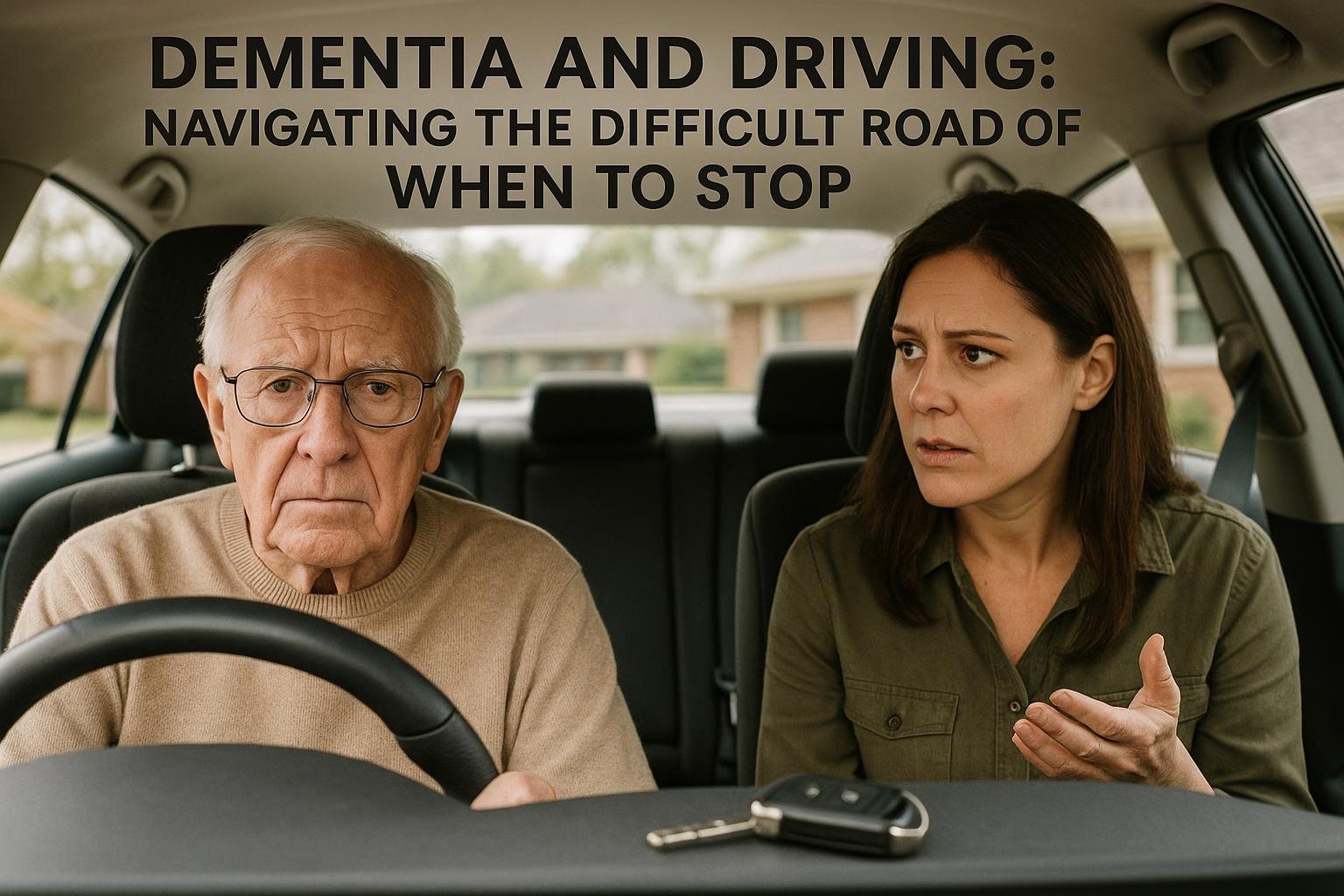
The Difficult Intersection of Dementia and Driving
For many people, driving is a symbol of independence and freedom. So, when a person with dementia is faced with the prospect of giving up their car keys, it can be a deeply emotional and challenging experience.
However, the reality is that dementia impairs the skills necessary for safe driving, and there will come a time when it is no longer safe for the person to be behind the wheel.
This article will discuss how dementia affects driving ability, the warning signs of unsafe driving, and how to approach the difficult conversation about stopping driving.
The goal is to ensure the safety of the person with dementia and others on the road.
How Dementia Impairs Driving Skills
Dementia is a progressive brain disease that affects cognitive function, which is essential for safe driving. The skills that can be impaired by dementia include:
•Memory: Forgetting routes to familiar places, or even the purpose of a trip.
•Attention and Concentration: Becoming easily distracted or having difficulty focusing on the road.
•Judgment and Decision-Making: Making poor decisions, such as misjudging the speed of other cars or failing to yield the right-of-way.
•Reaction Time: Having slower reflexes, which can be critical in an emergency situation.
•Visual-Spatial Skills: Difficulty with parking, changing lanes, or judging distances.
Because of these impairments, the American Academy of Neurology recommends that people with mild dementia should be strongly encouraged to stop driving [1].
Warning Signs of Unsafe Driving
It is important for family members and caregivers to be vigilant for the warning signs of unsafe driving.
These signs may appear gradually, so it is important to pay attention to any changes in driving behavior.
According to the National Institute on Aging, some of the warning signs include [2]:
•Getting lost in familiar areas
•Failing to observe traffic signals or stop signs
•Driving at an inappropriate speed, either too fast or too slow
•Making slow or poor decisions in traffic
•Becoming angry or confused while driving
•Having accidents or near-misses
•Receiving traffic tickets
Having the Conversation About Stopping Driving
Talking to a loved one about giving up driving is one of the most difficult conversations a caregiver can have. It is important to approach the topic with sensitivity and compassion.
Here are some tips from the Alzheimer’s Association [3]:
•Be Prepared: Before you have the conversation, do your research and have a plan for alternative transportation.
•Choose the Right Time and Place: Find a time when you are both calm and can talk without interruptions.
•Use “I” Statements: Express your concerns in a non-confrontational way. For example, say “I am worried about your safety when you are driving,” rather than “You are a dangerous driver.”
•Involve a Trusted Authority Figure: Sometimes, a recommendation from a doctor, a lawyer, or another respected person can be more effective.
•Offer Alternatives: Help the person find other ways to get around, such as public transportation, ride-sharing services, or help from family and friends.
•Be Patient and Persistent: It may take several conversations before the person is ready to accept that it is time to stop driving.
When to Seek a Professional Driving Evaluation
If you are unsure about whether your loved one is still safe to drive, a professional driving evaluation can be helpful.
A certified driving rehabilitation specialist can assess the person’s driving skills and provide an objective opinion. Many hospitals and rehabilitation centers offer these evaluations.
The evaluation typically includes both an office-based assessment of cognitive and physical abilities and an on-road driving test.
The evaluator will provide a report with recommendations about whether the person should continue driving, whether they need additional training, or whether they should stop driving altogether.
Alternative Transportation Options
Once the decision has been made to stop driving, it is important to have a plan for alternative transportation. Some options include:
•Family and Friends: Ask family members and friends if they can provide rides.
•Ride-Sharing Services: Services like Uber and Lyft can provide convenient transportation.
•Senior Transportation Services: Many communities offer transportation services specifically for older adults.
•Volunteer Driver Programs: Some organizations have volunteer drivers who can provide rides to medical appointments and other essential destinations.
The Road Ahead
The transition from driver to passenger can be a difficult one for a person with dementia. It is a significant loss of independence, and it is important to acknowledge their feelings of sadness, anger, and frustration.
By providing support, understanding, and practical solutions for transportation, you can help your loved one navigate this challenging stage of the dementia journey.
The safety of the person with dementia and the community is the top priority. While the conversation about stopping driving is difficult, it is a necessary one to have.
With patience, compassion, and a solid plan for alternative transportation, you can help your loved one maintain their quality of life while ensuring the safety of everyone on the road.
References
[1] Neurology. (2008). When should patients with Alzheimer disease stop driving?. https://www.neurology.org/doi/10.1212/01.wnl.0000310816.24704.d0
[2] National Institute on Aging. (2024, July 18). Driving Safety and Alzheimer’s Disease. https://www.nia.nih.gov/health/safety/driving-safety-and-alzheimers-disease
[3] Alzheimer’s Association. (n.d.). Dementia & Driving. https://www.alz.org/help-support/caregiving/safety/dementia-driving
[4] Mayo Clinic News Network. (2019, November 12). Alzheimer’s and dementia: When to stop driving. https://newsnetwork.mayoclinic.org/discussion/alzheimers-and-dementia-when-to-stop-driving/