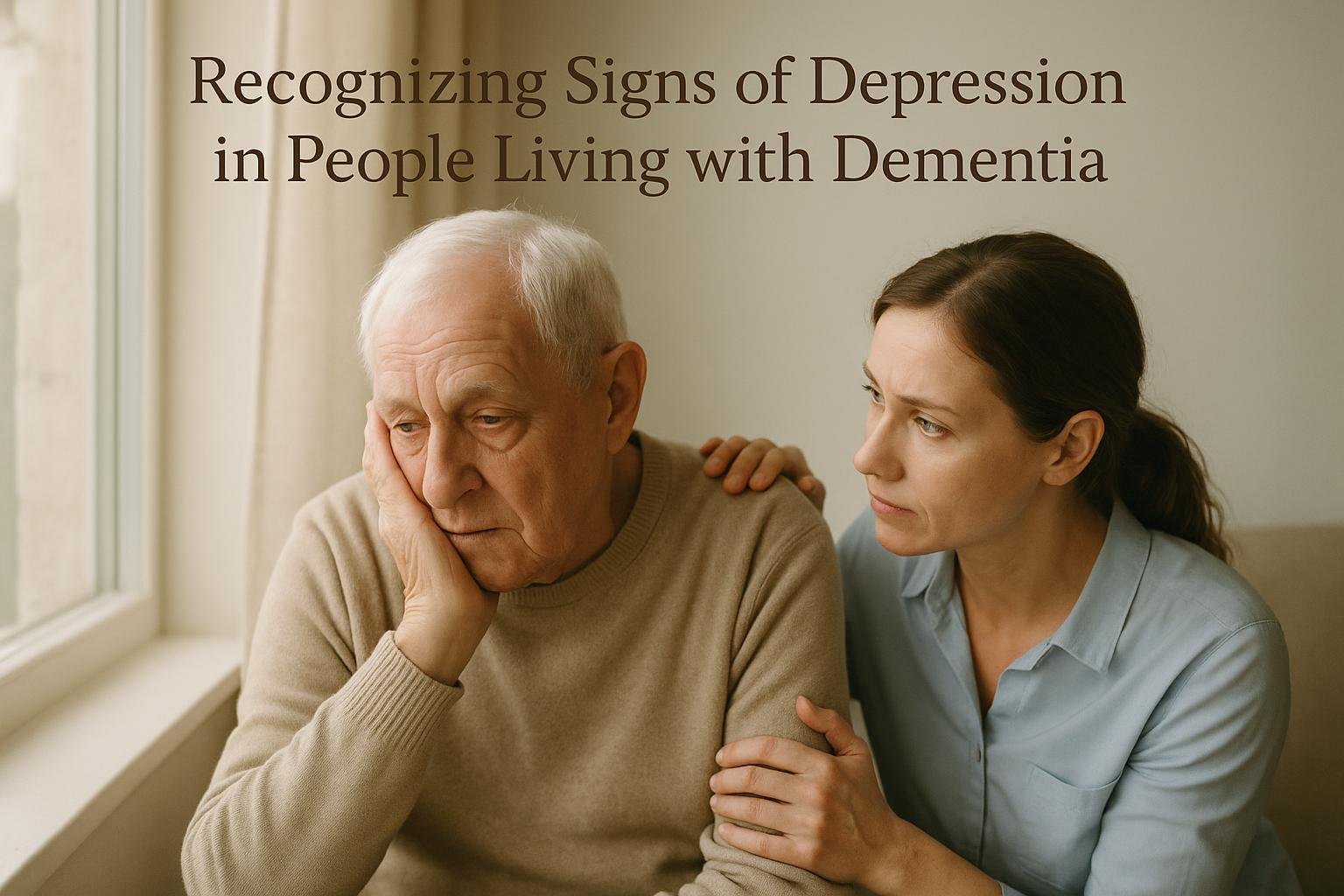
Living with dementia is a challenging journey, not just for the person diagnosed but for their caregivers as well.
One of the most common yet often overlooked co-occurring conditions is depression. It is estimated that up to 40% of people with Alzheimer’s disease suffer from significant depression [1].
Recognizing depression in someone with dementia can be difficult because the symptoms can overlap.
This article will provide a guide for caregivers on how to spot the signs of depression in people with dementia, understand the diagnostic process, and explore treatment options.
The Challenge of a Dual Diagnosis
Why is it so hard to identify depression in someone with dementia? The main reason is the similarity in symptoms. Both conditions can cause:
•Apathy and loss of interest in activities
•Social withdrawal and isolation
•Trouble concentrating and impaired thinking
Furthermore, the cognitive impairment caused by dementia can make it difficult for the person to express their feelings of sadness, hopelessness, or guilt.
They may not be able to articulate what they are experiencing, making it even more challenging for caregivers to recognize the signs of depression.
Signs and Symptoms of Depression in Dementia
While there is overlap, there are also some key differences in how depression may present in someone with dementia compared to the general population.
According to the National Institute of Mental Health, a diagnosis of depression in a person with Alzheimer’s requires the presence of either a depressed mood or decreased pleasure in usual activities, along with two or more of the following symptoms for at least two weeks [1]:
•Social isolation or withdrawal
•Disrupted appetite (not related to another medical condition)
•Disrupted sleep
•Agitation or slowed behavior
•Irritability
•Fatigue or loss of energy
•Feelings of worthlessness, hopelessness, or inappropriate guilt
•Recurrent thoughts of death or suicide
It is also important to note that depression in people with dementia may be less severe and the symptoms may come and go. They may also be less likely to talk about suicide.
| Symptom | Dementia | Depression |
| Cognitive Changes | Memory loss, confusion, difficulty with language | Trouble concentrating, indecisiveness |
| Mood | Can be variable, may include apathy | Persistent sadness, hopelessness, irritability |
| Sleep | Changes in sleep patterns are common | Can cause insomnia or oversleeping |
| Interest | Loss of interest in hobbies and activities | Loss of pleasure in previously enjoyed activities |
Getting a Proper Diagnosis
If you suspect that your loved one with dementia may be depressed, it is crucial to seek a professional evaluation.
A thorough diagnosis is important to rule out other medical conditions or medication side effects that could be causing the symptoms.
The diagnostic process will likely include:
•A review of the person’s medical history
•A physical and mental examination
•Interviews with family members and caregivers
It may be helpful to consult a geriatric psychiatrist, who specializes in diagnosing and treating mental health conditions in older adults.
Treatment Options for Depression in Dementia
Treating depression in a person with dementia can significantly improve their quality of life. The most effective approach is often a combination of non-drug approaches and medication.
Non-Drug Approaches
Before turning to medication, it is often recommended to try non-drug approaches first. These can include:
•Support Groups: Connecting with others in a similar situation can be very beneficial.
•Counseling: Individual therapy can provide a safe space to talk about feelings.
•Predictable Routine: A consistent daily routine can reduce stress and anxiety.
•Enjoyable Activities: Scheduling activities that the person enjoys can boost their mood.
•Regular Exercise: Physical activity has been shown to have a positive effect on mental health.
•Emotional Support: Acknowledging the person’s feelings and providing reassurance can be very comforting.
Medication
If non-drug approaches are not enough, medication may be recommended.
It is important to work closely with a doctor to find the right medication and dosage, and to monitor for any potential side effects.
The Importance of Early Detection
Identifying depression early in someone with dementia is crucial for several reasons. Early treatment can prevent the symptoms from worsening and can improve the person’s overall quality of life.
It can also make caregiving less stressful, as a person who is depressed may be more difficult to care for.
If left untreated, depression can accelerate the cognitive decline associated with dementia and can lead to other health problems, such as a weakened immune system and an increased risk of falls.
Working with Healthcare Professionals
It is important to work closely with a healthcare team that is experienced in treating people with dementia.
This team may include a primary care physician, a neurologist, a geriatric psychiatrist, and a therapist.
Regular communication with the healthcare team is essential for monitoring the person’s condition and adjusting the treatment plan as needed.
Caregivers should not hesitate to reach out to the healthcare team if they notice any changes in the person’s mood or behavior.
Keeping a journal of the person’s symptoms can be helpful for tracking changes over time and for providing information to the healthcare team.
A Brighter Outlook
Depression is a treatable condition, even in people with dementia. By being vigilant for the signs, seeking a proper diagnosis, and exploring treatment options, caregivers can help their loved ones find relief from the added burden of depression.
This can lead to an improved sense of well-being and a better quality of life for everyone involved. Remember that you are not alone in this journey, and there are resources and professionals available to support you.
References
[1] Alzheimer’s Association. (n.d.). Depression. https://www.alz.org/help-support/caregiving/stages-behaviors/depression
[2] Alzheimer’s Society UK. (n.d.). Depression and dementia. https://www.alzheimers.org.uk/about-dementia/stages-and-symptoms/depression-dementia
[3] Kitching, D. (2015). Depression in dementia. InnovAiT, 8(11), 678-684. https://doi.org/10.1177/1755738015605229
[4] Harvard Health Publishing. (2012, October 1). Depression: Early warning of dementia?. https://www.health.harvard.edu/mind-and-mood/depression-early-warning-of-dementia