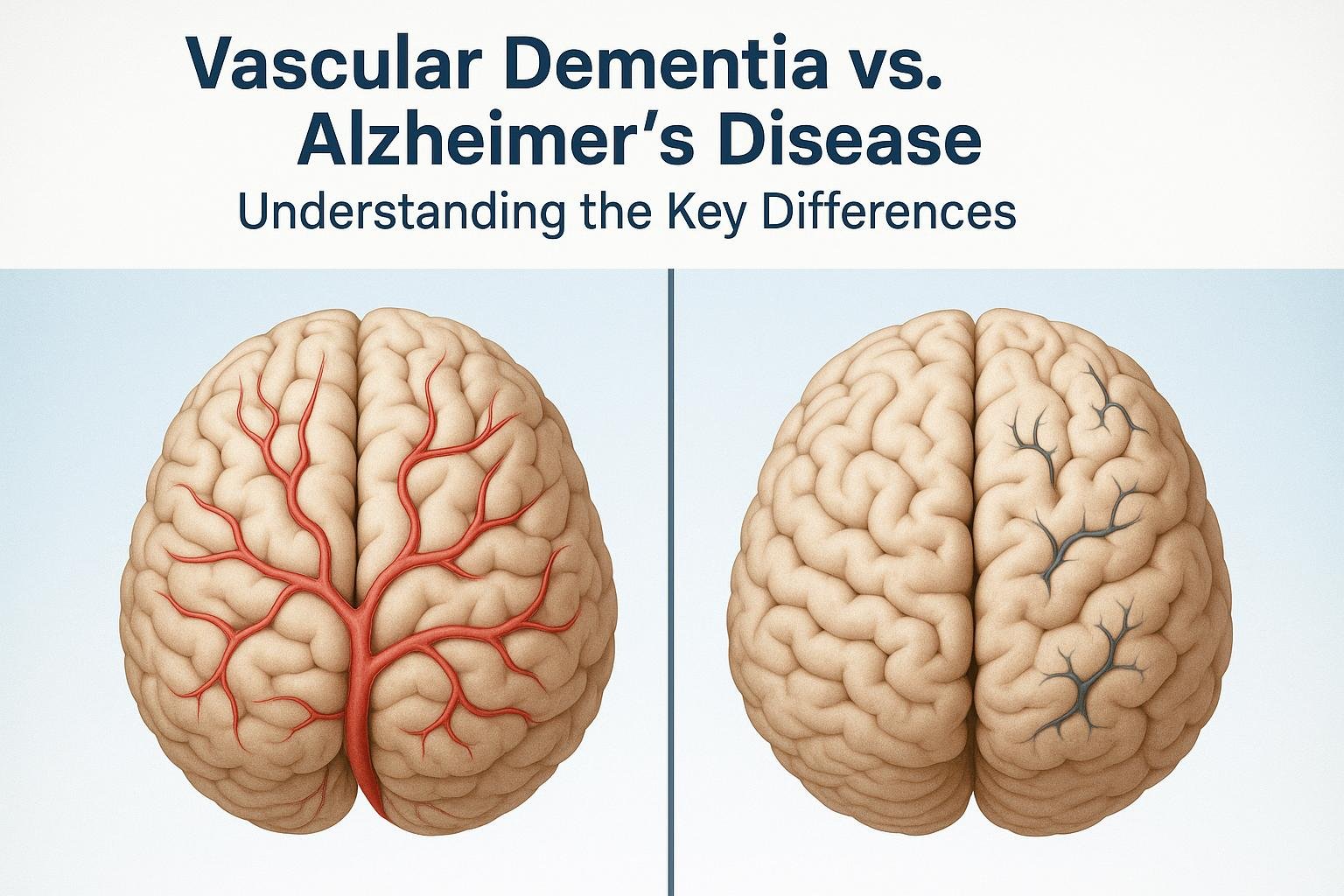
Are you or a loved one experiencing memory problems and wondering if it’s vascular dementia or Alzheimer’s disease?
Understanding the distinction is important for getting the right diagnosis and care. While both conditions affect cognitive function, they have different causes, symptoms, and progression patterns.
This article provides a clear comparison of vascular dementia and Alzheimer’s disease. We will explore their unique characteristics to help you understand these two common forms of dementia.
What Causes These Conditions?
The primary difference between vascular dementia and Alzheimer’s disease lies in their underlying causes. Each condition originates from different types of brain damage.
Vascular Dementia: A Blood Flow Problem
Vascular dementia is caused by damage to the blood vessels in the brain. This damage reduces blood flow, depriving brain cells of the oxygen and nutrients they need to function properly.
The most common cause of this damage is a stroke, where a blood clot blocks an artery in the brain. However, other conditions that affect blood vessels, such as high blood pressure, diabetes, and high cholesterol, can also lead to vascular dementia [1].
According to the Alzheimer’s Association, vascular dementia is the second most common type of dementia after Alzheimer’s disease [2]. The damage to the brain can be widespread or localized, depending on the location and severity of the blood vessel problems.
Alzheimer’s Disease: Plaques and Tangles
Alzheimer’s disease, on the other hand, is characterized by the buildup of abnormal protein deposits in the brain. These proteins, beta-amyloid and tau, form plaques and tangles that disrupt communication between nerve cells and eventually lead to their death [3].
The exact cause of Alzheimer’s disease is not fully understood. However, scientists believe that a combination of genetic, lifestyle, and environmental factors contribute to its development. Age is the most significant risk factor, with the majority of people with Alzheimer’s being 65 and older.
Recognizing the Symptoms
The initial symptoms of vascular dementia and Alzheimer’s disease can also differ, which can help in distinguishing between the two conditions.
Early Signs of Vascular Dementia
In vascular dementia, symptoms can appear suddenly after a major stroke or gradually as a result of multiple small strokes. Unlike Alzheimer’s, memory loss is not always the first sign. Instead, early symptoms may include:
- Problems with attention and concentration
- Difficulty with planning and decision-making
- Slower thinking speed
- Physical symptoms like weakness or coordination problems
As the condition progresses, memory problems may develop, but they are often less severe than in the early stages of Alzheimer’s disease.
Early Signs of Alzheimer’s Disease
Memory loss, particularly difficulty remembering newly learned information, is the hallmark early symptom of Alzheimer’s disease.
This is because the disease typically begins in the part of the brain that affects learning. As the disease progresses, other symptoms emerge, including:
- Disorientation and confusion about time and place
- Difficulty with language, such as finding the right words
- Impaired judgment and decision-making
- Changes in mood and personality
| Symptom Comparison | Vascular Dementia | Alzheimer’s Disease |
|---|---|---|
| Initial Symptoms | Problems with attention, thinking speed, and executive function | Memory loss, especially of recent events |
| Physical Symptoms | Common, including weakness, numbness, or paralysis | Less common in early stages |
| Progression | Often step-wise, with sudden declines after strokes | Gradual and progressive decline |
| Cognitive Domains | Attention, processing speed, and executive function affected early | Memory and language affected early |
How the Diseases Progress
The progression of vascular dementia and Alzheimer’s disease also follows different patterns.
The Step-Wise Decline of Vascular Dementia
Vascular dementia often progresses in a step-wise pattern. This means that a person’s abilities may remain stable for a period and then suddenly decline after another stroke or vascular event. These declines can be significant and noticeable.
In some cases, the progression can be more gradual, especially if it is caused by small vessel disease rather than major strokes. However, the step-wise pattern is a key feature that distinguishes it from the more gradual decline of Alzheimer’s.
The Gradual Progression of Alzheimer’s Disease
Alzheimer’s disease typically progresses slowly and gradually over several years. The disease is often divided into early, middle, and late stages, with symptoms becoming more severe over time.
In the early stage, the person may still be able to function independently. By the late stage, they may be completely dependent on others for care.
Diagnosis and Treatment
Diagnosing and treating vascular dementia and Alzheimer’s disease require different approaches.
Diagnosing the Conditions
There is no single test to diagnose either condition. A diagnosis is typically based on a combination of factors, including:
- A detailed medical history
- A physical and neurological examination
- Cognitive tests to assess memory and thinking skills
- Brain imaging, such as an MRI or CT scan, to look for evidence of strokes or other brain changes
Brain imaging can be particularly helpful in distinguishing between vascular dementia and Alzheimer’s disease. An MRI can show evidence of strokes or other vascular damage, while a PET scan can reveal the presence of amyloid plaques and tau tangles.
Treatment Approaches
While there is no cure for either vascular dementia or Alzheimer’s disease, there are treatments available to manage symptoms and improve quality of life.
For vascular dementia, treatment focuses on preventing further strokes and managing the underlying conditions that contribute to vascular disease. This may include medications to control blood pressure, lower cholesterol, and prevent blood clots. Lifestyle changes, such as a healthy diet and regular exercise, are also important.
For Alzheimer’s disease, there are medications available that can help with memory and thinking problems for a time. These medications, such as cholinesterase inhibitors and memantine, work by regulating neurotransmitters in the brain. Newer treatments, such as aducanumab and lecanemab, target the underlying amyloid plaques and may slow the progression of the disease in its early stages [4].
Moving Forward
Distinguishing between vascular dementia and Alzheimer’s disease is important for receiving the right care and support.
While they share some similarities, their different causes, symptoms, and progression patterns require different management strategies.
If you are concerned about your own or a loved one’s cognitive health, it is important to speak with a healthcare professional to get an accurate diagnosis.
References
[1] Mayo Clinic. (2025, September 18). Vascular dementia. https://www.mayoclinic.org/diseases-conditions/vascular-dementia/symptoms-causes/syc-20378793
[2] Alzheimer’s Association. (n.d.). Vascular Dementia. https://www.alz.org/alzheimers-dementia/what-is-dementia/types-of-dementia/vascular-dementia
[3] Medical News Today. (2022, November 30). Vascular dementia vs. Alzheimer’s: Similarities and differences. https://www.medicalnewstoday.com/articles/vascular-dementia-vs-alzheimers
[4] Healthline. (2023, September 18). Vascular Dementia vs. Alzheimer’s Disease. https://www.healthline.com/health/alzheimers/vascular-dementia-vs-alzheimers