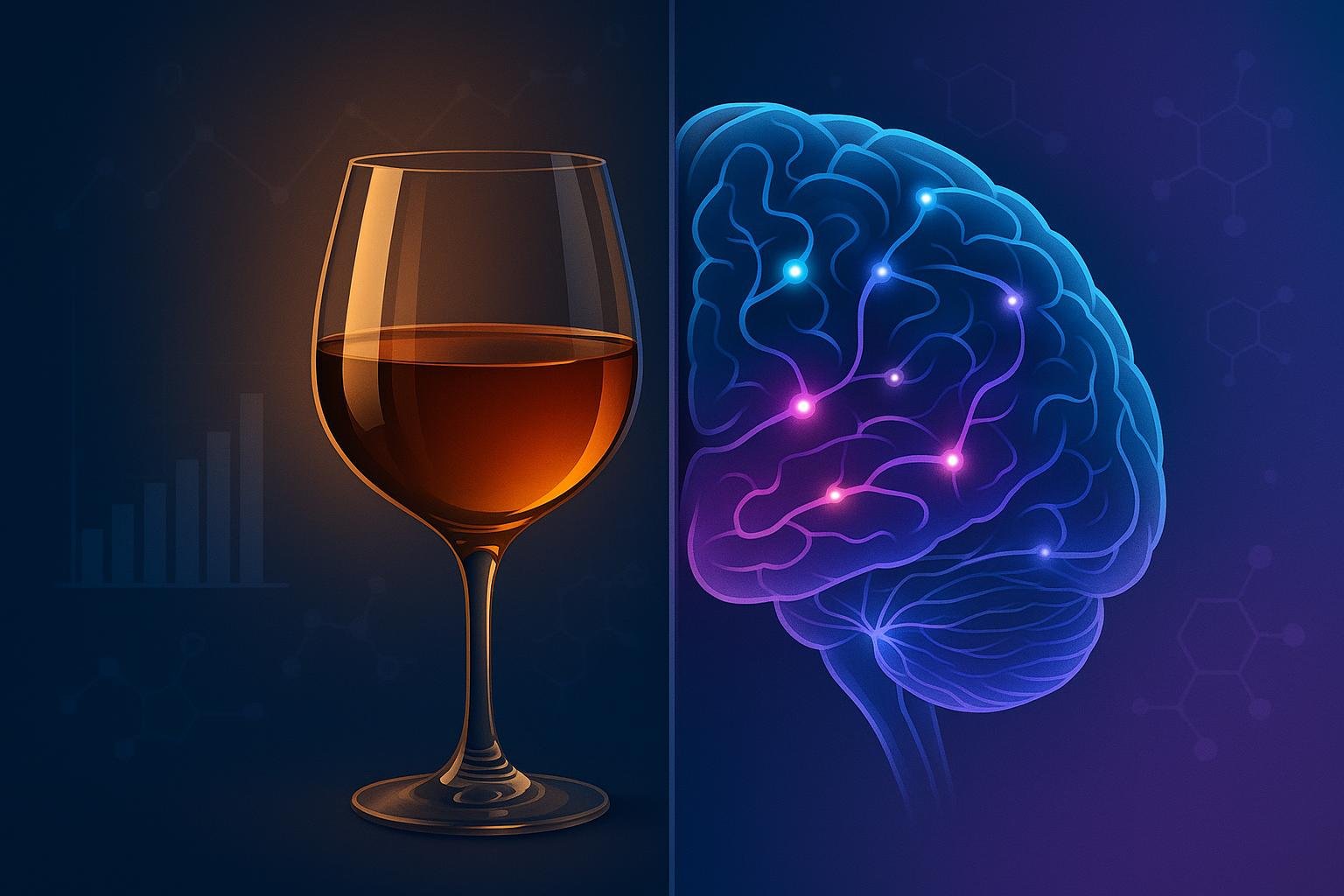
Are you wondering if that nightly glass of wine actually protects your brain from dementia?
A major new study published in BMJ Evidence-Based Medicine has turned conventional wisdom on its head. The research analyzed data from 559,559 individuals and found that any level of alcohol consumption may increase dementia risk, not decrease it.
The Study That Changed Everything
This groundbreaking research followed participants for an average of 4 years in the US cohort and 12 years in the UK cohort. During this time, 14,540 participants developed dementia and 48,034 died.
The study used two different analytical approaches that yielded contrasting results. Traditional observational data from the US Million Veteran Programme and the UK Biobank initially showed what researchers call a “U-shaped association” between alcohol and dementia risk.
What Observational Data Showed
The observational findings suggested that light drinkers had the lowest dementia risk. Non-drinkers and heavy drinkers (consuming more than 40 drinks per week) appeared to have higher risks.
Heavy drinkers showed a 41% increased risk (HR 1.41) compared to light drinkers. Those with alcohol use disorder had an even higher 51% increased risk (HR 1.51).
What Genetic Analysis Revealed
However, genetic analysis using Mendelian randomization told a completely different story. This method uses genetic variants to minimize the influence of lifestyle factors and environmental confounders.
The genetic data revealed a monotonic increase in dementia risk with greater alcohol consumption. A single standard deviation increase in weekly alcohol consumption was associated with a 15% increase in dementia risk (OR 1.15).
| Alcohol Consumption Level | Observational Risk | Genetic Risk |
|---|---|---|
| Non-drinkers | Higher than light drinkers | – |
| Light drinkers | Lowest risk (reference) | – |
| Heavy drinkers (>40 drinks/week) | 41% increase (HR 1.41) | – |
| Alcohol Use Disorder | 51% increase (HR 1.51) | 16% increase (OR 1.16) |
| Each SD increase in drinks/week | – | 15% increase (OR 1.15) |
Why Light Drinking Appeared Protective
The study uncovered a crucial finding that explains the apparent contradiction. Researchers discovered that individuals who developed dementia also experienced a decline in alcohol intake over time.
This phenomenon, called reverse causation, means that early cognitive decline leads people to reduce their alcohol consumption. The brain changes associated with developing dementia may cause people to naturally drink less, creating the false impression that light drinking is protective.
In reality, the “protective effect” of light drinking was simply a consequence of the disease process itself. People weren’t protected by drinking lightly—they were drinking lightly because their brains were already beginning to change.
The Public Health Impact
These findings carry enormous implications for dementia prevention strategies worldwide. The research suggests that reducing alcohol use disorder prevalence could lower dementia incidence by up to 16%.
This represents a significant opportunity for public health intervention. With dementia affecting millions globally and no cure currently available, prevention strategies become critically important.
The study challenges decades of research that suggested moderate alcohol consumption might be beneficial for brain health. Instead, it provides evidence that any level of alcohol consumption may contribute to dementia risk.
What This Means for Your Health
If you’ve been justifying your evening wine with the belief it protects your brain, this research suggests otherwise. The study provides strong evidence that when it comes to dementia prevention, the safest approach may be to avoid alcohol entirely.
This doesn’t mean you need to panic if you occasionally drink. However, it does suggest that using potential brain benefits as a reason to drink regularly may not be scientifically sound.
The research represents the largest combined observational and genetic study to date on this topic, making its findings particularly significant for understanding the true relationship between alcohol and brain health.