
It is a common worry. You walk into a room and forget why you are there.
You misplace your keys more often.
For many older adults, these small memory lapses bring a wave of concern about cognitive decline and dementia.
While some cognitive changes are a normal part of aging, emerging research reveals a surprising factor that can significantly accelerate this process: dehydration.
A recent study found that over half of adults aged 55-75 are physiologically dehydrated, a condition that can increase the risk of developing dementia by an alarming 200% [1].
This article explores the powerful connection between hydration and brain health, offering science-backed strategies to protect your cognitive future.
The Science Behind Dehydration and Dementia
The link between dehydration and dementia is not just a coincidence; it is a scientifically validated connection.
Multiple studies have shown that poor hydration is a significant risk factor for cognitive decline.
A landmark 2018 study published in Nutrients found that individuals with dehydration were over twice as likely to develop dementia [1].
Another prospective cohort study from 2023, published in BMC Medicine, followed nearly 2,000 older adults for two years and discovered that those with poor hydration status experienced a greater decline in global cognitive function [2].
The research is clear: maintaining proper hydration is essential for brain health.
The Hydromolecular Hypothesis
Scientists explain the dehydration-dementia link through the hydromolecular hypothesis.
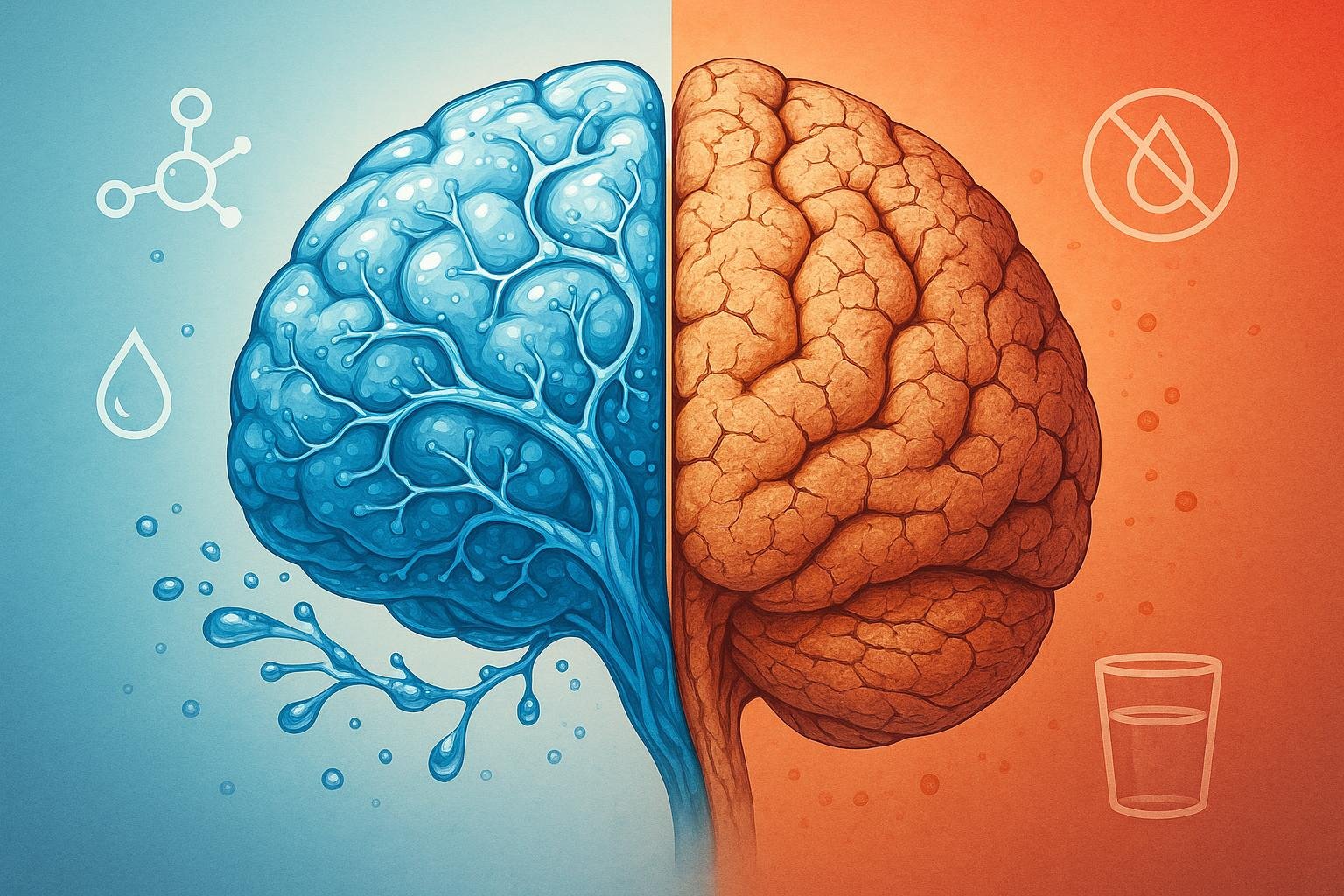
This theory suggests that when the body lacks sufficient water, the volume of interstitial fluid in the brain decreases.
This low fluid volume creates an environment where proteins can misfold and clump together, a process known to cause neuronal and synaptic damage.
These defective proteins disrupt the brain’s information processing, leading to the cognitive impairments seen in dementia [1].
How Dehydration Affects Brain Function
Dehydration impacts the brain in both the short and long term. Even mild dehydration, as little as a 2% loss of body water, can impair cognitive performance in tasks requiring attention, psychomotor skills, and immediate memory [3].
This is because dehydration reduces the flow of oxygen to the brain and can cause electrolyte imbalances, which are critical for proper nerve function.
Over time, chronic dehydration can lead to more severe consequences, including the physical shrinkage of brain cells [4].
This cumulative damage accelerates cognitive decline and significantly increases the risk of dementia, particularly in adults between the ages of 65 and 85 [1].
Warning Signs and Risk Factors
One of the most challenging aspects of identifying dehydration in older adults is that its symptoms can mimic those of dementia.
Memory loss, confusion, and difficulty concentrating are all common signs of both conditions, making it easy to overlook a correctable hydration issue [5].
It is crucial to be aware of the risk factors for dehydration, which include being over the age of 65, having metabolic syndrome, and having existing cognitive impairment.
Recognizing these risks can help caregivers and individuals take proactive steps to maintain proper hydration.
Evidence-Based Prevention Strategies
Preventing dehydration is one of the most effective ways to protect your cognitive health.
The National Academy of Medicine recommends a daily fluid intake of about 13 cups (3.7 liters) for men and 9 cups (2.7 liters) for women [6].
However, it is important to focus on maintaining a healthy hydration status rather than just the volume of water consumed. Here are some practical tips to stay hydrated:
- Establish a regular fluid schedule: Offer drinks at consistent times throughout the day.
- Provide a variety of hydrating options: In addition to water, offer herbal teas, fruit-infused water, and diluted juices.
- Use visual reminders: Keep a water bottle in plain sight or use a smart bottle that vibrates as a reminder.
- Offer hydrating foods: Many fruits and vegetables, such as watermelon, cucumbers, and oranges, have high water content.
Take Action: Protect Your Brain Today
The evidence is compelling: dehydration is a significant and modifiable risk factor for dementia.
By understanding the science behind this connection and implementing practical hydration strategies, you can take a proactive role in protecting your brain health and reducing your risk of cognitive decline.
Start today by making a conscious effort to stay hydrated—it is a simple yet powerful step towards a healthier cognitive future.
References
[1] Lauriola, M., Mangiacotti, A., D’Onofrio, G., Cascavilla, L., Paris, F., Paroni, G., Seripa, D., Greco, A., & Sancarlo, D. (2018). Neurocognitive Disorders and Dehydration in Older Patients: Clinical Experience Supports the Hydromolecular Hypothesis of Dementia. Nutrients, 10(5), 562. https://pmc.ncbi.nlm.nih.gov/articles/PMC5986442/
[2] Nishi, S. K., Babio, N., Paz-Graniel, I., Serra-Majem, L., Vioque, J., Fitó, M., Corella, D., Pintó, X., Bueno-Cavanillas, A., Tur, J. A., Diez-Ricote, L., Martinez, J. A., Gómez-Martínez, C., González-Botella, A., Castañer, O., Alvarez-Sala, A., Montesdeoca-Mendoza, C., Fanlo-Maresma, M., Cano-Ibáñez, N., … Salas-Salvadó, J. (2023). Water intake, hydration status and 2-year changes in cognitive performance: a prospective cohort study. BMC Medicine, 21(1). https://bmcmedicine.biomedcentral.com/articles/10.1186/s12916-023-02771-4
[3] Adan, A. (2012). Cognitive Performance and Dehydration. Journal of the American College of Nutrition, 31(2), 71–78. https://pubmed.ncbi.nlm.nih.gov/22855911/
[4] The Brain & Spine Institute of North Houston. (n.d.). How Dehydration Affects Your Brain. Fayaz Neurosurgery. https://fayazneurosurgery.com/how-dehydration-affects-your-brain/
[5] Connecting Hearts Home Care. (2016, June 7). Symptoms of Dehydration in Elderly People Look Like Dementia. https://connectingheartshomecare.com/symptoms-of-dehydration-in-elderly-like-dementia/
[6] Mayo Clinic. (n.d.). Water: How much should you drink every day? https://www.mayoclinic.org/healthy-lifestyle/nutrition-and-healthy-eating/in-depth/water/art-20044256