Have you ever watched a loved one struggle with memory loss and wondered if there was something more we could do? Have you found yourself lying awake at night, worried about your own cognitive future, especially if Alzheimer’s runs in your family? We know these fears all too well, and we understand the desperate search for hope in what often feels like an uphill battle against dementia.
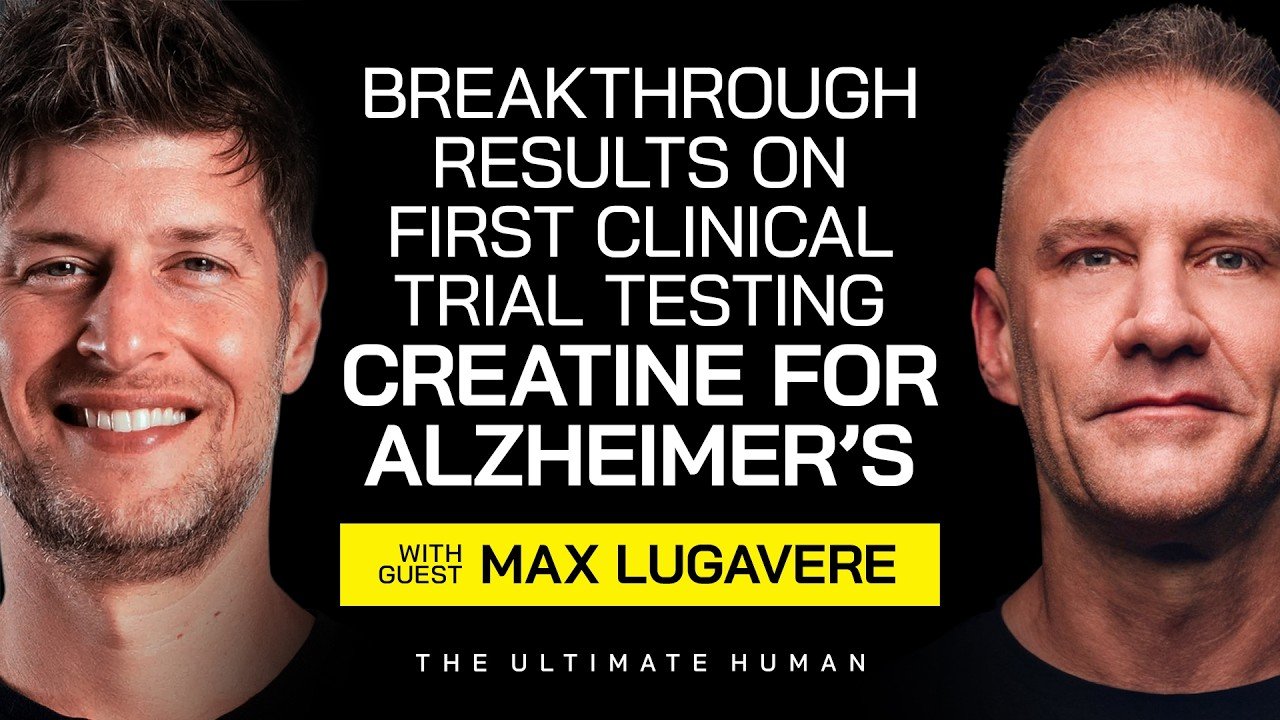
Today, we want to share something that has genuinely excited us and given us renewed hope. We recently came across a fascinating discussion between Gary Brecka and Max Lugavere on The Ultimate Human Podcast that we think every family dealing with dementia concerns needs to hear about.
The episode, titled “First Alzheimer’s Creatine Trial Shows Shocking Results,” discusses groundbreaking research that could change how we think about brain health and Alzheimer’s prevention.
The Research That’s Getting Everyone Talking
We have to admit, when we first heard about using creatine for Alzheimer’s, we were skeptical. Most of us know creatine as that supplement bodybuilders use to build muscle. But here’s what caught our attention: the first clinical trial testing creatine specifically for Alzheimer’s disease has just been completed, and according to Max Lugavere, the results are absolutely mind-blowing.
What makes this research so significant is that it represents a completely new approach to thinking about brain health. While we’ve been focused on complex pharmaceutical interventions, researchers have been quietly investigating whether this simple, well-studied supplement could offer real benefits for cognitive function and potentially even help with Alzheimer’s disease.
The timing of this research couldn’t be more important. We’re living in an era where Alzheimer’s disease affects millions of families worldwide, and despite decades of research and billions of dollars invested in drug development, we still have limited effective treatments. That’s why any new avenue of research, especially one involving a supplement with an excellent safety profile like creatine, deserves our serious attention.
Understanding Creatine’s Role in Brain Health
Before we dive into what this research means for our families, let’s talk about what creatine actually does in our brains. We think it’s important to understand the science so we can make informed decisions about our health and the health of our loved ones.
Creatine is a compound that our bodies naturally produce, and it plays a crucial role in energy production at the cellular level. While most people associate it with muscle function, our brains actually have some of the highest energy demands of any organ in our body. Think about it: our brains are constantly working, processing information, forming memories, and maintaining all the complex functions that make us who we are.
What’s fascinating is that brain energy metabolism becomes increasingly important as we age, and it’s particularly relevant when we’re talking about neurodegenerative diseases like Alzheimer’s. Research has shown that people with Alzheimer’s often have problems with how their brain cells produce and use energy. This is where creatine comes in.
When we supplement with creatine, we’re essentially giving our brain cells additional resources to produce energy more efficiently. It’s like having a backup power system for our most important organ. This concept isn’t entirely new – researchers have been studying creatine’s effects on brain function for years, but this recent trial represents the first time it’s been specifically tested in people with Alzheimer’s disease.
What makes us particularly hopeful about this research is that creatine has an excellent safety profile. Unlike many experimental treatments for Alzheimer’s, creatine has been extensively studied in other contexts, and we know it’s generally safe for most people when used appropriately. This means that if the research continues to show positive results, we might have access to a relatively safe and affordable option for supporting brain health.
What the Community Is Saying
One of the things that struck us most about this research is how it’s resonating with real families dealing with dementia concerns. When we looked at the comments on the podcast episode, we found stories that probably sound familiar to many of you.
One viewer shared something that really hit home: “I started taking creatine for working out but have seen great results with my cognitive health. Biological father died from dementia and grandfather had Alzheimer’s. I’m optimistic.” This comment captures something we hear from so many families – that combination of personal experience with dementia and the cautious hope that comes with new research.
We think it’s significant that people are already reporting cognitive benefits from creatine supplementation, even when they started taking it for other reasons. While we always emphasize that individual experiences don’t replace scientific research, these personal accounts add an important dimension to our understanding of how creatine might affect brain health in real-world situations.
Another comment that caught our attention mentioned the importance of speaking out about issues in the food and pharmaceutical industries. This reflects a broader conversation we’re having as a society about taking more control of our health and being open to solutions that might come from unexpected places.
What This Means for Our Families
So where does this leave us as families dealing with dementia concerns? We think there are several important takeaways from this research that we should all consider.
First, this research represents hope. For too long, families affected by Alzheimer’s have felt like they were fighting a battle with very few weapons. Every new avenue of research, especially one that shows promising results, gives us more options to consider and discuss with our healthcare providers. The fact that this research involves a supplement with a good safety profile makes it even more encouraging.
Second, it reinforces something we’ve been learning more about in recent years: the importance of brain energy metabolism in cognitive health. This isn’t just about Alzheimer’s disease – it’s about understanding how we can support our brain health throughout our lives. Whether we’re worried about our own cognitive future or caring for someone who’s already showing signs of memory problems, understanding how our brains use energy gives us new ways to think about brain health.
Third, this research highlights the value of staying informed about developments in dementia research. We know it can be overwhelming to keep track of all the studies and findings, but staying connected to the latest research helps us make better decisions for ourselves and our loved ones. It also helps us have more informed conversations with our healthcare providers.
We want to be clear about something important: while this research is exciting, we’re not suggesting that anyone should start taking creatine without talking to their doctor first. What we are suggesting is that this research gives us something concrete to discuss with our healthcare providers, especially if we have concerns about cognitive health or a family history of dementia.
The Broader Context of Brain Health Research
This creatine research doesn’t exist in isolation – it’s part of a larger shift in how we think about brain health and dementia prevention. We’re seeing more research into lifestyle factors, nutritional interventions, and supplements that might support cognitive function. This represents a move away from the idea that we’re powerless against dementia and toward a more proactive approach to brain health.
What’s particularly encouraging is that many of these interventions, including creatine supplementation, are things that most people can access and afford. This democratizes brain health in a way that expensive pharmaceutical treatments cannot. While we certainly need continued research into new medications for Alzheimer’s, we also need practical, accessible strategies that families can implement as part of a comprehensive approach to cognitive health.
The research also fits into what we’re learning about the importance of mitochondrial health – the health of the tiny powerhouses inside our cells that produce energy. As we age, our mitochondria become less efficient, and this is particularly problematic for energy-hungry organs like our brains. Interventions that support mitochondrial function, like creatine supplementation, might help address this fundamental aspect of aging and cognitive decline.
Practical Steps for Families
If you’re reading this and wondering what you should do with this information, we understand. It can be overwhelming to process new research findings, especially when they relate to something as important as brain health. Here’s how we suggest approaching this information:
Start with a conversation with your healthcare provider. This is always our first recommendation when it comes to any health-related decision. Bring up this research and ask whether creatine supplementation might be appropriate for you or your loved one. Your doctor can help you weigh the potential benefits against any individual risk factors and help you make an informed decision.
Consider your family history and risk factors. If you have a family history of dementia or other cognitive concerns, this research might be particularly relevant to your situation. However, even if you don’t have obvious risk factors, supporting brain health is something we can all benefit from as we age.
Think about this as part of a comprehensive approach to brain health. While creatine supplementation might be helpful, it’s not a magic bullet. We know that brain health is influenced by many factors including diet, exercise, sleep, stress management, and social connections. The most effective approach is likely to combine multiple strategies rather than relying on any single intervention.
Stay informed but don’t get overwhelmed. Research in this field is moving quickly, and there will likely be more studies on creatine and brain health in the coming months and years. We encourage you to stay informed, but remember that you don’t need to implement every new finding immediately. Take time to process information and make thoughtful decisions.
Consider joining or connecting with support communities. Whether online or in person, connecting with other families dealing with similar concerns can be incredibly valuable. These communities can help you stay informed about new research, share practical strategies, and provide emotional support during difficult times.
Important Considerations and Limitations
While we’re excited about this research, we think it’s important to maintain realistic expectations and understand the limitations of what we know so far. This is still early research, and we need to see more studies before we can make definitive recommendations about creatine for Alzheimer’s prevention or treatment.
We also want to emphasize that individual responses to supplements can vary significantly. What works well for one person might not work the same way for another. This is why working with a healthcare provider who knows your individual health situation is so important.
Additionally, while creatine has a good safety profile for most people, it’s not appropriate for everyone. People with kidney problems, for example, should be particularly cautious about creatine supplementation. This is another reason why professional medical guidance is essential.
We should also remember that supplement quality can vary significantly between manufacturers. If you and your healthcare provider decide that creatine supplementation is appropriate for you, it’s worth investing in a high-quality product from a reputable manufacturer.
Looking Forward with Hope
As we wrap up our discussion of this exciting research, we want to leave you with a sense of hope and empowerment. For too long, families dealing with dementia have felt like they were at the mercy of a disease process they couldn’t influence. Research like this creatine trial reminds us that there are things we can do to support brain health and potentially reduce our risk of cognitive decline.
We’re living in an exciting time for brain health research. Scientists are investigating everything from lifestyle interventions to cutting-edge treatments, and we’re learning more about the brain and how to protect it than ever before. While we don’t have all the answers yet, we have more tools and strategies available to us than previous generations did.
The key is to stay informed, work with qualified healthcare providers, and take a proactive approach to brain health. Whether that includes creatine supplementation, other lifestyle changes, or a combination of strategies, the important thing is that we’re not sitting passively by while our cognitive health is at risk.
We encourage you to watch the full podcast episode with Max Lugavere and Gary Brecka to hear more details about this research. The conversation provides valuable insights into not just this specific study, but also the broader landscape of brain health research and what it means for all of us.
Remember, every step we take to support our brain health is an investment in our future and the future of our families. This research gives us one more tool to consider in that important work.