Does your loved one with dementia constantly complain about being cold, even in warm weather?
Do they wear multiple layers of clothing or refuse to remove coats indoors?
Are you concerned that they might not be able to regulate their body temperature properly?
These temperature-related concerns affect many families caring for someone with dementia.
Temperature regulation problems are common in dementia patients due to damage in brain areas that control body temperature.
The hypothalamus, which acts as the body’s thermostat, can be affected by dementia, leading to difficulties maintaining normal body temperature and properly sensing hot or cold conditions.
Understanding why dementia patients experience temperature regulation issues helps families provide better care and prevent dangerous situations like hypothermia or overheating.
These problems can occur at any stage of dementia but typically become more pronounced as the disease progresses and affects more areas of the brain responsible for automatic body functions.
Understanding Temperature Regulation in Dementia
Temperature regulation involves complex interactions between the brain, nervous system, and various body systems working together to maintain the optimal internal temperature of approximately 98.6°F (37°C). This process ensures proper functioning of vital organs and metabolic processes throughout the body.
The hypothalamus serves as the body’s primary temperature control center, located deep within the brain. This small but crucial structure monitors internal body temperature and responds to changes in external conditions by triggering appropriate responses such as shivering, sweating, or changes in blood flow to the skin.
Dementia-related brain damage can significantly impair the hypothalamus and other brain regions involved in temperature regulation. As these areas become damaged or disrupted, patients may lose the ability to accurately sense temperature changes or respond appropriately to maintain comfortable body temperature.
The impact of temperature regulation problems extends beyond simple discomfort. Thermoregulatory dysfunction can lead to serious health complications, increased fall risk, and reduced quality of life for both patients and their caregivers.
Understanding these challenges helps families take proactive steps to ensure their loved one’s safety and comfort.
Research shows that temperature regulation problems can appear at various stages of dementia progression.
While some patients may experience these issues early in the disease process, others may not develop significant temperature-related difficulties until later stages when brain damage becomes more extensive.
| Temperature Regulation Component | Normal Function | Impact of Dementia |
|---|---|---|
| Hypothalamus | Controls body thermostat | Damage impairs temperature control |
| Sensory perception | Detects hot/cold | Reduced ability to sense temperature |
| Behavioral responses | Adjusting clothing/environment | Impaired decision-making about comfort |
| Physiological responses | Shivering, sweating | Compromised automatic responses |
What Research Shows About Temperature Issues
Scientific studies reveal that dementia significantly affects the body’s ability to regulate temperature, with multiple mechanisms contributing to these problems. Research published by Elder-Well Adult Day Program demonstrates that dementia can damage or disrupt the functioning of the hypothalamus, leading to diminished ability to control body temperature [1].
The prevalence of temperature regulation problems in dementia patients varies depending on the type and stage of dementia. Studies indicate that these issues become more common as the disease progresses, with patients in moderate to severe stages experiencing the most significant difficulties.
Three primary mechanisms explain how dementia interferes with temperature regulation. First, impaired central control occurs when the hypothalamus sustains damage, disrupting its ability to respond to temperature changes and internal cues. This damage affects the brain’s capacity to maintain the delicate balance required for optimal body temperature.
Second, reduced perception means that individuals with dementia may not recognize when they feel too hot or too cold. This sensory impairment makes it difficult for patients to take appropriate measures such as adjusting clothing, seeking shade, or moving to a more comfortable environment.
Third, ineffective responses develop when dementia impairs the body’s ability to respond effectively to temperature fluctuations. For example, the shivering response, which generates heat to combat cold temperatures, may become compromised in individuals with advanced dementia, leaving them unable to warm themselves naturally.
Types of Temperature-Related Problems
Hypothermia risk represents one of the most serious temperature-related complications in dementia patients. This condition occurs when the body loses heat faster than it can produce it, leading to dangerously low body temperature. Symptoms include confusion, disorientation, and shivering, which can worsen existing cognitive challenges and create a dangerous cycle of declining function.
Overheating problems pose equally serious risks, particularly during warm weather. Individuals with dementia may struggle to recognize signs of overheating, leading to heat-related illnesses such as heat exhaustion or heatstroke. These conditions can develop rapidly and require immediate medical attention.
Seasonal challenges affect many dementia patients differently throughout the year. Winter months may bring increased hypothermia risk, while summer heat can lead to dangerous overheating. Patients may also experience confusion about appropriate seasonal clothing, wearing heavy coats in summer or light clothing in winter.
Medication interactions can compound temperature regulation problems. Many medications commonly prescribed for dementia patients can affect the body’s ability to regulate temperature. Some medications may impair sweating, while others can affect blood circulation or alter the body’s response to temperature changes.
Signs and Symptoms to Watch For
Recognizing temperature regulation problems in dementia patients requires careful observation of both physical signs and behavioral changes. Families should monitor several key indicators that suggest their loved one may be experiencing temperature-related difficulties.
Physical signs of temperature problems include persistent complaints about being cold or hot, inappropriate clothing choices for the weather, and visible signs of discomfort such as shivering or excessive sweating. Patients may also show changes in skin color, with pale or blue-tinged skin suggesting cold exposure, or flushed, red skin indicating overheating.
Behavioral indicators often provide early warning signs of temperature regulation issues. Patients may repeatedly add or remove clothing, seek out heat sources like radiators or fireplaces, or avoid certain areas of the home due to perceived temperature discomfort. Some individuals may become agitated or restless when experiencing temperature-related discomfort.
Cognitive symptoms can worsen when patients experience temperature extremes. Prolonged exposure to uncomfortable temperatures may exacerbate confusion, memory problems, and behavioral changes associated with dementia. This creates a concerning cycle where temperature problems worsen cognitive symptoms, which in turn impair the patient’s ability to address temperature issues.
Sleep disturbances frequently accompany temperature regulation problems. Patients may have difficulty sleeping due to feeling too hot or cold, leading to increased daytime confusion and behavioral problems. Poor sleep quality can also worsen existing dementia symptoms and reduce overall quality of life.
Increased vulnerability to temperature-related injuries becomes apparent as patients lose awareness of their surroundings and become more prone to accidents. This may include burns from hot surfaces, frostbite from cold exposure, or falls related to temperature-induced confusion or discomfort.
Early Warning Signs
Subtle changes in behavior often precede more obvious temperature regulation problems. Families should watch for increased complaints about room temperature, frequent requests to adjust thermostats, or unusual clothing choices that seem inappropriate for current weather conditions.
Communication changes may indicate temperature-related discomfort. Patients might use different words to describe their sensations, express confusion about why they feel uncomfortable, or become unable to articulate their temperature-related needs effectively.
Activity level changes can signal temperature regulation difficulties. Patients may become less active during certain times of day or seasons, avoid outdoor activities they previously enjoyed, or show reluctance to participate in activities that involve temperature changes.
Causes and Risk Factors
Brain damage patterns in different types of dementia affect temperature regulation in various ways. Alzheimer’s disease typically causes gradual damage to multiple brain regions, including areas involved in temperature control. As the disease progresses, patients may experience increasingly severe temperature regulation problems.
Vascular dementia can cause more sudden temperature regulation issues if blood flow to temperature control centers becomes compromised. Lewy body dementia often affects the autonomic nervous system, which plays a crucial role in temperature regulation, potentially causing more pronounced temperature-related symptoms.
Age-related factors compound dementia-related temperature regulation problems. Older adults naturally experience changes in their ability to regulate body temperature due to aging skin, reduced muscle mass, and changes in blood circulation. When combined with dementia-related brain changes, these age-related factors can significantly increase temperature regulation difficulties.
Medication effects represent a major risk factor for temperature regulation problems in dementia patients. Many commonly prescribed medications can affect the body’s ability to maintain proper temperature. Antipsychotic medications may impair the body’s cooling mechanisms, while some antidepressants can affect sweating and temperature perception.
| Risk Factor | Impact on Temperature Regulation | Management Strategy |
|---|---|---|
| Hypothalamus damage | Impaired central temperature control | Environmental modifications |
| Reduced perception | Cannot sense temperature changes | Regular monitoring and assistance |
| Medication side effects | Various temperature-related effects | Regular medication reviews |
| Age-related changes | Decreased natural temperature regulation | Enhanced environmental support |
| Dehydration | Impaired cooling mechanisms | Consistent hydration monitoring |
Environmental factors play a significant role in temperature regulation challenges. Patients living in poorly heated or cooled environments face increased risk of temperature-related problems. Homes with inconsistent temperatures, drafts, or inadequate insulation can exacerbate existing temperature regulation difficulties.
Dehydration frequently contributes to temperature regulation problems in dementia patients. Proper hydration is essential for effective temperature control through sweating and blood circulation. Patients with dementia may forget to drink fluids, have difficulty recognizing thirst, or experience swallowing problems that limit fluid intake.
Management and Support Strategies
Environmental modifications represent the first line of defense against temperature regulation problems in dementia patients. Maintaining consistent indoor temperatures between 68-72°F (20-22°C) helps reduce the burden on compromised temperature regulation systems. Using programmable thermostats can ensure stable temperatures throughout the day and night.
Layered clothing approaches provide flexibility for patients with temperature regulation difficulties. Multiple thin layers allow for easy adjustment as temperature needs change throughout the day. Natural fiber clothing such as cotton and wool provides better temperature regulation than synthetic materials, which may trap heat or fail to provide adequate insulation.
Monitoring strategies help caregivers identify temperature-related problems before they become serious. Regular skin temperature checks, observation of clothing choices, and attention to comfort complaints provide valuable information about the patient’s temperature regulation status. Digital thermometers designed for elderly patients can help monitor body temperature when concerns arise.
Hydration management plays a crucial role in supporting temperature regulation. Ensuring adequate fluid intake helps maintain the body’s ability to cool itself through sweating and supports proper blood circulation. Offering fluids regularly throughout the day, using appealing beverages, and monitoring for signs of dehydration helps prevent temperature-related complications.
Seasonal preparation involves adjusting care strategies based on weather conditions and seasonal changes. Winter preparations may include ensuring adequate heating, providing warm clothing options, and monitoring for signs of hypothermia. Summer preparations focus on cooling strategies, sun protection, and preventing overheating.
Practical Daily Strategies
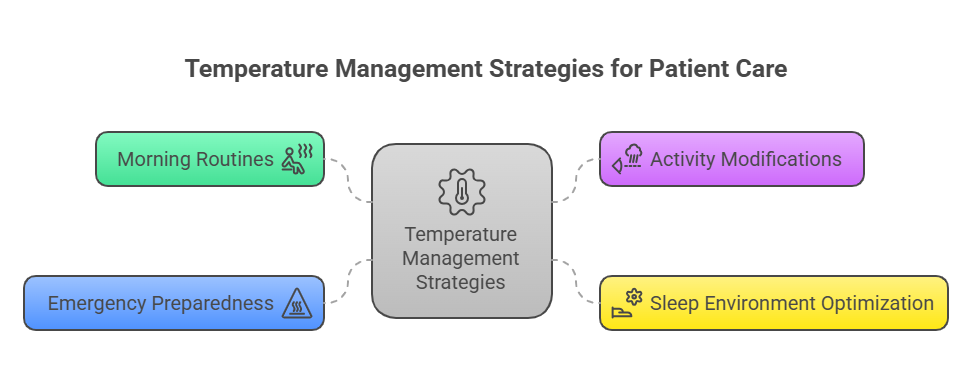
Morning routines should include temperature assessment and appropriate clothing selection. Caregivers can help patients choose clothing suitable for the day’s weather and planned activities. Checking weather forecasts and preparing appropriate clothing options in advance reduces decision-making burden on patients.
Activity modifications may be necessary during extreme weather conditions. Indoor activities during very hot or cold weather help prevent temperature-related stress. When outdoor activities are necessary, careful preparation including appropriate clothing, timing, and duration helps ensure safety.
Sleep environment optimization supports better temperature regulation during rest periods. Appropriate bedding, room temperature control, and sleepwear selection contribute to comfortable sleep and better overall temperature regulation. Some patients may benefit from heated blankets or cooling fans depending on their specific needs.
Emergency preparedness includes having plans for power outages, extreme weather events, and temperature-related medical emergencies. Backup heating or cooling options, emergency contact information, and knowledge of hypothermia and hyperthermia symptoms help ensure rapid response to temperature-related crises.
When to Seek Medical Help
Immediate medical attention is required when dementia patients show signs of hypothermia or hyperthermia. Hypothermia symptoms include confusion (beyond baseline), shivering, slow or slurred speech, and drowsiness. Hyperthermia symptoms include high body temperature, altered mental state, hot and dry skin, and rapid pulse.
Regular medical monitoring helps identify temperature regulation problems before they become serious. Healthcare providers can assess medication effects on temperature regulation, evaluate the progression of dementia-related temperature control issues, and recommend appropriate interventions.
Medication reviews should occur regularly to identify drugs that may be contributing to temperature regulation problems. Some medications can be adjusted or replaced with alternatives that have less impact on temperature control. Healthcare providers can also recommend timing adjustments for medications that affect temperature regulation.
Signs requiring medical evaluation include persistent complaints about temperature despite appropriate environmental conditions, frequent episodes of shivering or overheating, changes in skin color related to temperature, and new or worsening confusion associated with temperature changes.
| Emergency Symptoms | Condition | Action Required |
|---|---|---|
| Confusion + shivering + slow speech | Hypothermia | Call 911 immediately |
| High fever + altered mental state | Hyperthermia | Call 911 immediately |
| Persistent temperature complaints | Regulation problems | Schedule medical appointment |
| Medication-related temperature issues | Drug effects | Contact prescribing physician |
Preventive medical care includes regular check-ups to monitor overall health status and identify conditions that might affect temperature regulation. Thyroid problems, circulation issues, and other medical conditions can compound dementia-related temperature regulation difficulties.
Frequently Asked Questions
Why do dementia patients feel cold all the time?
Dementia patients may feel cold frequently due to damage to the hypothalamus, the brain’s temperature control center. This damage impairs their ability to accurately sense temperature and respond appropriately to maintain warmth. Additionally, reduced perception means they may not recognize when environmental conditions are actually comfortable, leading to persistent feelings of being cold even in adequately heated spaces.
Can temperature regulation problems be treated?
While the underlying brain damage causing temperature regulation problems cannot be reversed, many strategies can help manage these issues effectively. Environmental modifications, appropriate clothing, medication adjustments, and careful monitoring can significantly improve comfort and safety. Some patients may benefit from medications that support circulation or other aspects of temperature regulation.
Are temperature regulation problems dangerous?
Temperature regulation problems can be serious if not properly managed. Hypothermia and hyperthermia represent medical emergencies that require immediate attention. However, with appropriate care strategies and monitoring, most temperature-related risks can be prevented or minimized. The key is recognizing problems early and implementing appropriate interventions.
How can families help with temperature regulation?
Families can help by maintaining consistent indoor temperatures, assisting with appropriate clothing choices, monitoring for signs of temperature-related discomfort, and ensuring adequate hydration. Regular communication with healthcare providers about temperature-related concerns helps ensure optimal management strategies.
Do all dementia patients develop temperature regulation problems?
Not all dementia patients experience significant temperature regulation difficulties, and the severity varies considerably between individuals. Factors such as the type of dementia, areas of brain affected, overall health status, and environmental conditions influence whether and when temperature regulation problems develop.
Key Takeaways
Temperature regulation problems are common in dementia patients due to brain damage affecting the hypothalamus and other temperature control mechanisms. These issues can range from mild discomfort to serious medical emergencies, making awareness and proactive management essential for patient safety and comfort.
Environmental modifications and careful monitoring represent the most effective strategies for managing temperature regulation problems. Maintaining consistent indoor temperatures, providing appropriate clothing options, ensuring adequate hydration, and watching for signs of temperature-related distress help prevent serious complications.
Medical support plays a crucial role in managing temperature regulation issues. Regular medication reviews, monitoring for underlying conditions that affect temperature control, and prompt treatment of temperature-related emergencies help ensure optimal outcomes for dementia patients.
Family involvement is essential for successful temperature regulation management. Caregivers who understand the causes and signs of temperature regulation problems can provide better support and prevent dangerous situations from developing.
The most important message for families is that temperature regulation problems are manageable with appropriate strategies and support. While these issues can be concerning, understanding their causes and implementing effective management approaches helps ensure patient safety and comfort throughout the dementia journey.
References:
[1] Elder-Well Adult Day Program. “How Dementia Can Impair the Body’s Ability to Regulate Temperature.” January 5, 2024. https://elderwelladultday.com/how-dementia-can-impair-the-bodys-ability-to-regulate-temperature/